 TEXTILES.ORG




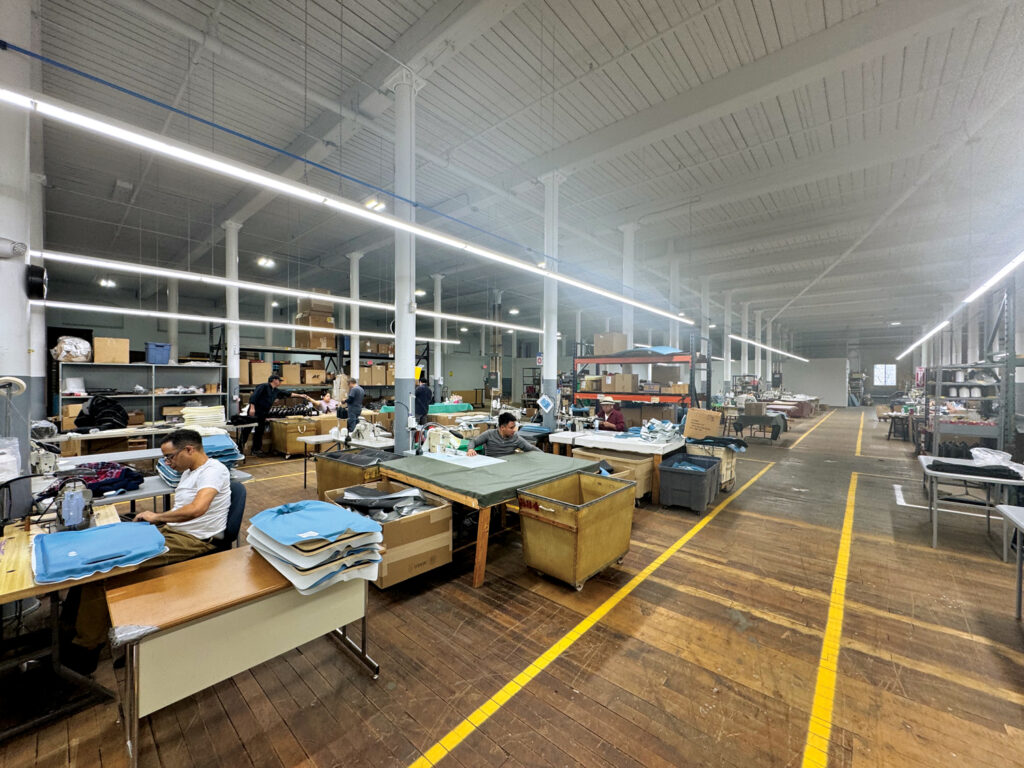
It takes skill to be a fabricator, but it takes even more to be a successful fabricator—because at some point, your business may grow enough that you need more space. The steps required for a successful move might be new to you.
“Moving a factory is not something you just know how to do,” says Layne Mayer, who recently oversaw a corporate move as CEO at Amerisewn, a domestic sewing contractor based in Pawtucket, R.I., that specializes in functional wearables for the U.S. military, high-quality consumer products, protective pads for health care applications and other industrial sewing solutions.
Mayer is one of four fabrication business operators who shared their experiences moving their facilities in recent years, providing some perspective for those who may go through the same thing in the future. Growth was often cited as a reason for a move, but there were other factors involved, including the loss of a lease, a new business partnership and splitting of warehouse and office space.

Finding a new building
Finding space is the first challenge.
“We had been in our previous location for 11 years, and it was not quite enough manufacturing space and too much office space, but it was what had been available at the time,” says Taylor Bigley, owner of Awnings by Bigley & Hogshire in Hampton, Va. “But that wasn’t the impetus to move—it was a landlord who decided to make a market adjustment of 30%.”

In addition, the landlord wanted to implement a “triple-net” lease, which puts the business owner on the hook for additional expenses such as taxes and maintenance. “That would end up being a lot more than a 30% increase,” Bigley explains. “The HVAC systems were 25 years old, and we knew we didn’t want to be responsible for that.”
He says fabricators looking to move should not expect to find a building immediately. Plan for time needed to search for the right spot. “It was hard to find a new building,” says Bigley. “We looked at several with a commercial real estate agent. There were zoning issues because even [though] we’re not a smoke-belching plant, we still needed to be M1 because of assembly, frames and those sorts of things.
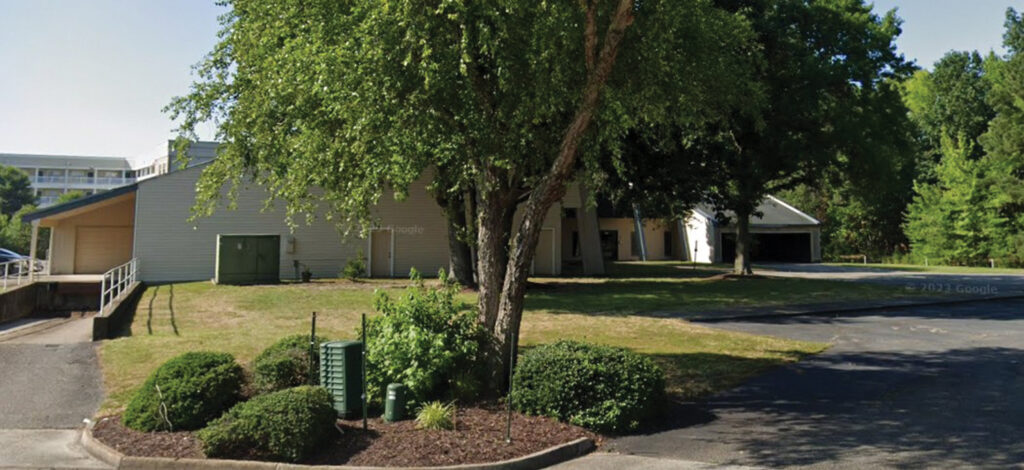
“There was not a lot of M1 manufacturing in our area and frankly, we [were] competing for space with the big gyms, ballet and cheerleading facilities that don’t need the zoning but occupy the spaces,” he continues. “I finally found our space … by bird-dogging myself, going around and passing places I remembered. What I found was a railing company that had closed.”
Fabricators moving into a new space run into the same problem homeowners do when it comes time to pack up: an amazing amount of “stuff” that has accumulated over the years. “We had certainly amassed a large amount of equipment and materials, which makes a move tough,” says Bigley. “We had to do a lot of recycling of collected materials, such as aluminum and steel, and threw away a lot that was not worth moving.”
“We spent a couple of months just dumping stuff,” adds Mayer. “There was a lot that had been stored away over 18 years. A good rule for moving is ‘Don’t move anything you don’t need.’”
Expect surprises
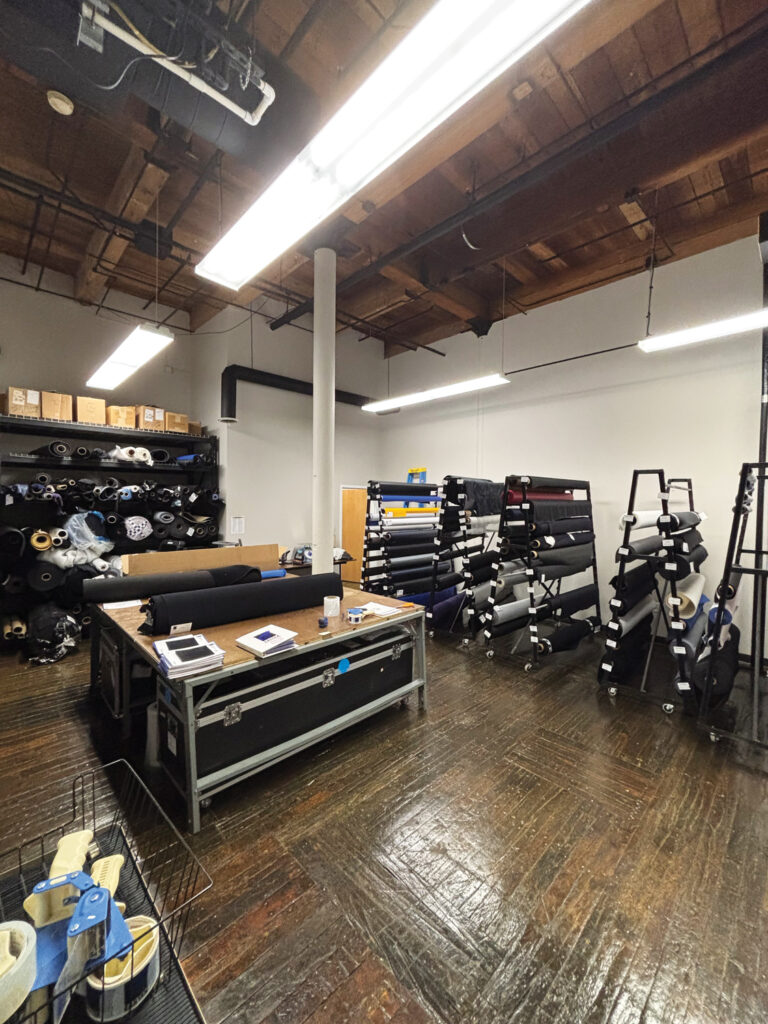
Troy Kilfoyl, vice president and general manager of Eastex Products LLC in Plymouth, Mass., a provider of textile products and solutions to textile-based manufacturing, recently supervised the company’s move from a combination warehouse/office space to just office space. The warehouse moved to a parent-company facility in Indiana.
Despite careful planning, Kilfoyl says fabricators who move should not be surprised about being surprised.
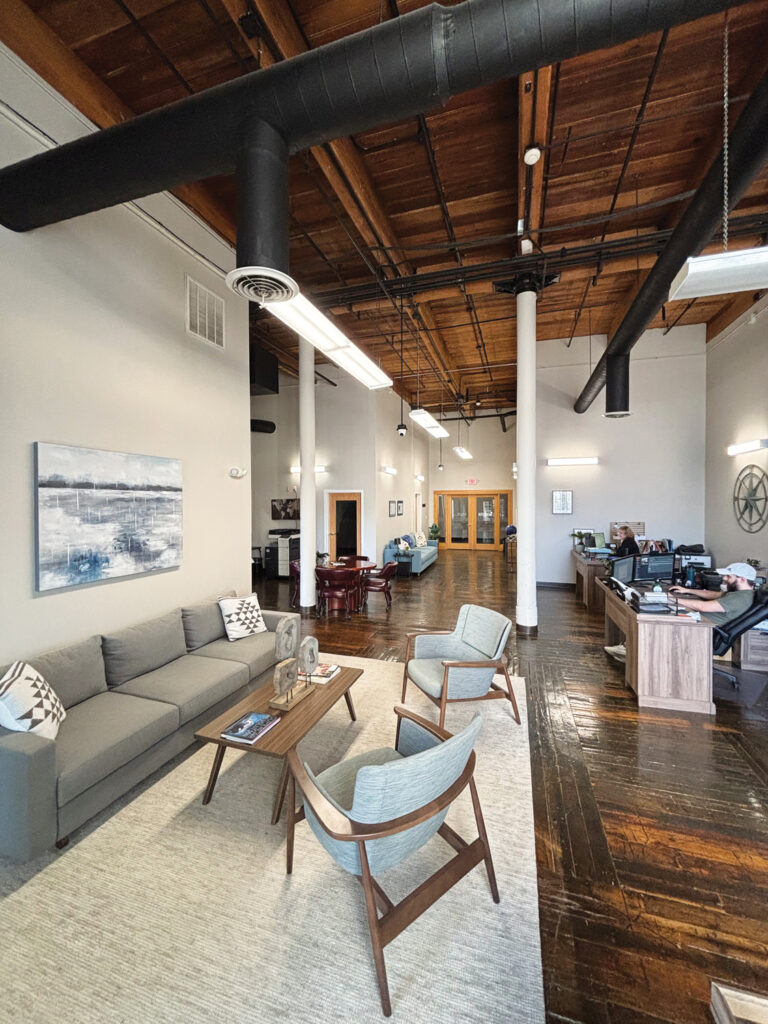
“There can be a lot of little ‘aha’ moments,” explains Kilfoyl. “It was my responsibility to figure out where the people were going to go in the new facility and where the furniture was going to be. I took video of the new place and made drawings and so on, but I didn’t pay close enough attention to where the phone, internet jacks and power jacks were relative to where I wanted to put desks and things like that. I had to have contractors in after the move to get some of that resolved.”
Andrew Lafuente, owner of Lafuente Sign and Awning in Everett, Mass., started working in his parents’ awning company when he was 12 years old and eventually opened his own business as an adult. Not long ago, he merged a Texas manufacturer of retractable shade awnings with his business and moved that operation in with his own.

“The decision to make the move was strictly based on maximizing the ability to oversee all manufacturing out of our corporate HQ,” explains Lafuente. “Retractable shade systems require a different level of attention from our stationary awnings. Taking over something like that and trying to manage it between Texas and Boston would have made it unnecessarily challenging for the company.”
Lafuente says the logistics of manufacturing two different product lines in two locations did not appeal to him. “Flying back and forth and developing and training a new team [were] challenges that could be eliminated if we were all under one roof,” he says. However, as the business grows, “it will be possible to move one side of the operation to a different building in a different city. I just thought I would be setting myself up for failure keeping those two manufacturing operations so far apart from each other.”
What it takes to move
“There’s a hundred things we could have done differently,” says Mayer, laughing. “You learn a lot in hindsight.”
One issue Amerisewn ran into was not enough electricity in the new space. “We discovered we needed an additional transformer, and even with solid planning, we didn’t fully understand what it was going to cost to pack up 25,000 square feet, move and build out the new space,” Mayer says.
Amerisewn hired Polaris MEP, Rhode Island’s nonprofit Manufacturing Extension Partnership organization that helps manufacturing companies with operational improvements. “It was a smart move,” she says. “We had a lean assessment [done] and did floor planning and mapped all the equipment before we moved, so we had a good plan in hand.”
Impact on operations, customers
It’s hard not to disrupt business during a move, but these fabricators largely found ways to minimize the consequences.
When it came time to move the Texas operation to Massachusetts, Lafuente flew south to supervise the trucks being loaded and scheduled the deliveries for the weekend. “We tried to organize the deliveries in a way that the drivers would arrive in Boston either Sunday evening or early Monday morning, causing as little disruption to our normal operation as possible,” he says.
A month after his move, Kilfoyl says not all inventories were accurate and not everything was in the right bin, among other organizing issues. “It takes a lot,” he says.
With any move, there is likely to be some kind of impact on customers. The goal is to minimize it as much as possible.
“For the most part, I think we were pretty good at keeping customers out of [the chaos],” says Kilfoyl. “In certain instances, customers would send a truck to our warehouse and pick up orders themselves if they were in New England. But now that’s not really an option, since we ship from Indiana.”
On the other hand, Mayer says Amerisewn took the opportunity of the move to examine some facets of the business. “We were able to phase out certain products that weren’t profitable or that we were ready to move on from,” she says. “We strategized on that.”
The larger space has enabled Bigley to take on larger projects, and there have been other advantages as well. “With aluminum price increases, we’ve been able to buy and store in our warehouse to minimize the impact of price increases,” he says.
Mayer notes that the needs and well-being of the company’s employees must always be considered. “When we moved, we needed solid manufacturing space that would have room for us to grow, and we didn’t want to move far enough away from our existing plant that we would lose employees.”
Amerisewn eventually found a perfect spot about 15 minutes from the old factory. “Ultimately, we didn’t lose anyone,” Mayer says. She adds, with a laugh, “But, oh yes, we had one person who was upset that their commute went from seven to 15 minutes. Everyone is happy we are here now, though.”
Jeff Moravec is a freelance writer based in Brooklyn Park, Minn.
SIDEBAR: Absorbing another company in addition to moving
Andrew Lafuente, owner of Lafuente Sign and Awning in Everett, Mass., had a lot on his plate when he agreed to acquire a Texas company that produces retractable shade systems; he was going to move that operation to the Boston area, where it would be with his existing stationary awnings operation.
One of the factors was making sure the new partner, a German immigrant who had been in the business in the U.S. for only three years, would be comfortable with the move.
“From the perspective of the previous owner, he’s giving up his baby, essentially,” says Lafuente. “For me, it was an enormous investment and a big risk. You have moments where things can be tense, and you have to be very aware of those moments just to keep everything at peace.
“You have to keep emotions at bay,” he adds, “so the previous owner feels that he’s engaged in a positive way. But just because the [merger] happens doesn’t necessarily mean it’s going to succeed.”
When merging your business with another, the actual agreement for how to marry the two is simple—at least compared to the logistics, such as moving facilities, that follow.
“Reaching the agreement is the easiest part,” Lafuente adds. “Being able to execute and look at all the details and the angles to ensure everything is successful, that’s the hard part.”