 TEXTILES.ORG




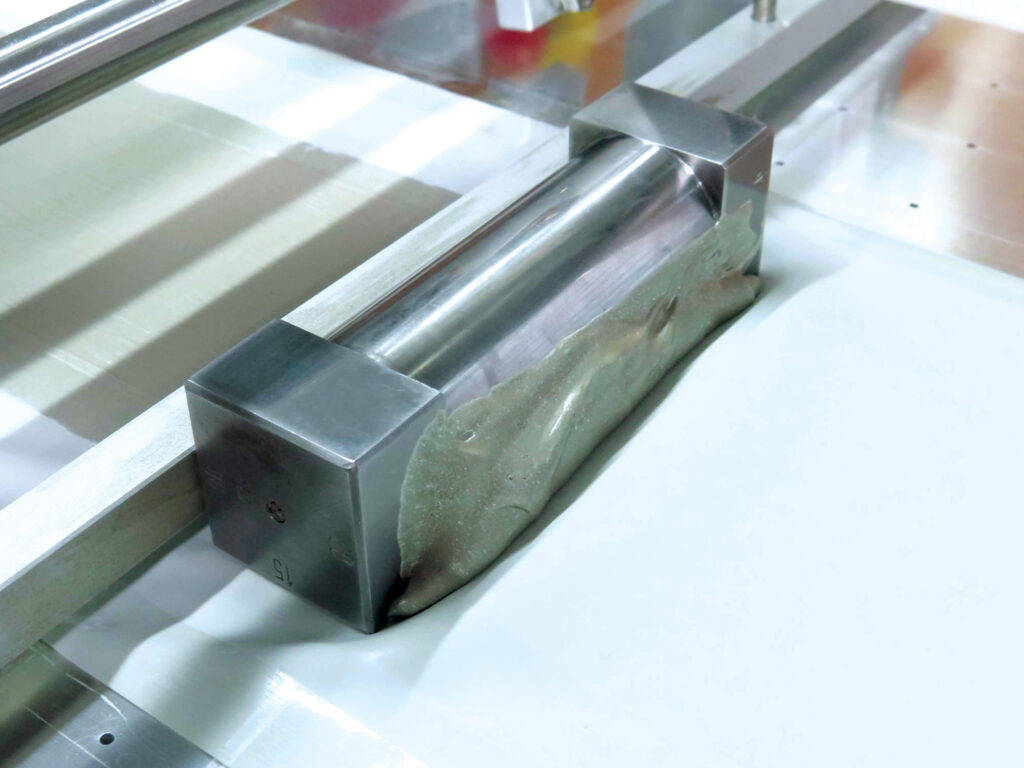
A problem for conductive structures printed on smart textiles is their ability to stretch. Being conductive while staying soft and flexible is at odds. Mechanical stresses of pressure, stretching and washing can cause a printed conductive structure to break or tear or loosen its adhesion to the textile.
Researchers in the Color- and Functional-Printing Working Group at the German Institutes of Textile and Fiber Research Denkendorf (DITF) are investigating ink and paste formulations based on conductive particles and elastic binders to improve stretchiness while maintaining conductivity.
The goal of the research team is to expand knowledge of the interactions between conductive particles and binders, between additives and textile auxiliaries, in order to create highly conductive inks and pastes. This will make it possible to produce print coatings for different textile substrates and applications, enabling reliable conductivity.
Solving this issue would bring down costs for mass production of textile electronics. It’s much more cost-effective to print conductive structures on textile surfaces using screen printing or CHROMOJET technology, a digital spray printing technique, than to produce wrapped yarns and tension-relieved conductive yarns arranged in loops, which are the current techniques.