 TEXTILES.ORG




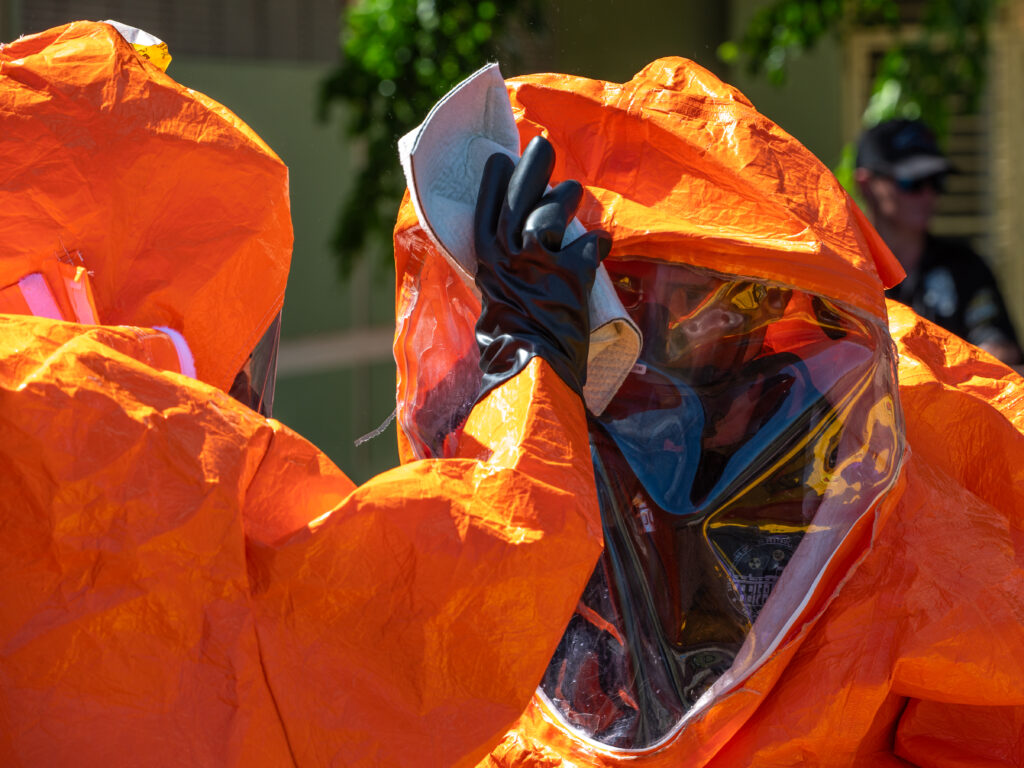
The Washington, D.C., U.S. National Guard’s 33rd Weapons of Mass Destruction-Civil Support Team conducted a specialized training event over four days in July in Ponce, Puerto Rico. The event simulated hazardous substance surveying of an illicit drug manufacture site and a terror attack scenario involving chemical warfare agents. Representatives from other federal and civil agencies, such as responders from the District of Columbia, also took part.
Since the use of FiberTect wipes following the East Palestine, Ohio, railcar derailment in 2023 and the Army testing them in Alaska that year to find the best chemical decontamination method, a hybrid “dry first” method may be emerging as a best practice, says Corey Collings, director of research, development, testing and evaluation at First Line Technology. The use of FiberTect as the first step to capture the bulk of the contaminants in these instances is increasingly putting the nonwoven wipe in the spotlight.
The wipe is used against chemical warfare agents, toxic industrial chemicals and radiological contaminants. A secondary step could involve using a HEPA vacuum, water or a chemical application, depending on the hazardous substance involved.
The product was developed by Texas Tech University following research done and needs identified years ago by the Department of Health and Human Services: Administration for Strategic Preparedness and Response concerning being able to respond to emergency chemical decontamination. The wipe’s development was funded through grants from the Department of Defense.
Editor’s note: The product’s inventor, Seshadri Ramkumar, Ph.D., is a professor at Texas Tech University and a frequent contributor to Advanced Textiles Association publications.