 TEXTILES.ORG




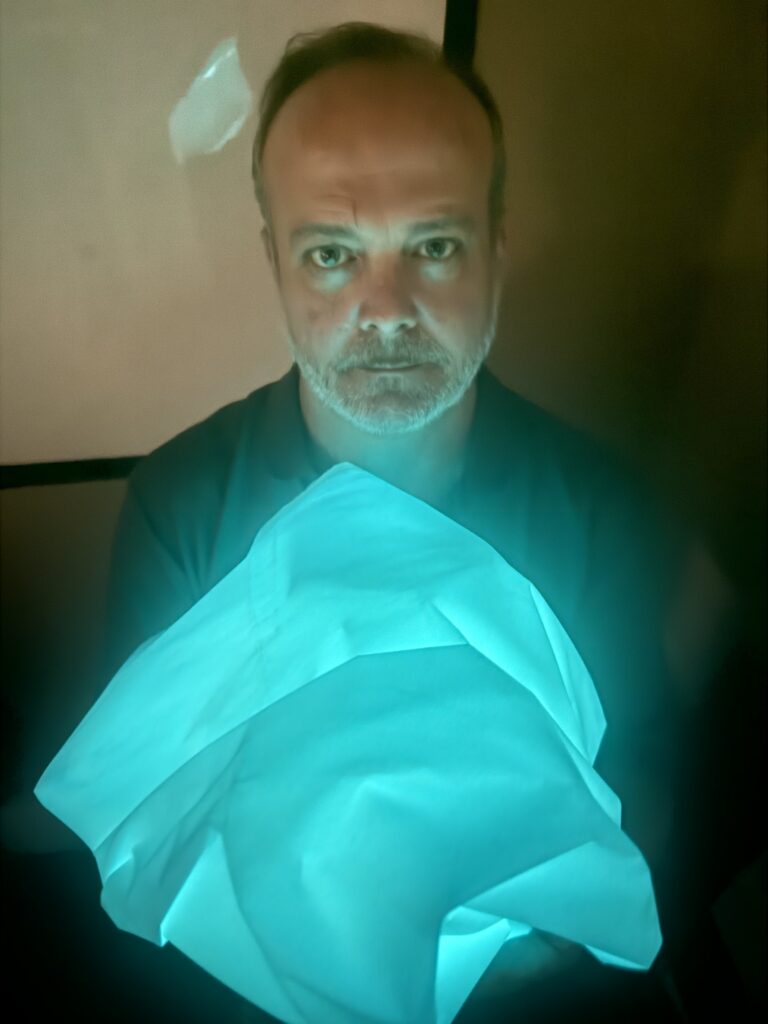
A conundrum for smart textiles developers is how to combine conductive materials and power sources with soft, flexible textiles. In the new light-emitting fabrics developed by Florida think tank Global Research and Discovery Group (GRDG) and Ashford Textiles®, there are no power cords, batteries or chemicals powering their illumination. The technology that makes the blankets glow is embedded in the polyester fibers. They absorb UV and near-infrared wavelengths and give off light in the dark.
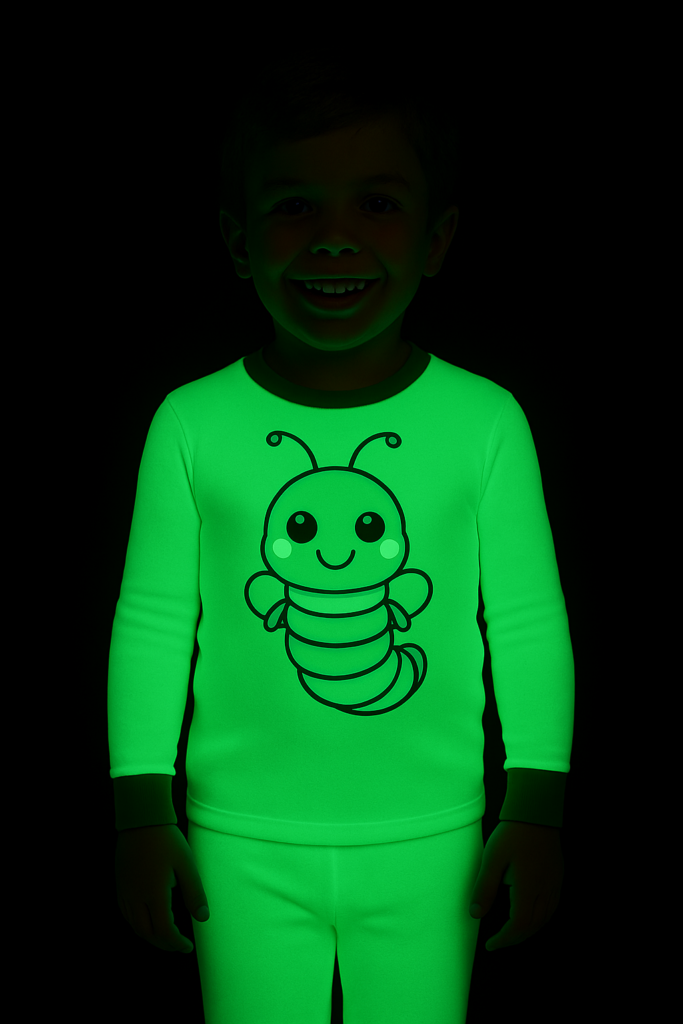
The technology is primed for use in commercial products and humanitarian-aid blankets. The yellow- and green-light versions, called Night Glow, to be sold by Northwest Group, are planned for products such as children’s pajamas, athletic and safety items, and National Football League-branded décor, with the first products scheduled to come out in August. The humanitarian-aid blanket glows green or even blue, on a wavelength that repels mosquitoes.
The technology is a proprietary crystal compound. Sunlight (or other bright light) charges electrons in the “nanoscale ‘pinwheels,’” which emit the energy as a soft glow that’s visible in the dark. The crystals can glow for up to eight hours and don’t wash out of the fibers. (For non-polymer fibers, the technology can be applied as a coating.) Green and blue are most visible in the dark, but the crystals can be created to emit any color.
In Project AURA (Advanced Ultraluminous Refuge Aid), the name for the technology’s humanitarian development mission, Dr. Roscoe M. Moore Jr., GRDG Chief Scientific Advisor and former Assistant Surgeon General of the United States, tasked the team with addressing a dual challenge: provide free, sustainable light to those without access and protect them from one of the deadliest threats in the world—mosquito-borne diseases.
Understanding that need had previously come to GRDG founder, director and lead innovator Daryl Thompson, who once witnessed the aftermath of a mudslide that destroyed an entire village. The lack of light compounded the stress of the event for children, who were terrified in the darkness.
Inspiration for how to accomplish the lighting goal came from nature. After returning late at night from doing some coastal research, Thompson saw glowing dinoflagellates, which emit light to defend themselves. Although the mechanism is different, the spark of the idea was all that was needed.
“My team’s specialty is biomimicry, where we study biological or physical properties and learn how to adapt and apply them into new fundamental technologies that can be adopted into everyday consumer products,” Thompson says. “Most of our work is directed at defense or biodefense initiatives, which means we end up with many high-tech solutions that can be adapted into industry, especially textiles.”
GRDG was founded in 2010 to develop humanitarian and biodefense applications. Areas of exploration by the company include antiviral therapeutics, antimicrobial fabrics that don’t need washing, and skin-regenerative bandages that promote healing for burn victims or chronic wounds.
The organization is also working on a cooling fabric called M1L, which Thompson describes as a “nanoscale heat exchanger” and was inspired by research into plants. “The fabric cools better the more sunlight it is exposed to,” he says.
GRDG is launching a Textile Innovation Program and is seeking collaborations with technical textile and smart fabric manufacturers as well as outdoor, defense, aerospace and medical brands.
“It is always important for us to establish collaborations with those in the textile industry who understand the practical market and scaling implications,” Thompson says.
“We’ve spent years engineering adaptive materials and solar conversion platforms for defense, sustainability and disaster response,” he says in a release about the technology. “It’s time to bring those capabilities into the textile space. Fabrics shouldn’t just cover—they should convert, adapt and protect.”