 TEXTILES.ORG




Advanced Textiles Association (ATA) brought together manufacturers, suppliers, government officials and industry leaders at its 2026 ATA Outlook® Leadership Conference to examine the trends reshaping the textile industry, from defense procurement and trade policy to artificial intelligence (AI), leadership development and economic uncertainty.
Held at The Westin Poinsett in Greenville, S.C., the conference featured two days of presentations and networking designed to help attendees navigate an increasingly complex business environment while strengthening connections across the industry.
The conference opened with Military Morning programming and updates from ATA member groups, including the U.S. Industrial and Narrow Fabrics Institute (USINFI) and the Military Division. USINFI Chair Mark Harries, president of Bally Ribbon Mills, highlighted the organization’s advocacy efforts, educational programming and government relations initiatives, encouraging members to become more involved in shaping public policy affecting the industry.
Defense and national security remained key themes throughout the event. Leighann Mazoki of Defense Logistics Agency Troop Support provided a virtual update on government procurement opportunities, while Ron Houle, founder and president of Pivot Step Consultants LLC, challenged attendees to rethink traditional approaches to military procurement and industrial base resilience. Houle discussed the rapidly changing defense landscape and the opportunities and challenges facing companies supporting the nation’s military supply chain.
Leadership and purpose were front and center during a keynote presentation by Dean Wegner, founder and CEO of Authentically American. Drawing on his experiences as a West Point graduate, Army ranger, Army helicopter pilot and entrepreneur, Wegner shared the story behind his American-made apparel company and challenged attendees to consider the impact of their purchasing decisions. Highlighting that only a small percentage of apparel sold in the United States is manufactured domestically, he emphasized the importance of supporting American workers and strengthening the nation’s manufacturing base.
“ATA’s Outlook Conference was a great opportunity to connect with peers and to meet new people. I especially enjoyed the Military Morning, which was filled with valuable insight that directly supports the business I do daily,” said Aimee Heuschkel, marketing director of fashion and industrial, Americas, Lectra.
The conference also focused on personal and professional growth. Certified Speaking Professional™ and author James Robilotta, who emceed the first day of the program, engaged attendees with an interactive workshop that encouraged authenticity, vulnerability and trust-building. Through a mix of humor, storytelling and audience participation, Robilotta demonstrated how genuine leadership can strengthen organizations and improve workplace relationships.
Trade and policy developments took center stage during a presentation by Sara Beatty, president of White Haven Trade, who provided an update on tariffs, government procurement, PFAS regulations and legislative activity in Washington. Beatty discussed the importance of industry advocacy and the need for manufacturers to remain engaged as policymakers continue to shape the future of trade and domestic manufacturing.
AI emerged as another major topic. Kevin Lee, executive director of the Institute for AI and Democratic Governance, explored the rise of “agentic AI” systems capable of making autonomous decisions rather than simply providing recommendations. His presentation examined the legal, ethical and governance challenges associated with AI-driven business operations and highlighted the importance of maintaining human oversight as organizations adopt new technologies.
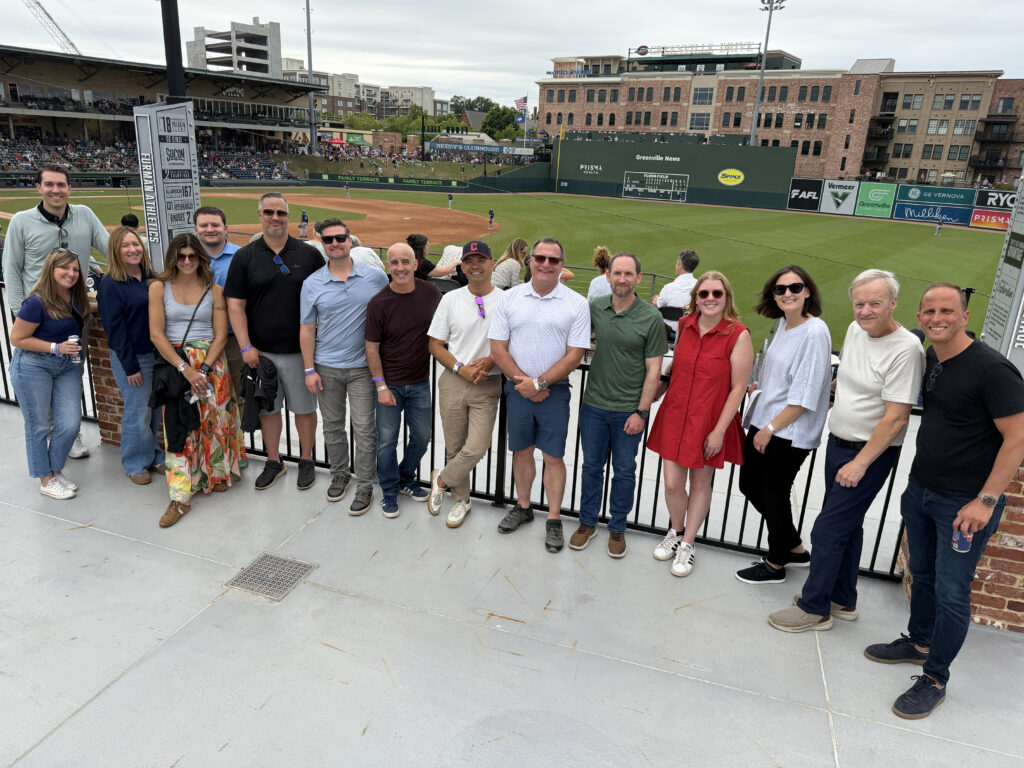
Beyond the educational sessions, the conference emphasized the value of networking and industry collaboration through events including a Greenville Drive baseball game, receptions and informal gatherings that allowed attendees to strengthen relationships and exchange ideas.
Innovation and product development were the focus of a presentation by Drew Child, Ph.D., PMP, vice president of research and development for Milliken & Company, Technical Textiles. Child shared Milliken’s multi-year effort to modernize its innovation process through an Agile Stage Gate hybrid model that combines structured governance with the flexibility needed to foster creativity. The approach, he explained, better aligns innovation investments with long-term business strategy while accelerating project execution.
Global supply chains and raw material markets were examined by Shannan Billings, global lead for fibers in the Aromatics, Fibers and Derivatives team at S&P Global Commodity Insights. Billings discussed how geopolitical tensions, energy markets, tariffs and changing trade policies are influencing the cost and availability of petrochemical feedstocks that support synthetic fiber production. She also offered practical strategies for managing supply chain volatility through diversification, planning and risk management.
Closing the conference’s educational programming, economist Roger Tutterow, Ph.D., professor of economics and Henssler Financial Endowed Chair at Kennesaw State University, provided a comprehensive overview of the economic, business and political landscape. Tutterow addressed manufacturing trends, tariffs, labor markets, inflation and the growing role of artificial intelligence, while also examining the disconnect between historically weak consumer confidence and continued consumer spending. His outlook suggested continued economic growth, though at a slower pace, with recession risks elevated but not the most likely scenario.
“One of the most valuable parts of Outlook was the mix of sessions and conversations around market direction, leadership challenges, and how companies are adapting to change,” says Amy Klingelsmith, business development manager, Fil-Tec Inc.
“Bringing those ideas back to Fil-Tec gives us a lot to think about in terms of how we stay competitive and continue to evolve in a changing manufacturing landscape.”
Beyond the educational sessions, the conference emphasized the value of networking and industry collaboration through events including a Greenville Drive baseball game, receptions and informal gatherings that allowed attendees to strengthen relationships and exchange ideas.
By bringing together thought leaders from government, industry, academia and business, the ATA Outlook Leadership Conference reinforced its mission of preparing textiles professionals to meet emerging challenges while identifying new opportunities for growth and innovation.
For more information about Outlook and next year’s conference, visit usinfi.textiles.org/outlook-conference.