 TEXTILES.ORG




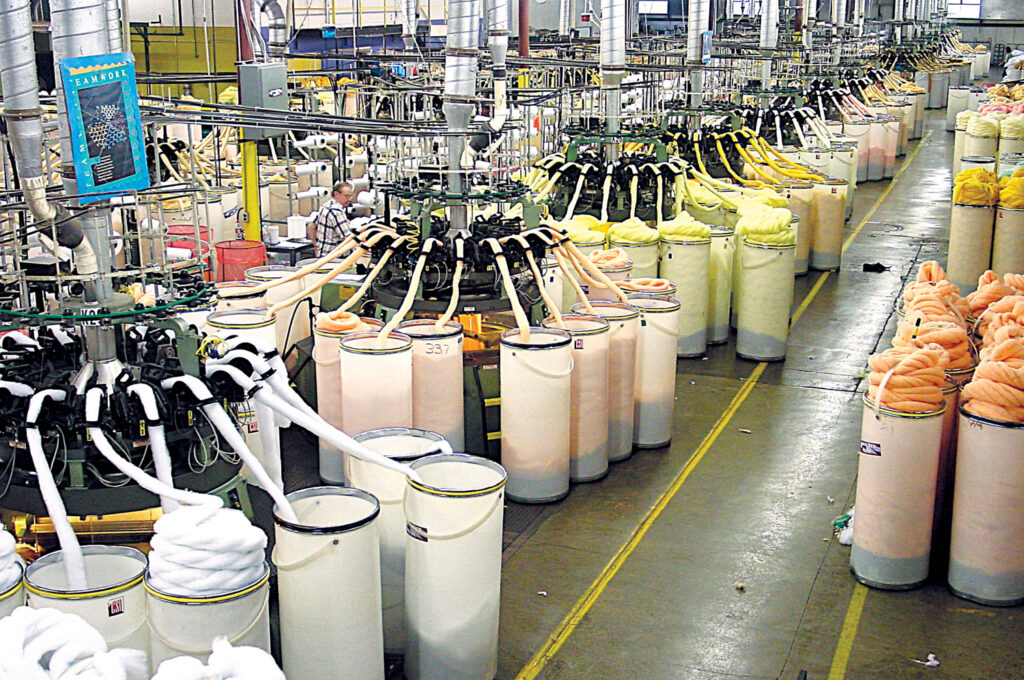
“Made in America” can mean different things, depending on context. It could refer to consumer products created with U.S. labor from raw materials sourced from around the world. It could describe an item sold to the federal government or used in an infrastructure project, where a percentage of it must be composed of American-made components. It could be an item for the U.S. military, which must be American-made from the yarn constructing the textile on up. It often is a custom product or a specialty item with advanced performance characteristics, as the industry that remains in this country is nimble, adaptive and often survives in niches.
“A lot of people have dismissed our industry over time and have a very old-world view of what the U.S. textile industry is today—modern, sophisticated, automated,” says Kim Glas, president and CEO of the National Council of Textile Organizations (NCTO). “We employ 453,000 people across the United States, so I dismiss any notion that we aren’t a vital and critical sector.”
Glas points out that the textile industry is also crucial to the security of the United States. “Our industry makes 8,000 different products for the U.S. military alone,” she says.
Nevertheless, U.S. textile manufacturers face a host of challenges. U.S. tariffs and reciprocal tariffs from other countries make inputs and equipment more expensive and U.S. products harder to sell internationally; mills are closing; and China remains a low-cost manufacturing juggernaut—sometimes supplying raw materials and other inputs and at other times, taking business away.
“Our industry has lost 40 textile plants over the last two and a half years, so we have been facing enormous economic headwinds,” says Glas.
Diversification, innovation are key
A positive trend for the U.S. textile industry, however, is a seemingly strong commitment to bringing manufacturing back to the United States—or at least closer to these shores. Dan Sinykin, president of Monterey Mills in Janesville, Wis., notices this happening.
“In the last five years since COVID, we’ve seen the industry reflect on the effect a pandemic can have on markets, as we have seen with respect to the effects of taxes and tariffs over the past year as well. I believe this has led to a renewed interest in bringing more manufacturing to this hemisphere,” says Sinykin. “When you do that, it strengthens the supply chain; while it may increase short-term costs, it gives American companies a greater sense of stability and comfort in knowing that there is an active group of mills and manufacturers that can meet industry needs.”
The core of Monterey Mills’ business is the fabric sleeve on a paint roller. Diversifying into nonindustrial business has helped the company; that area is growing and includes apparel and other items, including fabric for costumes and mascots, hospital pads, pet beds, and air and water filtration media. Its vertical business will be where the company’s next five years of growth will be coming from, Sinykin says, making new products out of its own fabric.
For OTEX Specialty Narrow Fabrics® in Bernardsville, N.J., the key to vitality is innovation. “In an age of ever-increasing globalization, the way the U.S. has continued to succeed has always been through innovation and specialization,” says Eric Aerts, director of marketing/research and development.
OTEX’s story is an example of using innovation to transform. The company once manufactured decorative ribbons, but when overseas manufacturers introduced ribbons to the U.S. market, OTEX pivoted by producing specialty narrow textiles. Today, OTEX manufactures products for aerospace, the military, fire safety, transportation, outdoor, marine and medical industries.
“It’s always going to take a little courage to think outside of your box,” says Aerts. “It has played out very well for us. I think it’s less of a risk than standing still.”
Sinykin agrees that innovation is key. “If you look at our revenue today, 35%–40% of our revenue is from products that have been developed in the last 10 years,” he says. “We have products that essentially have not changed much in 50 years, but we are constantly looking for new raw materials to incorporate into our products, new products to create and new markets to investigate.”
Tariffs’ unintended consequences

Sometimes, though, inputs have to be imported. “Everything we produce is made in the U.S., and the vast majority of our products are comprised of USA-made materials,” says Aerts. “That being said, there are times when offshore raw materials are the only choice.”
One example is acrylics. Sinykin says, “If we want to buy acrylic staple fiber, we have to buy fiber from Mexico or from a different country because there is no one in the United States that manufactures acrylic or modacrylic fiber.”
It will take time to determine if the tariffs imposed by the federal administration bring business back to the United States, especially now that many have been struck down as unlawful. “I would say that tariffs have injected a huge level of uncertainty into the marketplace for all domestic manufacturing, including our industry,” says Glas.
Sinykin shared that his company has experienced financial harm because of the tariff policy. “We made a commitment when the tariffs increased significantly that we were not going to pass anything on to our customers, that we were going to eat the tariffs’ cost internally—and we did, to the tune of tens of thousands of dollars,” he says.
Reciprocating tariffs from other countries hurt international sales. “Canada is a great example,” says Sinykin. “When Canada responded to U.S. tariffs by imposing their own, we lost hundreds of thousands of dollars in revenue. We had orders literally in our warehouse ready to ship that got canceled because the tariff going into Canada was going to be too high for our customers to absorb, and we had to eat the fabric or sell the fabric to someone else at a lower cost.”
Identifying supply chain gaps
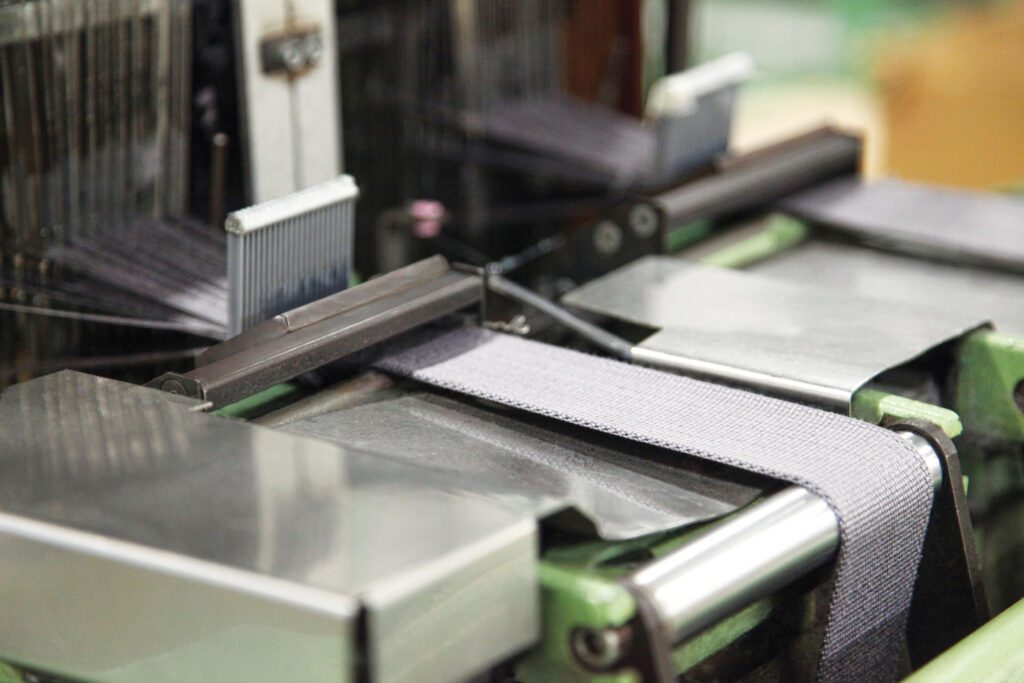
Company partnerships and networking via industry association events and participation can play a role in finding items produced closer to home.
“Have long-term shared goals, strategies and initiatives,” says Aerts. “Whether these are relative to building market share, developing new products or finding ways to lower costs, achieving these as partners will have a better chance of success than aiming at shortsighted temporary gains.”
One challenge to fostering cooperation is that companies might be unfamiliar with potential partners and what they bring to the supply chain. Lisa Shimkat of the Small Business Administration (SBA) would like to see the industry conduct asset mapping to identify gaps in the supply chain and promote awareness. She is the associate administrator for the Office of Field Operations and acting associate administrator of the Office of Manufacturing and Trade.
She cited an example from an East Coast roundtable of manufacturers that demonstrates why greater coordination is needed among businesses.
“Somebody at one side of the table said, ‘I have to go overseas for this [item] because I can’t get it here.’ And literally someone on the other side of the table said, ‘I make that.’ We have somebody right here. We don’t know what’s in our backyard,” says Shimkat.
That experience is one of the reasons why the SBA created the Make Onshoring Great Again portal, which allows businesses to register their companies to connect with other businesses and organizations. (See sidebar.)
Ways government can support ‘made in America’
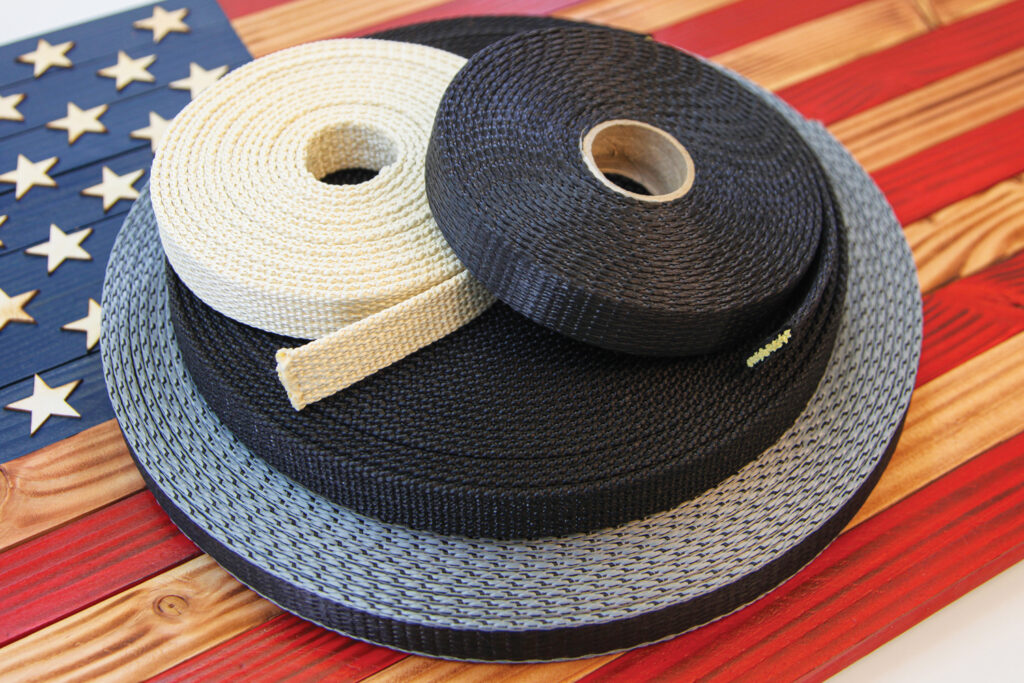
While the federal government influences U.S. manufacturing by being involved in everything from tariffs and trade agreements to loans, more assistance might be needed.
Sinykin believes greater federal government support is needed to build back America’s manufacturing infrastructure. He points out that companies are not going to accept the high cost and risk of building a mill or a cut-and-sew operation unless a market is available for the output.
“A manufacturing rebound in the U.S. is not going to get done in a vacuum without some type of incentive from the government saying, ‘If you build it, we will help you grow the business domestically,’” he says.
Glas also believes there are policy changes the federal government can implement to help the industry. “Do I think the U.S. government is going to do a massive funding of cutting and sewing? Probably not,” she says. “Do I think the government may change its procurement laws to require fully American-made Berry uniforms across the government that would then enable the growth of cut and sew jobs? Yes, I think that’s possible.”
Government can take other steps to help the industry without spending on infrastructure. Shimkat cited two actions:
- State and local governments can expedite permits affecting equipment purchases and installation to allow equipment to come online faster.
- The federal government can continue to reduce regulatory burdens on small businesses.
Since early 2025, Shimkat says, the government has cut more than $100 billion in regulations under SBA Administrator Kelly Loeffler. “We hope to continue at that pace,” she says.
Meanwhile, U.S. textile manufacturers are continuing to invest and produce fibers, textiles and apparel. The most recent figure from 2024 shows that the textile and apparel industry invested $5.5 billion in new plants and equipment, Glas says. As of 2025, the industry produced $60.9 billion in output.
“I’m really proud of what this industry has accomplished in a very uncertain environment,” says Glas.
Alan Pierce is a freelance writer in Burnsville, Minn., with a background in journalism as a reporter and editor.
SIDEBAR: Government tools to help American manufacturers
OTEXA
Made in the USA Sourcing & Products Directory
The International Trade administration Office of Textiles and Apparel has a directory to find U.S. sourcing for products at trade.gov/made-usa-directory. The directory includes spinners, weavers and nonwoven manufacturers to cut-and-sew, printers, finishers and more. To qualify for a directory listing, a vendor must be incorporated in the U.S. with at least one manufacturing or assembly plant in the U.S. that serves the domestic textile, apparel, footwear and travel goods supply chain.
SBA
U.S. Small Business Administration (SBA) offers two tools to help domestic manufacturers.
The Make Onshoring Great Again portal
The SBA’s Lisa Shimkat encourages U.S. manufacturers to register on the free reshoring portal. She is the associate administrator for the Office of Field Operations and the acting associate administrator of the Office of Manufacturing and Trade.
The portal also features an onshoring handbook to help manufacturers navigate the process of relocating operations back to the United States. The 10-page handbook includes a checklist for onshoring and links to resources for more information.
MARC loan
In September 2025, the SBA created the Manufacturers’ Access to Revolving Credit (MARC) Loan Program to provide working capital to small manufacturers. Information about the loan can be found in the document 7(a) Manufacturers’ Access to Revolving Credit (MARC) on the SBA website.
“The MARC loan is actually a loan guarantee,” says Shimkat. “It is a line of credit. The average is about a million dollars. If we are pushing manufacturers to expand or to be ready for contractors that are doing these bids, they need to have access
to capital to be able to ramp up the inventory.”
According to the SBA, the MARC funds “may be used for any short-term working capital need of the manufacturer, supporting everything from inventory purchases to new projects.”
The SBA also provides training for the loan program and others at sba.gov/partners/lenders/training-demand.
ATA Member Benefit Spotlight
Webinar access, recordings
Not only do ATA members have access
to free webinars, but they also can
rewatch them, in the webinar library.
Members who paid tariffs will be
interested in the replay of the recent
webinar on the tariff refund portal.
textiles.org/webinar-library