 TEXTILES.ORG




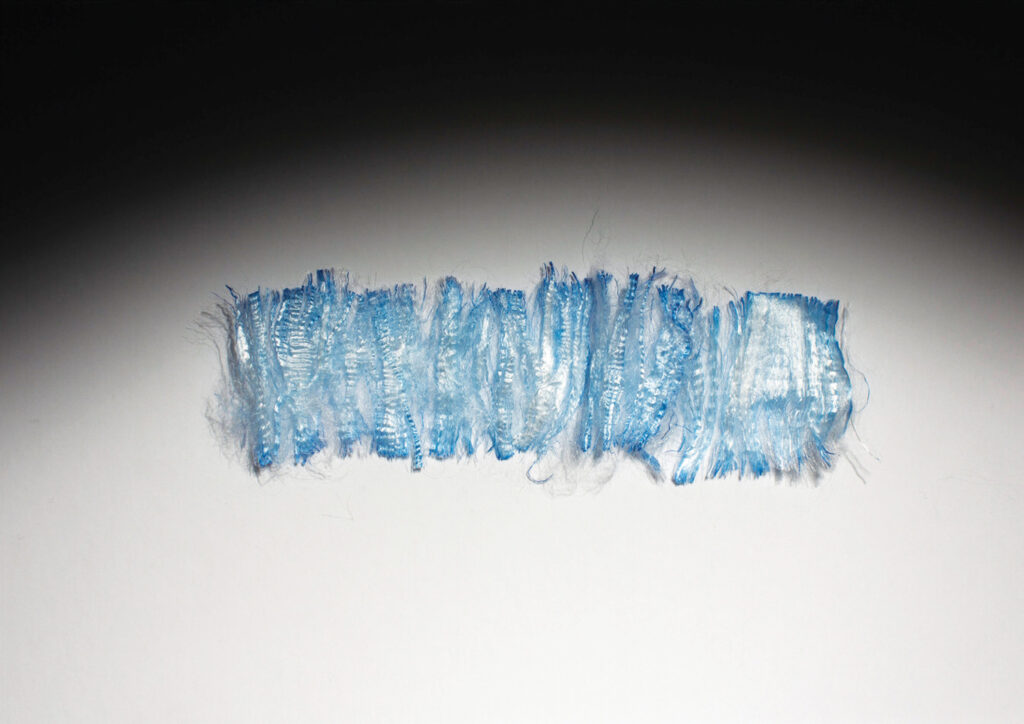
Experiments in his workshop using invasive seaweed and seafood waste started French artist Eugène Riconneaus on a journey into materials science, specifically marine-based polymers and a bright blue bio-pigment, the latter derived from cyanobacteria.
The marine material, a polysaccharide called Sei™, is the foundation for fibers called SeiYarn™ and a canvas fabric called SeiShell™ from ER Ocean Recherche, Paris. The silklike staple fiber can be used to create yarns and fabrics similar to cellulose fibers and viscose. It is naturally antimicrobial, biodegradable and can be dope-dyed. The canvas can be coated to mimic leather.
Interested customers can find more information on specs and testing results and sign up for the samples waiting list on the company’s website, oceanrecherche.com.
On his page, Riconneaus stresses that sustainability starts with a product’s design. During his career, he has collaborated with organizations such as Mercedes-Benz and Dr Martens, and his work has been showcased at institutions including the Museum of Modern Art in New York, N.Y. He launched his first fashion collection at age 18.