 TEXTILES.ORG




Researchers in Spain have analyzed evidence of a warp-weighted loom from nearly 3,500 years ago, providing a closer look at ancient textile technology.
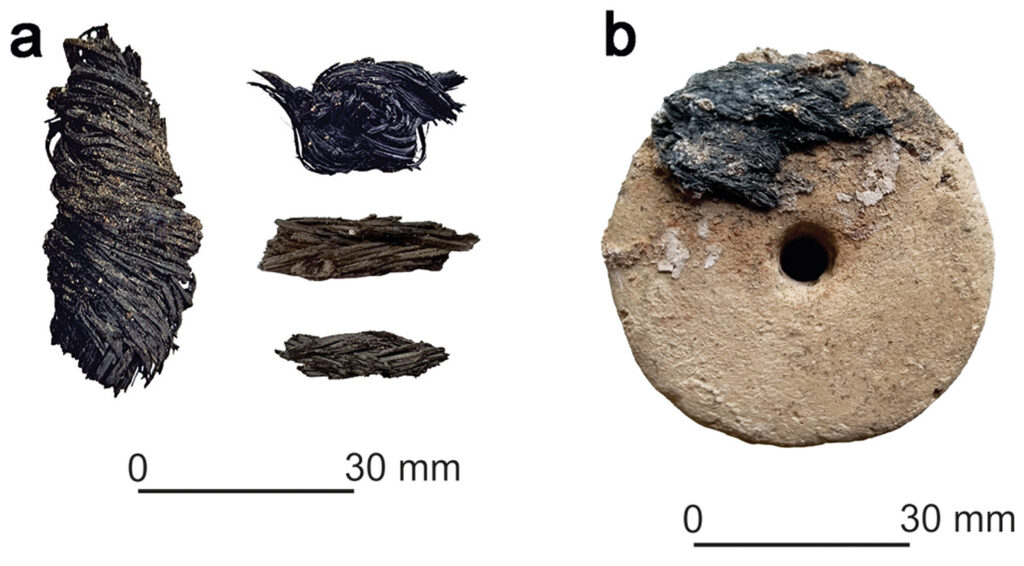
The evidence was excavated from Cabezo Redondo, a Bronze Age settlement in southeast Spain, and included 49 clay loom weights, plant-fiber rope fragments and charred timbers.
Warp-weighted looms are weaving devices where the threads hang freely, held taut by clay or stone loom weights. They were used throughout prehistoric Europe and the Mediterranean.
The plant-fiber ropes discovered are braided and knotted and made of esparto grass, which is commonly used for making ropes, baskets, mats and footwear. Most of the rope fragments were found next to the timbers, possibly indicating that the ropes were used to secure them. The loom weights are much lighter than other examples found across the Mediterranean, suggesting they were used to make a variety of fabrics.
This research was published in March in Antiquity.