 TEXTILES.ORG





At first glance, the custom manufacturing solutions produced by Masson Inc. of Indianapolis, Ind., might seem simple. From coated webbing assemblies for the medical market to urethane-coated pet collars, the company’s products pair a modest outward design with practical purpose.
But don’t be fooled. Each item reflects several months or years of prototyping, with every detail engineered for precise performance that may be invisible but can be critical.
In addition to serving the medical and pet industries, Masson offers its webbing assembly, sewing, die-cutting, laser cutting, printing, and radio-frequency and ultrasonic welding capabilities to the military, automotive, industrial, safety and sporting goods markets.
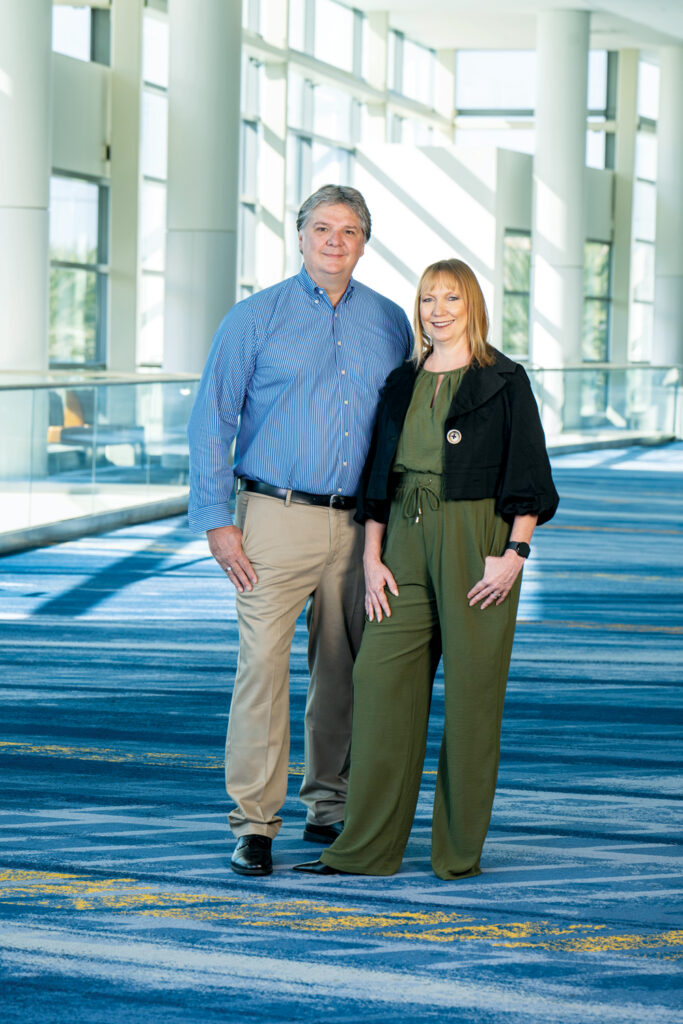
“The rabbit holes we find ourselves going down to ensure we’re making the best product possible never cease to amaze me,” says Dan Marsh, president. “It requires a massive amount of knowledge to ensure you understand the materials’ properties, how they interact with each other and how to bring that together into an efficient production process.”
Evolving expertise
Marsh knows just how much time and effort it takes to develop this level of expertise. When he joined Masson nearly 40 years ago from its sister company, Marian Inc., a converter and manufacturer of custom die-cut flexible components, he had strong experience in sales, engineering and maintenance—but limited exposure to textiles.
“The learning curve was huge, so I just started learning by necessity. As each new project came in, I researched intensely and gradually accumulated the knowledge I needed to complete it. And I’m still learning every day,” Marsh says. “Whether you’re starting a new project or a new business, it’s easy to get discouraged by how much there is to absorb. You just have to tell yourself you can do it and figure it out along the way.”
Fellow Advanced Textiles Association (ATA) members have been valuable sources of inspiration as well. “I’ve been fortunate to meet people at different ATA shows who have helped us improve our pretreatment and coating processes,” Marsh says. “It’s great to stay in touch with members and continually improve our industry relationships as well as our products.”
As Marsh’s knowledge expanded over the years, so did Masson’s product offerings, shaped by customer needs. The company’s coated lines started with a request for dog collars that wouldn’t absorb odors and moisture. From there, Masson expanded into welding so it also could assemble the coated products. The company later acquired a graphics company to add further value with in-house printing for customizations including instructions, logos and warning labels.
“The advantage is we keep our customers happy by being one source for a product they can’t get anywhere else,” Marsh says. “And we get the added bonus of flexibility and creativity to build something that hasn’t existed before.”
Pacing progress
Supporting dynamic industries means there’s no shortage of opportunities to innovate. Both the medical and sporting industries are looking to do more with smart fabrics that interface with electronics to monitor the health of patients or track athlete data, and clients are coming to Masson with concepts.
The use of coated webbing is also growing. In the injury prevention space, it’s being used for products like fall-prevention harnesses.
“Coated webbing is easy to clean, abrasion-resistant and doesn’t absorb water,” Marsh says. “That’s a big benefit for pressure washer operators, as an example. Workers can share harnesses made with coated webbing between work shifts without waiting for them to dry. And because the webbing is more durable, when they’re sliding across scaffolding and pulling hoses around, the harnesses won’t lose strength.”
It is also an essential component for hydrogen fuel cell technology, which is gaining traction in aviation. Fuel cells are devices that capture and house hydrogen and produce electrical energy that can power plane engines more efficiently than traditional methods. Without the right coating, the material inside these cells would be destroyed. And for one significant customer, Masson was the only company capable of coating it correctly. “They tested several coating companies across and outside the country, but it was a difficult challenge only we could pull off,” Marsh recalls. “That was a big accomplishment we’re still proud of.”
Complex products like this take time to develop. Prototyping and developing new materials and products can average around two years—longer than some customers expect to wait. “We’ve had customers ask for a product within three months,” Marsh says. “So it’s critical for us to be transparent in helping them understand our processes and how their material choices and project changes affect timing.”
This transparency extends to pricing as well. “It’s important for our customers to understand not only the numbers but also what’s influencing the numbers,” says Tina Marsh, chief financial officer. “With a volatile external environment, everyone is aware costs are generally increasing, so keeping open lines of communication is key.”
Streamlining strategy
Tina joined Masson from Marian Inc. in 2015. Her main focus is ensuring every dollar spent and earned supports the company’s long-term financial strategy for growth and stability. While balancing efficiency and profitability is an ongoing challenge, implementing a new enterprise resource planning (ERP) system has made it much easier.
“We now track everything you can think of—our entire process flow, from ordering and receiving to producing and shipping as well as employee time, payroll and training,” Tina says.
But even the most powerful ERP system is not a substitute for time-management mastery. “I have a hard time getting away from my to-do list,” she notes. “One of the challenges of being a small company is there’s never enough time.”
With daily competing priorities, the company has prioritized one nonnegotiable: keeping production going. To reinforce this, Dan and Tina keep employees up-to-date on how they contribute to the company’s overall success. “We share our numbers with employees,” Tina says. “It’s helpful for them to see the full cycle of how productivity leads to profits, which in turn determines their bonuses.”
Productivity does not come at the expense of quality, however. “The team uses a lot of different equipment and techniques, so we are rigorous about keeping employee training up-to-date to retain the highest level of quality for our products,” Dan says. “We tell employees that if they wouldn’t be happy paying full retail price for the product they make, we’re not shipping it.”
Employees take immense pride in their work, especially when they can see it come together as part of a final product. Dan and Tina aim to do this whenever possible, especially when they can highlight something specific, such as hospital machinery for which the team has manufactured parts. “It feels really good to see one of these out in the ‘real world’ and know you made something that is being used to help people,” Dan says. “That’s the reason we do this in the first place.”
Holly Eamon is a business writer and editor based in Minneapolis, Minn.
SIDEBAR: Perfecting the process
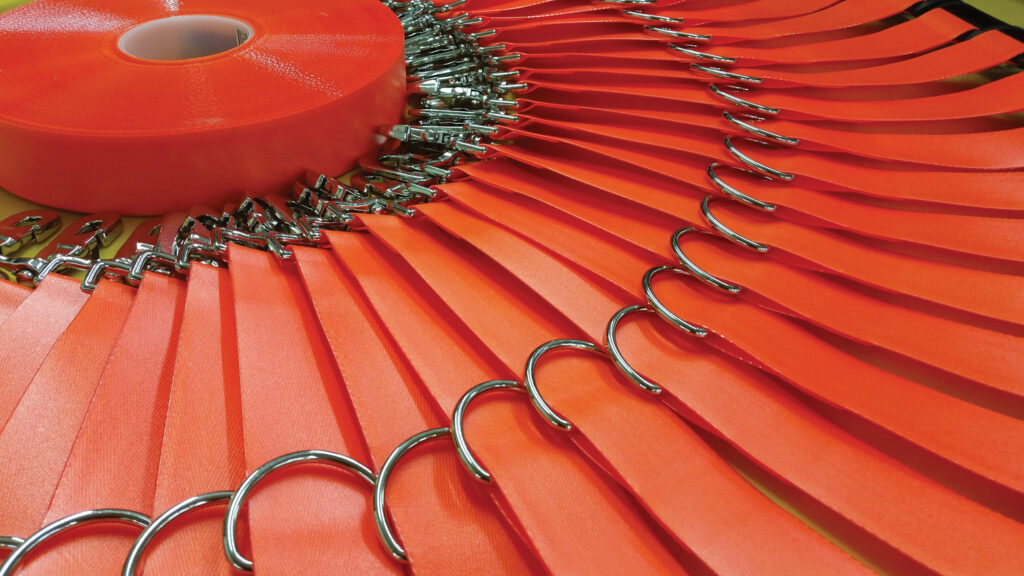
Developed 20 years ago, a coated webbing product Masson Inc. engineered for a medical supplier is still evolving to meet new demands. The customer originally requested a safety restraint that could be easily decontaminated without disassembly, soaking or drying and that worked in existing hardware.
“We worked with some incredible mills to design and produce the base webbing that was strong enough for the application and could stand up to the coating process, which can reach 410 F,” says Dan Marsh, president.
“We also had to find the coating compound that would provide the proper amount of adhesion, abrasion resistance and flexibility.”
Initial development took approximately two years, from creating new webbing designs and waiting for the mills to produce them, to working with compounders on each version, to extruding the new combinations and continually improving the process.
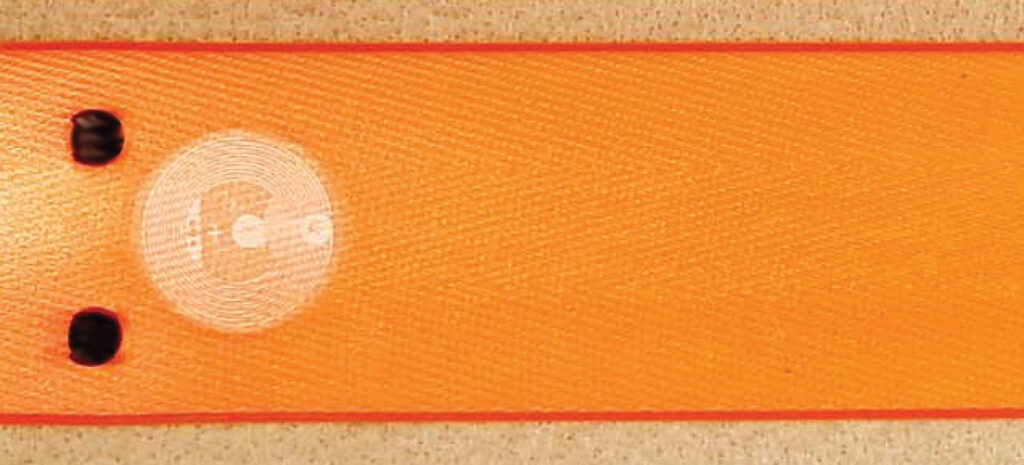
“Other than the process, the most challenging part was getting consumer feedback about the look, the feel in hand and the perception of quality along with performance,” Marsh recalls. “It was initially unique due to the thinness and strength of the coated webbing and the specialized texturing method we developed to provide ease of adjustment through the hardware and a better hand feel.”
Today, ongoing requests with new requirements continue to challenge the team’s development. Improvements have included Vectran® webbing coated to the same thickness (but with three times the tensile strength) and integrating electronics into the webbing and coating.
SIDEBAR: Masson Inc. CFO Tina Marsh’s tips for those new to textiles
- Approach the industry with patience and curiosity. It’s a field that blends tradition with constant change, from materials and machinery to trends and consumer expectations.
- Take time to understand the entire supply chain, from sourcing raw materials to final delivery, because success often depends on how well you grasp the full picture, not just your specific role.
- Never underestimate the importance of relationships, whether with suppliers, customers or your team. This is a people-driven industry, especially in smaller companies.
- Stay financially aware. Margins in textiles can be tight, and understanding the cost implications of decisions—whether in design, production or logistics—will make you much more effective, no matter your position.