 TEXTILES.ORG




Researchers at the Korea Research Institute of Chemical Technology (KRICT) have developed a high-performance polyester-amide (PEA) fiber that decomposes by more than 92% in one year under marine conditions and is also compostable and recyclable. The scientists envision gill nets made of the material, which fishermen typically use just a few times. The nets spend only about a month total in the water before being discarded. KRICT president Young-Kuk Lee says, “This technology marks a pivotal step toward the commercialization of biodegradable engineering plastics and will significantly contribute to solving the global marine plastic pollution crisis.”
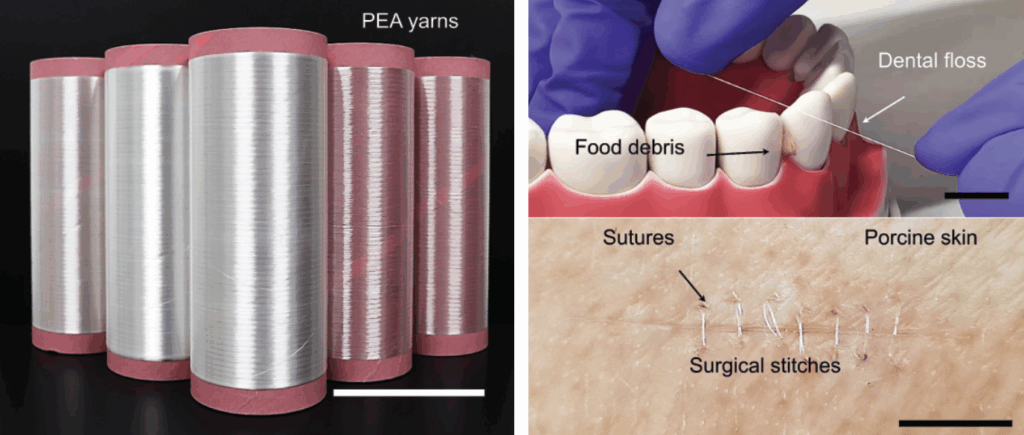
While in use, the fiber has strength and flexibility comparable to nylon. The PEA was synthesized using long-chain dicarboxylic acids derived from castor oil and caprolactam derivatives recovered from recycled nylon 6 waste. The team developed a two-step melt polymerization process that eliminates the need for toxic solvents. This method is compatible with existing polyester manufacturing facilities with only minor modifications, enabling its industrial scalability for uses in textiles and packaging.
This research was published in the March 2025 issue of Advanced Materials.
See Specialty Fabrics Review‘s Swatches section every month for short stories covering news, ingenious projects and research.