This page was printed from https://specialtyfabricsreview.com

Bacterial cellulose meets interior design

Features, Swatches | February 1, 2026 | By:

Two workers in protective gear manipulate large sheets of light brown, glossy Polybion bacterial cellulose in a production facility.
Acetobacter bacteria feed on agricultural fruit waste to create the Polybion™ fabric. Image: Polybion

Last fall, Polybion™, in conjunction with design studio Natural Urbano, released a set of translucent sculptural hanging lamps, the biomaterials company’s first foray into interior design with its Celium™ material.


The lamps, called Lapso, come in two different tones, one darker than the other. Because the material is cultivated from bacterial cellulose, the grain and textures vary on each lamp.
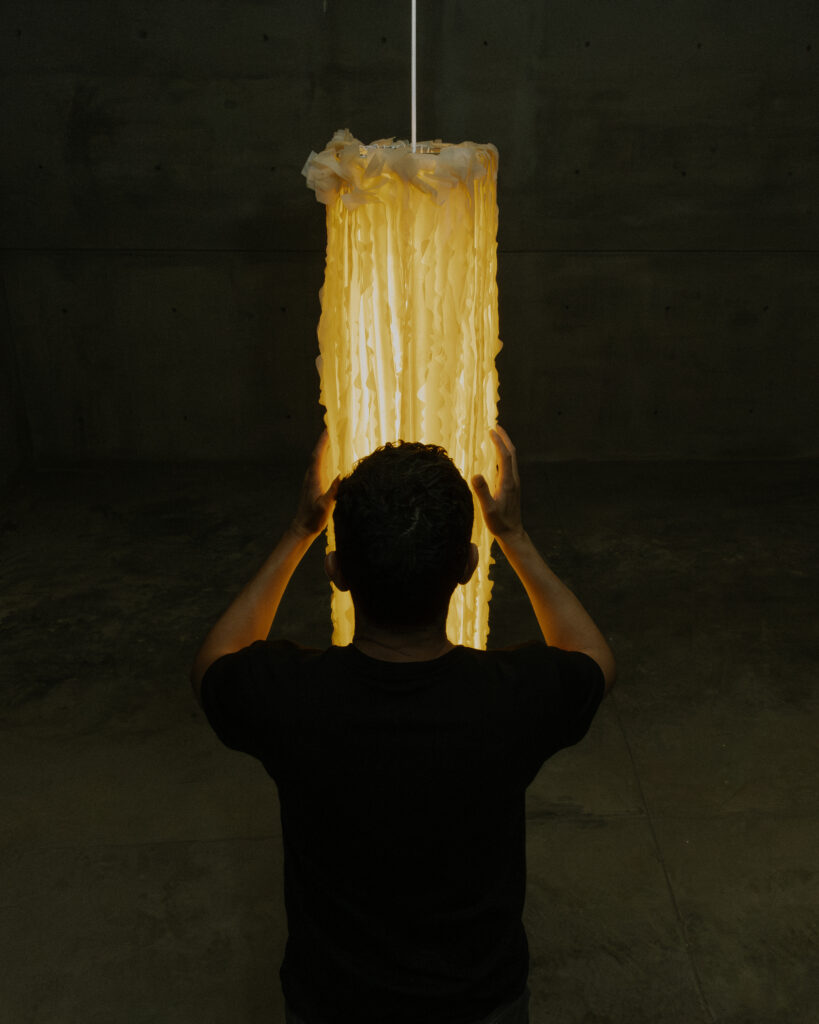
A person in a black shirt holds a glowing cylindrical lamp made from textured yellow material, set against a dark concrete background.
Each lamp is made to order and one of a kind because the grain in the biomaterial differs per sheet. Image: Polybion/Claudia Armida GALAR


The material is grown by feeding agro-industrial fruit waste to bacteria. During fermentation, strains of Acetobacter bacteria produce the material’s cellulose network as they metabolize the sugars. The fabric can be produced to be soft, firm, matte, glossy, opaque or translucent, and it can be dyed, embossed or tanned.
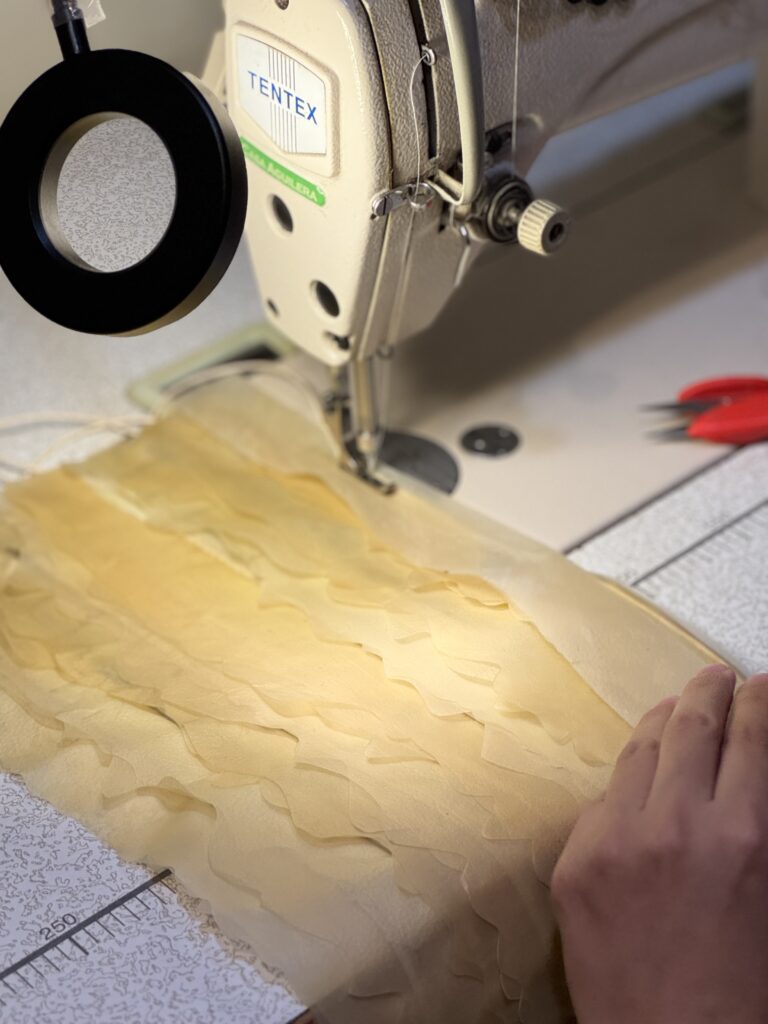
A sewing machine with a magnifying glass hovers over layered translucent Celium bacterial cellulose fabric, while a hand guides the material on an industrial sewing machine table.
Image: Polybion and Natural Urbano


This collaboration took place over the course of a year, where the companies experimented with different thicknesses, tanning formulas, finishing approaches, designs and assembly methods.
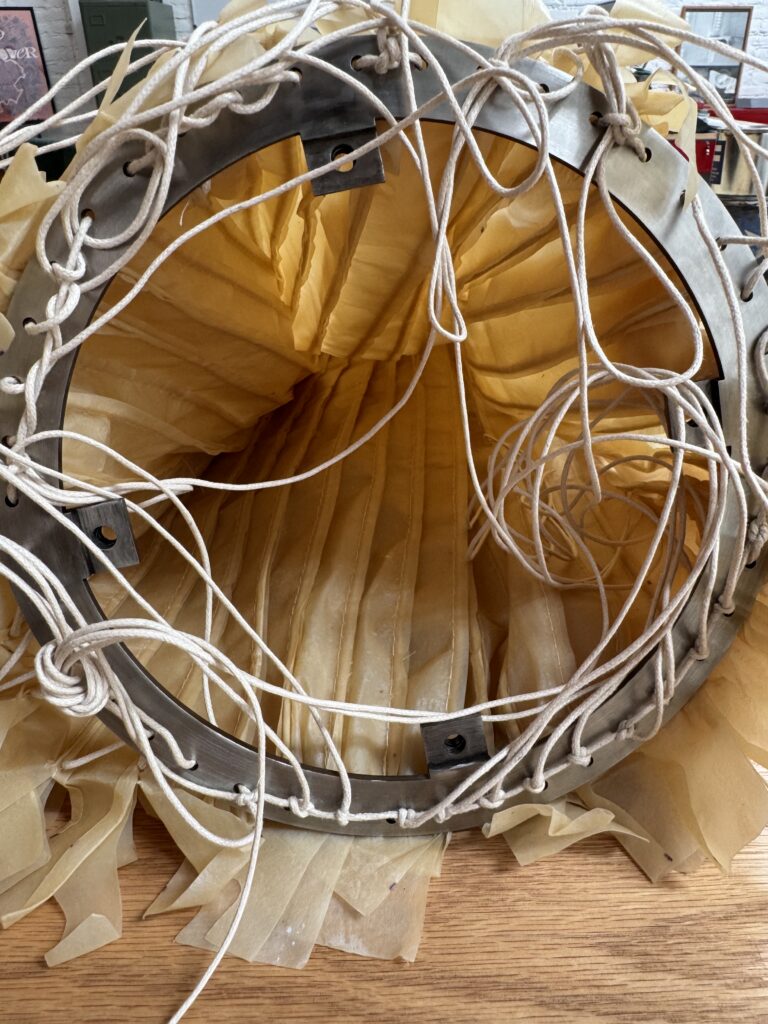
Interior view of a Polybion and Natural Urbano lamp structure with a circular metal frame, beige pleated bacterial cellulose Celium material, and intertwining ropes, resting on a wooden surface.
Image: Polybion and Natural Urbano


“Design innovation often comes from listening, adapting and co-creating with matter itself,” says a release about the creation of the lamps. “Designers approached the material not as a substitute but as a creative platform.”


Each lamp is made to order from Natural Urbano in Mexico; Polybion is based in Mexico and Spain.
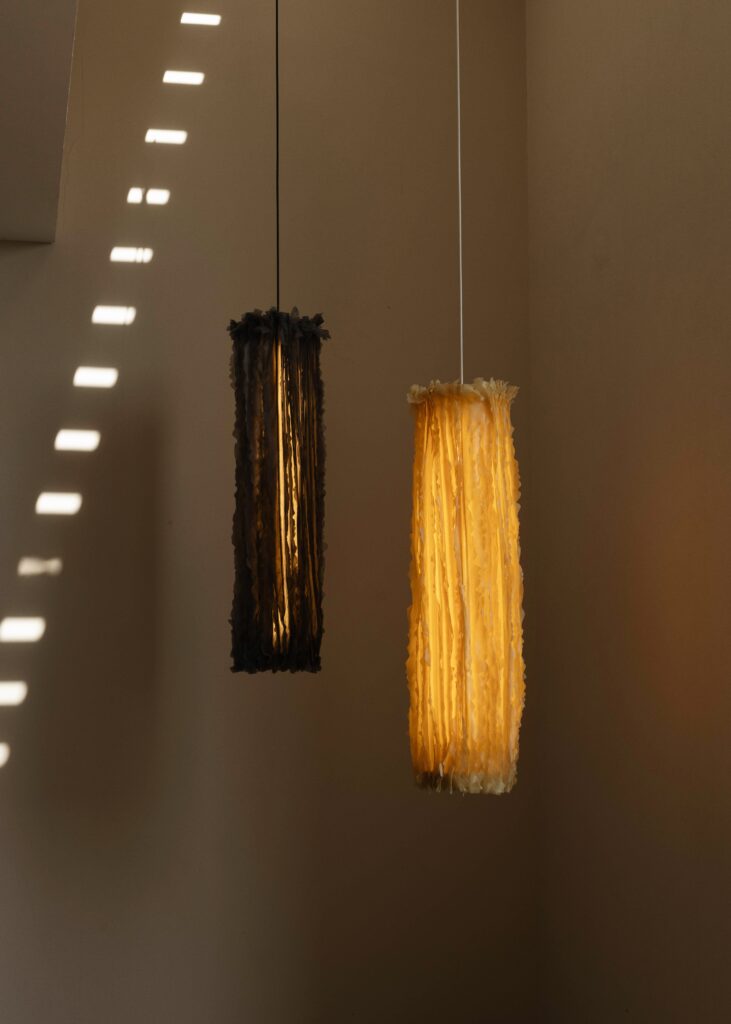
Two textured pendant lamps hang from the ceiling, one in dark grey and the other in warm yellow, casting soft shadows on the wall.
Raw bacterial cellulose becomes Polybion™ fabrics. Here, a translucent version of the company’s Celium™ is used in designer lamps created by Natural Urbano. The light version is in the material’s natural honey color, and the darker version, called Humo (Smoke), is dyed but still retains its grain. Images: Polybion and Natural Urbano/Verónica Sojo

See Specialty Fabrics Review‘s Swatches section every month for short stories covering news, ingenious projects and research.

Share this Story