 TEXTILES.ORG




Awnings serve both functional and aesthetic purposes, providing shade, weather protection and a highly visible branding opportunity. To maximize durability and visual impact, the awning industry relies on several proven graphic application methods and a range of specialized fabrics. Understanding how different graphics interact with various fabric types is essential for producing long-lasting, professional results.
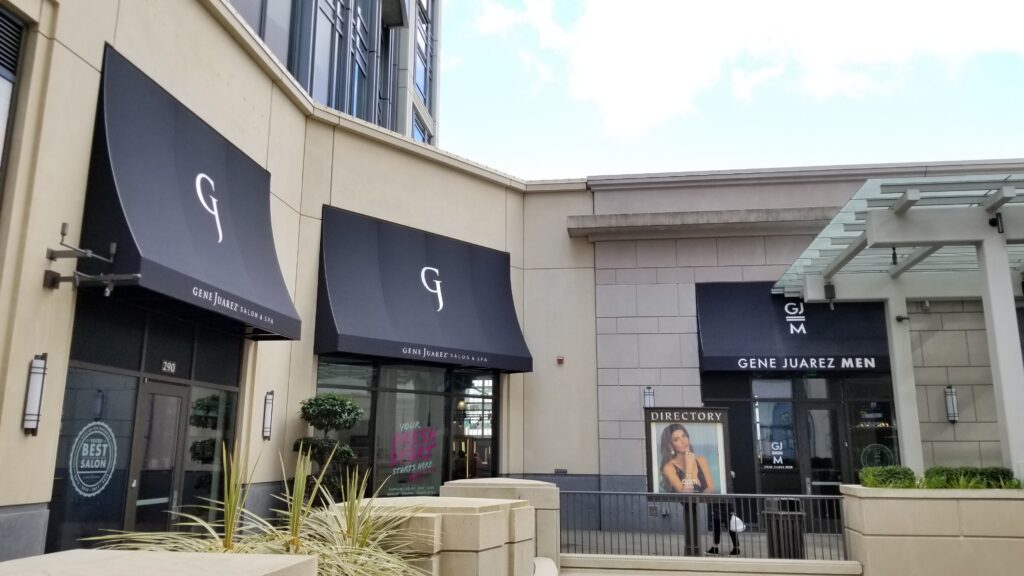
Paint applications on awning fabrics
Paint has long been used for applying graphics to awnings, particularly for custom lettering, logos and decorative striping. Traditional sign enamels and modern water-based or acrylic paints are commonly applied using brushes, rollers or spray techniques. Paint is most compatible with woven acrylic fabrics, as the porous surface allows proper adhesion and flexibility. When correctly, primed, applied and cured, painted graphics can offer excellent color vibrancy and a hand-crafted appearance.
However, paint applications require skilled labor and careful surface preparation. Improper paint selection or application can lead to cracking, fading or peeling over time, especially in harsh outdoor conditions. While paint remains popular for custom or artistic projects, many modern awning manufacturers have shifted toward film-based solutions for efficiency and consistency.
Heat-transferred vinyl on acrylic fabrics
Heat-transferred vinyl is widely used for applying graphics to acrylic awning fabrics. This process involves cutting designs from specially formulated vinyl and bonding them to the fabric using heat and vacuum or pressure. HTV is engineered to flex with the fabric, maintaining adhesion during normal expansion, contraction and movement.
Acrylic fabrics are well-suited for heat transfer due to their heat resistance and dimensional stability. When applied correctly, heat-transferred graphics offer sharp edges, consistent color and excellent durability. A UV laminate can be added in some instances to extend the life of a printed image on heat transferred vinyl. This method is commonly used for logos, lettering and multi-color designs that require precision and repeatability.
Care must be taken to use vinyl specifically designed for awning or marine applications. Inexpensive, lower quality vinyl may fail prematurely when exposed to UV radiation, moisture and temperature extremes.
Pressure-sensitive vinyl film on vinyl fabrics
Pressure-sensitive vinyl films are most often used on vinyl-coated awning fabrics, such as PVC-based materials. These films feature an adhesive backing that bonds to the smooth, non-porous surface of vinyl when pressure is applied. This method allows for fast production, easy repositioning during installation and compatibility with digitally printed graphics.
Vinyl film applications are ideal for large-scale branding, photographic images and gradient designs. High-quality outdoor films are UV-stable and formulated to resist shrinkage, cracking and adhesive failure. Because vinyl fabrics do not breathe like woven acrylics, pressure-sensitive films adhere reliably but some textured vinyl fabrics require heat and special techniques for proper graphic adhesion.
Surface cleaning is critical before application, as contaminants can compromise adhesion. Environmental conditions such as temperature and humidity also play a role in ensuring proper bonding and long-term performance. Review the warranty and application information from the film manufacturer to confirm it’s compatible with the fabric it will be applied to.
Graphic eradication for backlit awnings
Graphic eradication is a specialized technique used on backlit awnings to create white, illuminated graphics on a solid-colored background. The process involves using a chemical solution to remove the colored top layer of the vinyl, exposing the white, translucent substrate beneath.
The eradication process is technical and requires proper training in handling of the fabric, preparation, and use of chemicals and solvents. If unsure, network or partner with fellow Professional Awning Manufacturers Association members on best practices or subcontract the eradication portion to a qualified shop.
Common fabric types used in the awning industry
The awning industry uses a broad category of fabrics including but not limited to woven acrylics and vinyl-coated fabrics. Woven acrylic fabrics are valued for their breathability, colorfastness and upscale appearance. They perform well in high-sun environments and are commonly used for storefronts, patios and residential awnings.
Vinyl-coated fabrics offer superior waterproofing, strength and ease of maintenance. These materials are often selected for commercial applications, canopies and environments requiring frequent cleaning.
Conclusion
Selecting the right combination of fabric and graphic application method is critical to the performance and longevity of an awning. Paint, heat-transferred vinyl and pressure-sensitive vinyl each offer distinct advantages depending on the fabric type and design requirements. By understanding these materials and processes, awning professionals can deliver visually striking products that withstand years of outdoor exposure.
Chris Smith is vice president of dealer relations at Templar Screens, a member of the Professional Awning Manufacturers Association. PAMA is a member group of the Advanced Textiles Association.