 TEXTILES.ORG





At a distance, the gold-on-red silk tapestry and upholstered pieces stand out with their striking designs. It’s up close where the viewer comprehends the message in the decoration.
As a part of Milan Design Week in late April, Italian fine textile and furniture maker Rubelli presented “Ai Weiwei: About Silk” at its showroom in the city.

The artwork is a silk lampas weaving of artist and human rights activist Weiwei’s 2015 graphic wallpaper The Animal That Looks Like a Llama but Is Actually an Alpaca. The piece is a statement about social control by those in power and his imprisonment.
Motifs included in the piece include surveillance cameras, chains, handcuffs, the Twitter bird icon and the llama/alpaca, which has come to represent the fight against internet censorship in China.
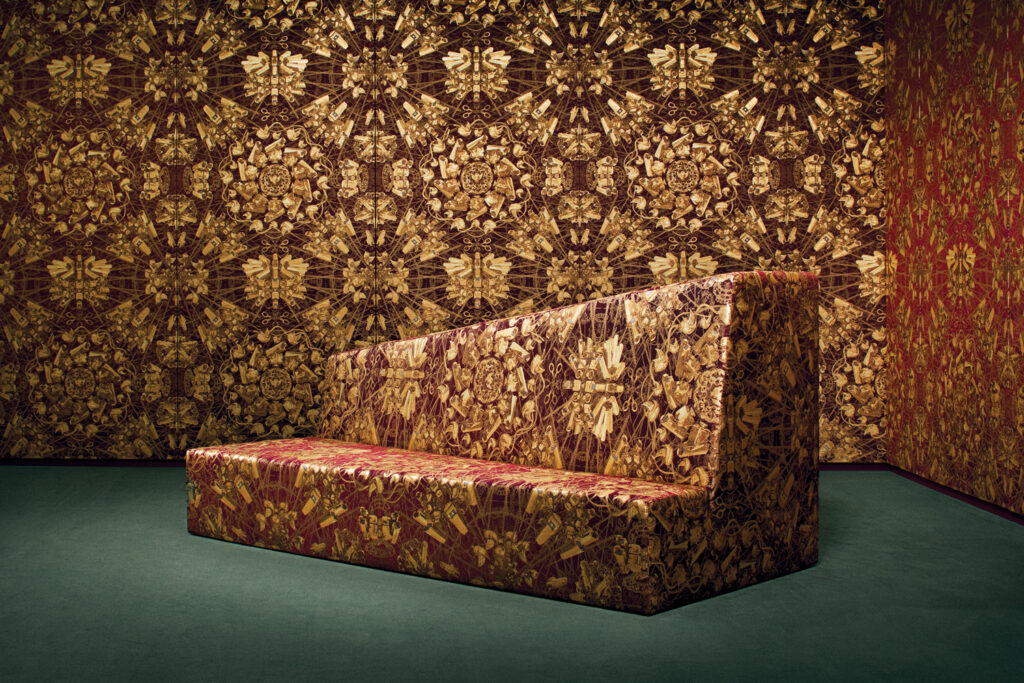
The textile translation of the work occurred in stages: the study of materials, weaves and colors, followed by loom weaving and refinement. The textile structure was engineered to re-create as much detail as possible.
The warp of this fabric consists of 9,600 silk threads equally divided between deep red and golden yellow. The red threads, interlacing with a black silk weft, create the background and define the decorative elements. The yellow threads bind with metallic wefts to provide brilliance and shading.
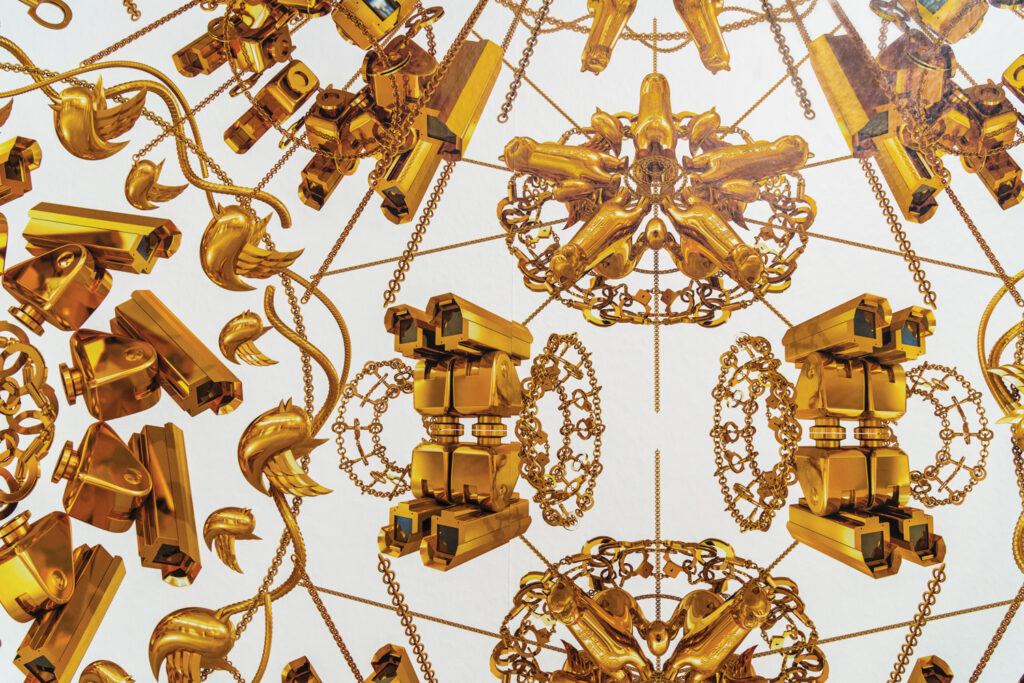
Five different wefts (130 per centimeter, or 330 per inch) are included: the black silk, a shiny gray yarn and three different shades of gold, calibrated to create a sculptural three-dimensionality. The gray yarn was crucial in simulating the glass surface of the surveillance cameras.
At the center of the “About Silk” exhibit space sat a sofa upholstered in the same fabric. Designed by Weiwei, its converging lines and inclined planes create an illusion of being longer than it actually is.

The exhibit also included a woven re-creation of his work The Finger, created in reversible silk and linen. Archival cases highlighted how Asian aesthetics have influenced Western taste over the centuries and showcased Venetian silk from the late 15th to the 18th century.
“About Silk” is part of a larger presence by Weiwei in Italy for 2026, which includes a major solo exhibition titled “Aftershock” in L’Aquila, focusing on natural disasters and political tragedies. That is on display until Sept. 6.
Rubelli, in business since 1781, manufactures textiles for indoor and outdoor applications, wallcoverings and furniture and supports textile artists.
See Specialty Fabrics Review‘s Swatches section every month for short stories covering news, ingenious projects and research.