 TEXTILES.ORG




Manufacturers are always competing for skilled operators, production leaders and capable managers. One highly trained workforce to enlist is transitioning military veterans.
Business leaders can successfully recruit and retain this demographic by promoting their company’s mission, culture and advancement opportunities to candidates. The civilian workforce differs in workplace style from the military, but that can be overcome with a little proactive understanding. Veterans on staff can help, both before and after a transitioning service member is hired.
Differences in workplace mindset
Veterans often arrive to their first post-service jobs with operational discipline and technical fluency, although they may struggle to translate their military work to the typical “soft skills” vocabulary on a résumé. They are problem-solvers and doers, experienced working on teams to accomplish goals and accountable to high standards in the military — skills that translate to the workforce.
But civilian workplaces function differently than the military environments they’ve left. Marine veteran Staff Sergeant Joseph Lorelli explains that certain nuances of corporate workplaces versus military life were something he had to learn to navigate.
He recalls that in the Marines, authority and direction were rarely ambiguous. “If somebody signs a piece of paper and they have the authority to say, ‘Do this,’ you do it.” In corporate settings, however, contradictory communication, such as emails differing from previous directives or different people, can create gray areas or confusion. In the corporate world, inaction may actually be a decision but may feel inefficient to someone trained in decisive environments.
Forward-looking companies can prepare both managers and new hires by coaching with direct, constructive feedback, having clear reporting structures and establishing regular performance check-ins.
“Once I showed a company I could figure out how to get things done, that I was open to their input and ideas on how I should do things, they liked working with me and we got things moving,” says Lorelli.
Lorelli started his military career as an Aircraft Electrical Systems Technician and later changed roles to Contingency Contract Specialist, where he established and managed contracts between the government and private companies. His first job out of the military was with National Industries for the Blind, a significant employer of veterans. He also brings a systems-thinking approach to his work.
“If I can make something simpler by just making things function better, then I will do that,” he says.
He adds he was particularly motivated by his Marine Corps mentors, and now he strives to be that effective leader, no matter what his work.
“If I have a team, I can say, ‘I like what we’re doing, but what can we do better? What are your personal goals? Where are you trying to get to?’ I’ve had a couple of good mentors in the Marines who really shaped me,” he says. “I learned how to use my influence to make programs and projects better. Just because something’s not broken, doesn’t
mean you can’t do it better.”
Ready leaders who want to advance
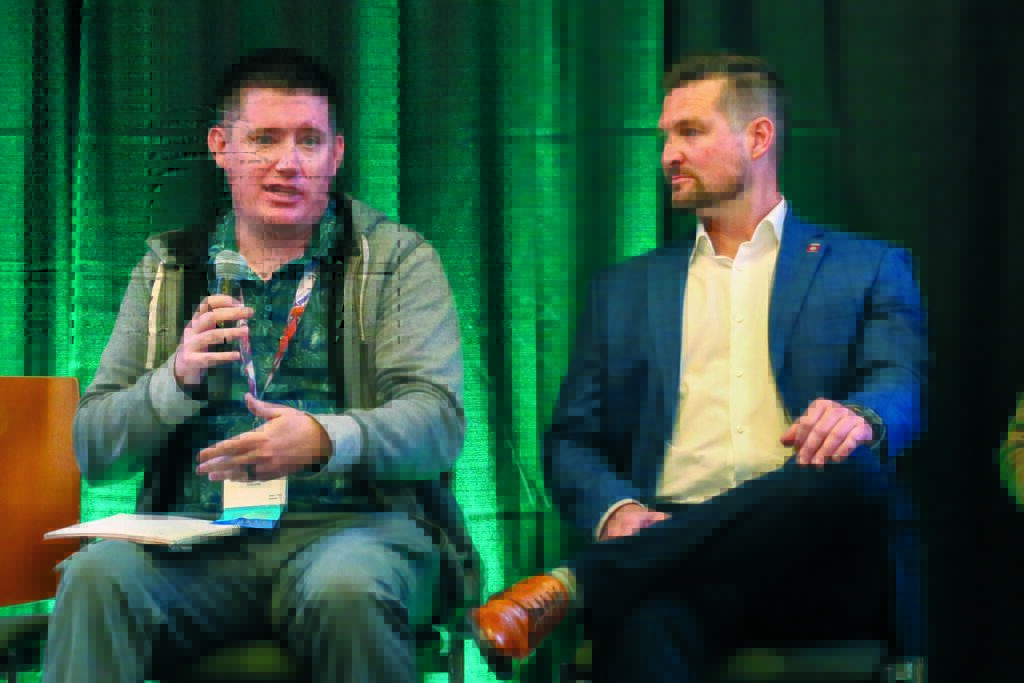
Lorelli says that the leadership and team-building skills he learned in the Marines served him well in civilian positions. Kurt Schimmel, director of operations for Autometrix Precision Cutting Systems Inc., headquartered in Grass Valley, Calif., agrees. “You see what it looks like to be on a world-class team, and it’s something you can take with you later in life.”
Upon graduating from a college ROTC program, Schimmel joined the Army as a second lieutenant. “I went to airborne school, which is just learning to jump out of a perfectly good airplane,” he says.
He toured Afghanistan as an executive logistics adviser to the Afghan military and police with a smaller team unit. He met with local Afghan leaders and helped them build logistics capabilities and gather the supplies they needed to fight the war. “This was an amazing, formative experience,” Schimmel says.
After leaving the Army, Schimmel gained additional experience in logistics, supply chain and manufacturing work. Later, he found a position at Autometrix through word of mouth when an architect friend of his was working on the company’s building.
“I told him I was seeking a leadership position with a growing, ambitious company and a great culture. It turned out to be a great fit,” he says.
Career trajectory is important for retention. Companies that wish to retain veterans should clarify advancement criteria and offer leadership development tracks. Motivated by growth and responsibility, many veterans engage more deeply when progression is visible.
“The military isn’t too different from any other high-performing organization,” Schimmel says. “It’s a group of people getting together to train and refine their craft and overcome difficult challenges. And that’s what any high-performing business sets out to do.
“Make sure your culture is always giving the hand up, is working to pull people up and developing them. It’s not an easy thing to do all the time, but it pays dividends when you do it right,” he adds.
Connecting with vets
Companies wishing to tap into this demographic need a proactive approach to formal and informal networking, since exiting service members start planning their transitions early.
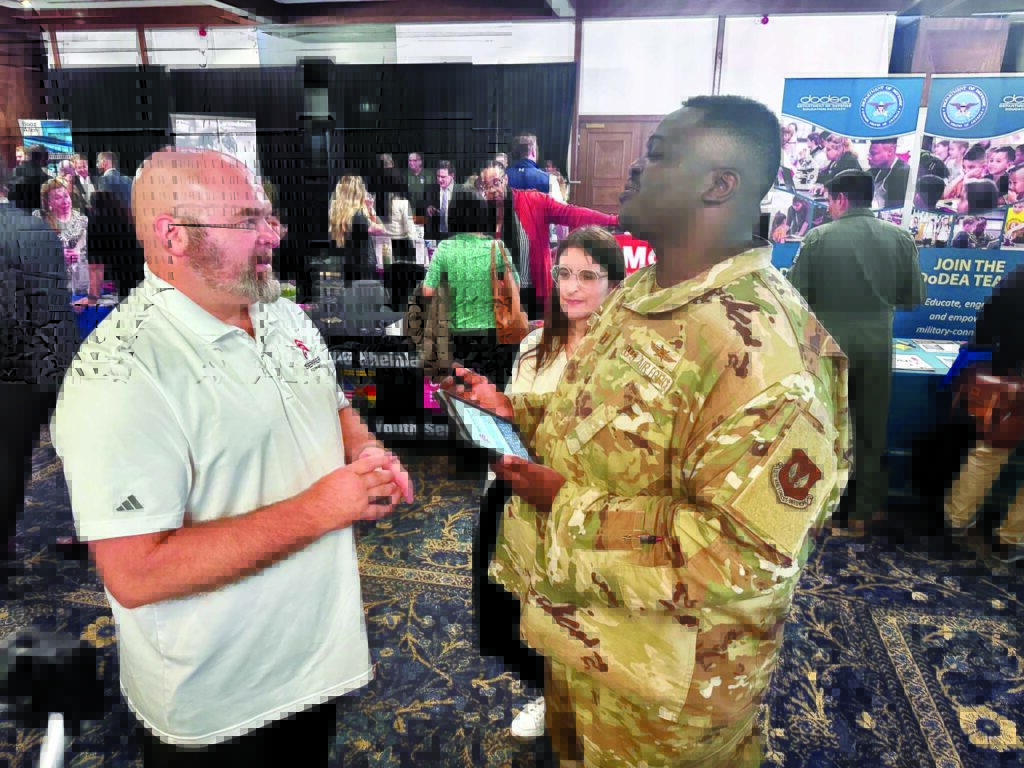
Steve Janke, a Marine veteran and president/founder of Semper Forward in Green Bay, Wis. (now a division of Fastport Inc., in Boston, Mass.), advises that companies should connect with vets in meaningful ways. In addition to job opportunities for the veteran, his organization sends community and relocation resources as well as employment information related to the service member’s spouse and daycare or school district information if they have a family. Engaged, authentic communication has to be more than standing in front of someone at a hiring event saying, “‘We’d love for you to come work for us,’” he says.
“You can do things virtually, but the talent you want is not just going to show up at your door,” Janke says. “It’s a lot like college recruiting. [Service members are] thinking about it way ahead of time.”
Janke joined the Marines in 1996 and spent four years stationed in Kaneohe Bay, Hawaii, working in Field Artillery Fire Direction Control. After his service, he began working for Daniel Zimmerman, the 10th Secretary of the Wisconsin Department of Veteran Affairs.
Zimmerman informed Janke that Wisconsin’s aging population faced a demographic cliff. “He sent me to a meeting about talent attraction, and I did something I learned never to do in the Marine Corps: I sat at that meeting, and I volunteered,” says Janke.
He was put in charge of building out the military and veteran talent piece, where he recruited from the military community, helping transitioning service members find careers with Wisconsin employers.
In 2020, Janke started Mission Wisconsin, which carries on the work he began with the state. He says the program still exists under Semper Forward. (For additional ways to connect with exiting service members, see the sidebar on page 64.)
Companies’ veterans on staff can also assist in recruitment. They can talk to potential candidates ahead of their interviews to answer questions. “Tell them your story, talk about your defense contractors,” Janke says. “Help them understand how your story ties into their future, their career, their family. Talk about why it matters to them.”
In-house veterans can also serve as support after hiring a new candidate, through mentorships or even through employee resource groups.
Lorelli says he stays in touch with the Marines he served with. He says that many veterans, especially those who have worked on the ground together, build bonds that easily last the rest of their lives. After their service has ended, many veterans continue to seek purpose and connection in their new careers.
If companies can offer concrete evidence of community and a shared mission, both sides are more likely to find successful pairings.
Military experience lends strategic textile insights
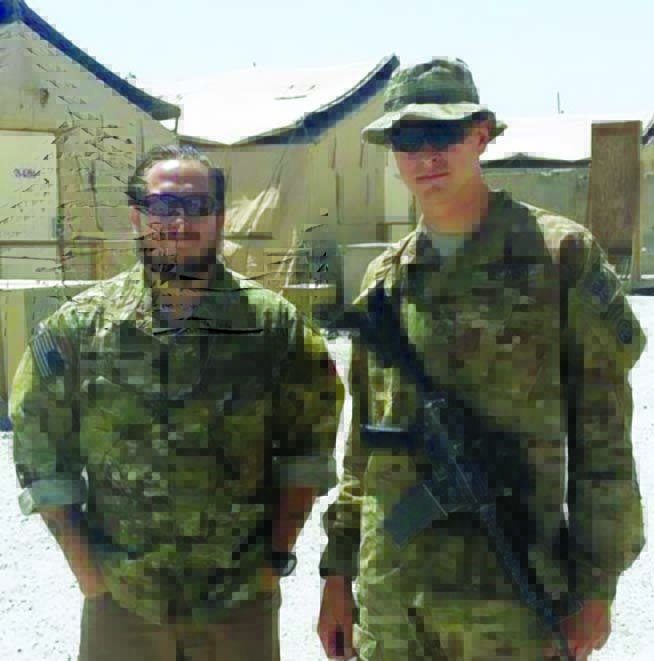
Some former service members harness their leadership ability — and firsthand product knowledge — to launch a business venture.
Spiritus Systems president and CEO Zane Vogel launched the Aberdeen, N.C.-based tactical gear and equipment company with his friend and co-founder Adam Holroyd and his wife, Nichole Holroyd, when the men were deployed in Afghanistan. “In between missions, when I had power and the internet, I began building the website and getting our first products and branding out,” Vogel says.
In 2016, Vogel left the military and began making inroads in the textile industry.
“The textile world was so foreign,” he says. “But we really believed the best way we could serve our customers was to have as much control over the product as possible, which meant not only designing but doing the manufacturing ourselves.”
Vogel says they founded the business on all those things that make the military “work”: clear standards, direct communication, accountability and shared ownership of outcomes.
Spiritus Systems’ location near Fort Bragg in North Carolina means a large number of veterans work at the company, in addition to employees who serve in the Reserves and National Guard.
Every day, veterans help inform design and output and lend their insights into government contracts, how gear is used and ideas for improvement.
“Many of [our employees] come to us already familiar with the brand; maybe they’ve used the equipment. It’s a big deal to them, and it’s a big deal to us,” says Vogel. “The military kind of prepares people to be fantastic employees. They translate extremely well to this manufacturing and operational environment we have.”
Sara Scullin is a freelance writer and editor based in Wisconsin.
SIDEBAR: Recognition for companies that hire veterans
The HIRE Vets Medallion Award Program is a federal award program that recognizes employers who recruit, hire and retain veterans.
Awards are based on the percentage of veterans employed by a company and retention rates; leadership training opportunities; veteran hiring initiatives and employee support programs; and pay equity, promotion and advancement outcomes.
Advanced Textiles Association member SourceAmerica® announced at the end of 2025 that it received the gold HIRE Vets Medallion Award from the U.S. Department of Labor.
SourceAmerica is a national nonprofit that administers the AbilityOne Program, which creates employment opportunities for people with disabilities, including veterans, through federal product and service contracts.
Applications for the HIRE Vets program are open by Jan. 31 of a given year and close April 30. They are broken into three categories based on number of employees at a company.
The program was established under the Honoring Investments in Recruiting and Employing American Military Veterans Act
of 2017 (HIRE Vets Act).
SIDEBAR: Resources that help connect jobs and vets
The following organizations help veterans and their spouses transition to the civilian workforce. The process to hire a veteran often begins a year or more ahead of when a service member will complete their time in the service. Companies should reach out early to get their message out and develop a strong candidate pool.
• Department of Defense SkillBridge Program: This federal program helps service members gain civilian work experience through specific industry training, apprenticeships or internships during the last 180 days of service. Organizations looking to hire can work with installation support offices to advertise opportunities, access informational webinars and reach out on the site’s Contact Us page, skillbridge.osd.mil/contacts.htm. Spring enrollment for companies is Feb. 1–April 1; fall enrollment is Oct. 1–Dec. 1.
• Military OneSource (militaryonesource.mil): Connect with the Transition Assistance Program on a local base, CareerOneStop and American Job Centers. The Spouse Education and Career Opportunities program has free services connecting military spouses with education and career opportunities as well as job-related training resources.
• Semper Forward (semperforward.com): The company acts as a liaison between businesses and the military community, matching candidates to open positions. Companies receive qualified leads following Semper Forward’s virtual and in-person events. Jobs are also posted on the Semper Forward job board.
• U.S. Chamber of Commerce Foundation, Hiring Our Heroes (uschamberfoundation.org/workforce): The program hosts in-person and virtual hiring fairs and webinars to connect veterans with companies.
• Local County Veterans Services Offices (CVSO): Many CVSOs (including those in tribal nations) provide essential assistance to veterans, their dependents and their survivors in accessing federal, state and local benefits. This includes assistance with pensions, education benefits and loans as well as retrieving military service records. Links to state or county VSOs are listed
on the National Veterans Foundation website at nvf.org/veteran-service-officers.
Is the military one of your major markets? Or do you want to get started in the military market? Check out our special digital edition of Specialty Fabrics Review focused on this market!
You can also stay on top of news in your market areas with the Advanced Textiles Association publications that you receive with your association membership.