 TEXTILES.ORG





As thermal control becomes an increasingly important area of innovation in technical textiles, manufacturers are developing solutions tailored to specific applications. In Japan, companies are applying advances in fibers, polymers and specialty materials to develop products addressing challenges that range from cooling large gathering and storage spaces to helping people stay warm without overheating in performance apparel.
These advances come as Japan seeks to strengthen the global competitiveness of its textile industry. Through initiatives such as the Japanese Audit Standard for Textile Industry (JASTI) Sustainable Textile Initiative — a standard developed to address growing global expectations around sustainability and human rights — the government is promoting more responsible business practices across the industry.
Keeping cool in hotter climates
Record-breaking heat waves around the world are creating new challenges for staying cool while limiting energy use — and reinforcing the role textile technologies can play in managing heat. Among these technologies is REI KEEP, using SPACECOOL® technology.
Manufactured by Kanbo Pras Corp., headquartered in Osaka, Japan, REI KEEP is a new membrane material infused with SPACECOOL, a multilayer optical film that combines heat-shielding and radiative cooling technologies to reduce surface temperatures without energy consumption.
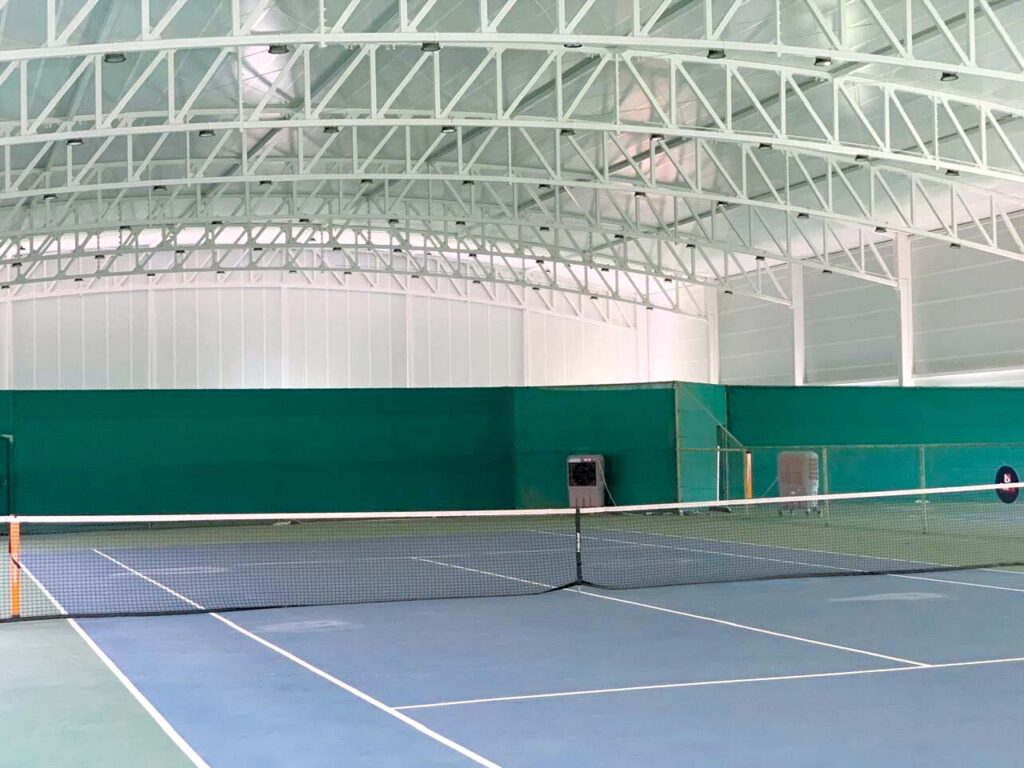
Reflecting solar heat while radiating accumulated heat outward enables SPACECOOL to keep the space beneath tensile structures cooler — a capability that could reshape their performance in warm climates.
Kanbo Pras developed REI KEEP over six years, with specific end-use applications for its membranes in mind, including industrial tents, construction materials and truck hoods.
The performance is worth the wait, says Kiyoto Matsuda, deputy manager of sales, who noted two critical challenges the team overcame: meeting Japan’s stringent building codes and flammability standards and perfecting the heat-welding process used to join REI KEEP membranes.
In comparison testing, a drop of approximately 10 degrees Celsius was confirmed in the effective temperature when comparing REI KEEP tents and tents using materials from other companies. SPACECOOL also is expected to maintain its radiative cooling effect for 10–15 years.
As Kanbo Pras works to develop a finished product made with REI KEEP, the membrane currently is available as a polyester or glass fiber base that can be sewn or processed into various shapes.

Natsuko Matsumoto, head of international business development, envisions future use to span buildings, rooftops, and outdoor equipment such as electrical panels, air conditioners and telecommunication devices, as it can reduce the risk of an equipment failure caused by heat.
From policy to performance
The Japanese government currently is aiming to reduce the country’s greenhouse gas emissions by 46% by 2030, compared to 2013 levels, as part of its Green Growth Strategy Through Achieving Carbon Neutrality in 2050. This strategy includes incentives for companies that adopt eco-friendly materials and energy-efficient processes.
At the same time, Matsumoto notes, the government is directing companies to implement more heat-shielding measures to keep employees safe as temperatures continue to rise.

These initiatives underscore the growing importance of materials that can help manage heat more effectively — demand that extends far beyond Japan.
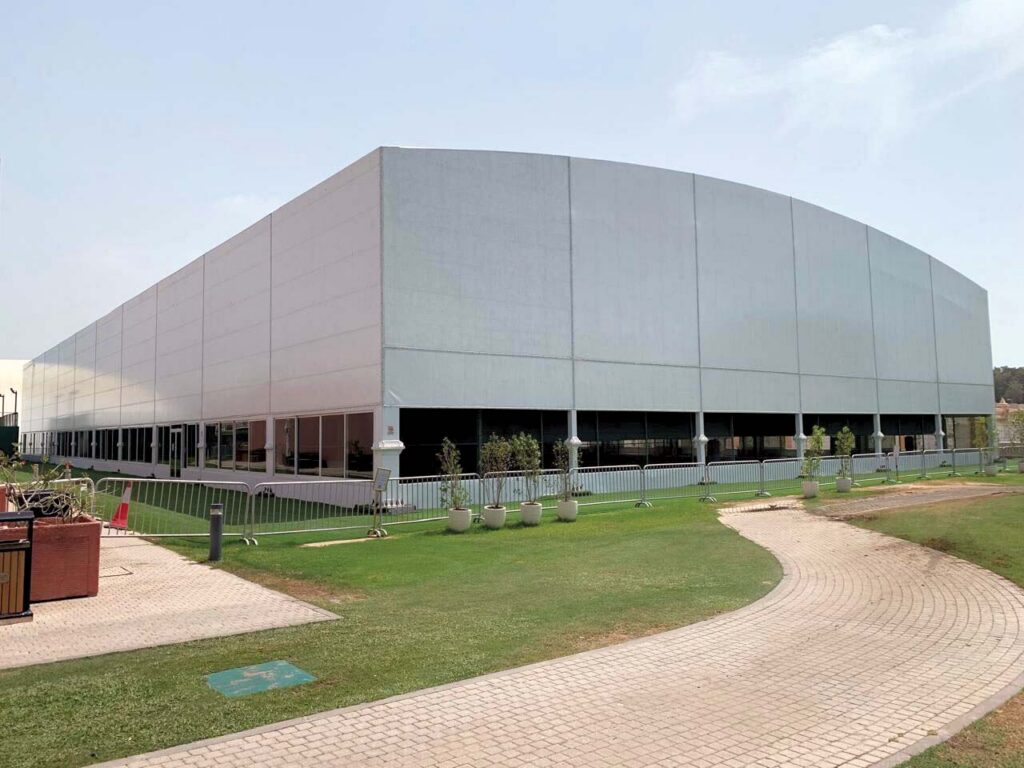
Matsumoto points to one of the first and largest REI KEEP applications as an example: the 2025 construction of an indoor tennis court tent at the Emirates Palace Mandarin hotel in Abu Dhabi, where professional athletes often train.
REI KEEP is installed on the roof of a tent covering the court, which spans roughly 3,200 square meters (34,440 square feet). This reduces the burden on air conditioning and helps provide a comfortable environment for athletes and staff amid Middle East heat waves. It also addresses the key goals SPACECOOL was designed to achieve: stability and efficiency for businesses, the reduction of planet-warming emissions, and comfort and safety for people.
Evolving beyond warmth
Natural down has traditionally been the insulation of choice, but the Staple Fiber Materials Department at Osaka-based TA FRONTIER Co. Ltd., previously known as Teijin Frontier Ltd., recently launched OCTAIR™, a new type of synthetic down, to address long-term challenges surrounding the global down market, says Takashi Owada, staple fiber material specialist at TA FRONTIER.
“OCTAIR represents the future because it aligns with one of the most important shifts happening in the insulation market today: the rapid growth of active insulation. Consumers are increasingly looking for versatile garments that can perform across a wide range of conditions, from everyday urban use to outdoor activities,” Owada says. “As a result, the market is moving beyond simply providing warmth. Breathability, moisture management, lightweight comfort, packability and freedom of movement have become just as important as thermal performance. Active insulation has emerged to address these evolving needs, and it is one of the fastest-growing segments in the performance apparel industry.”
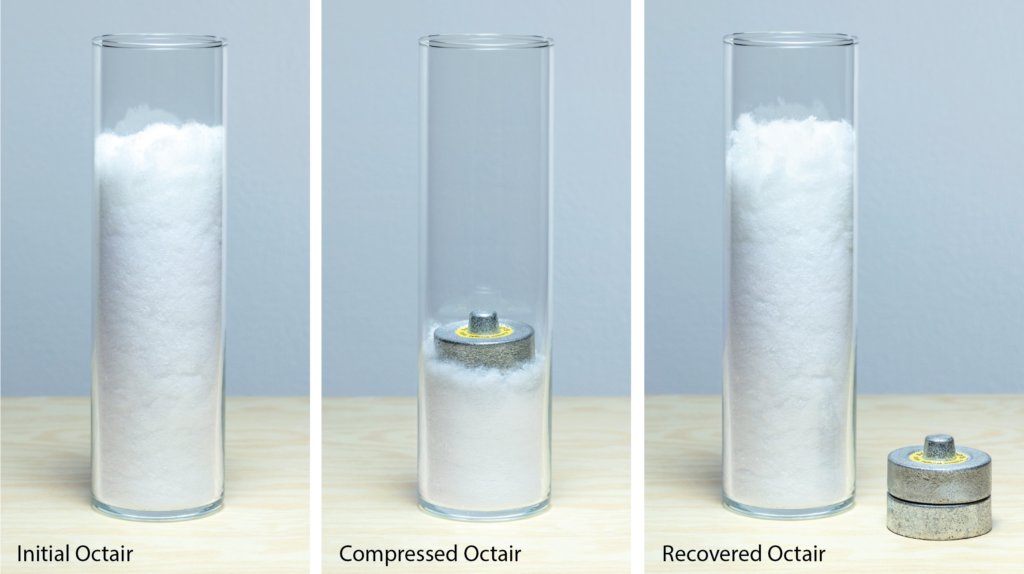
Owada also notes a growing need for insulation solutions that are both high-performing and less dependent on limited natural resources, as both brands and consumers focus more on sustainability, traceability, ease of care and animal welfare considerations regarding natural down.
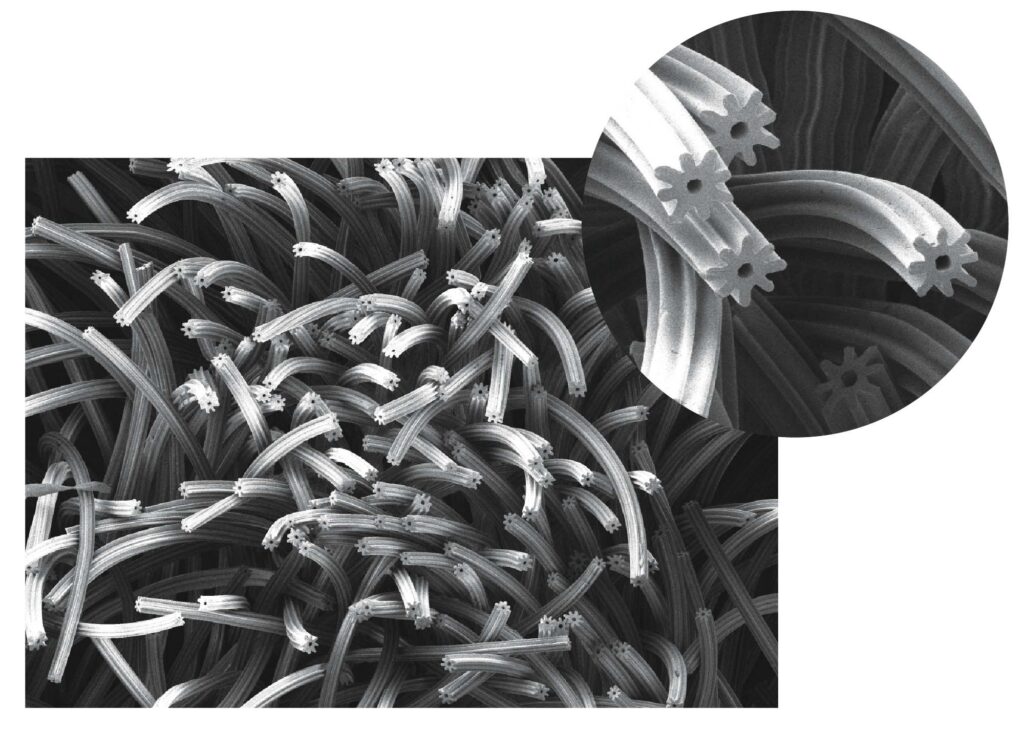
OCTAIR features a unique, hollow, eight-fin fiber structure that creates air pockets. Since trapped air is the most effective insulator, Owada says, the goal was to engineer a fiber structure that could maximize the amount of air held within the insulation.

One of its most distinct benefits is that it can be blown directly into clothing using compressed air, allowing manufacturers to use their existing down-filling equipment. This was one of the biggest challenges during development.
“Extremely lightweight fibers can be difficult to control during manufacturing,” Owada explains. “We had to ensure OCTAIR could open properly, flow smoothly and distribute uniformly through filling equipment that was originally designed for natural down.”
Beyond its technical difficulties, Owada notes another critical challenge: changing people’s perspectives on synthetic insulation, which often is viewed as a lower-cost or “lesser than” alternative.
“OCTAIR was designed as an entirely new category of insulation that combines the best attributes of both natural and synthetic materials,” Owada says. “We see it as a new category that bridges the gap between the two and redefines what modern insulation can be.”
Looking ahead, the team at TA FRONTIER plans to continue to evolve the product’s design and integration with other fiber and insulation technologies. “This flexibility allows us to tailor performance to specific applications and respond to changing market needs,” Owada says. “We believe the future of insulation will be defined not only by how warm a product is but by how well it
adapts to changing lifestyles, performance demands and global environmental challenges.”
Whether textiles keep heat out or hold it in, they continue to play a critical role in helping people adapt to evolving needs and environments.
Holly Eamon is a business writer and editor based in Minneapolis, Minn.
For more information on ATA Japan, see ata-japan.textiles.org.