 TEXTILES.ORG




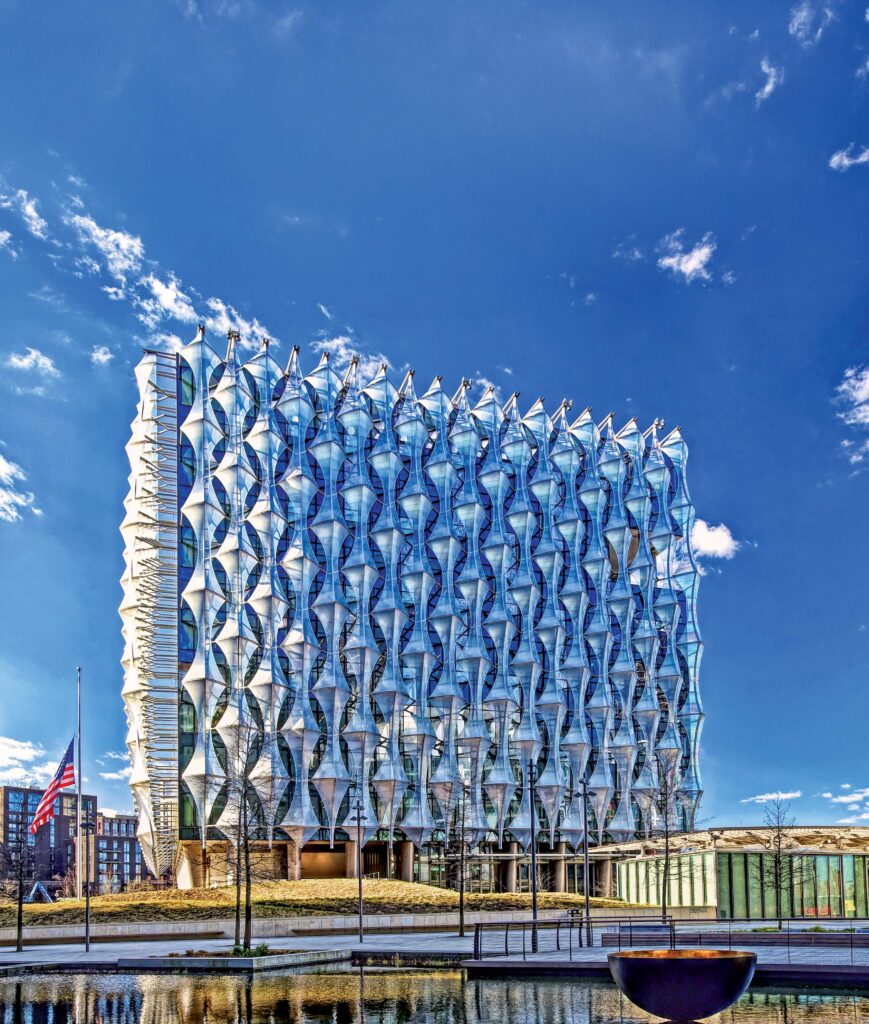
Lightweight, versatile and cost-effective, fabric gives architects and clients options for creating sports facilities, arenas and other large-span spaces.
Industry leaders from Birdair Inc., Air Structures American Technologies Inc. (ASATI), GuildWorks LLC and Seaman Corporation discuss how the fabric structures sector has grown and changed in the decades since their organizations were founded.
Tensile architecture materials
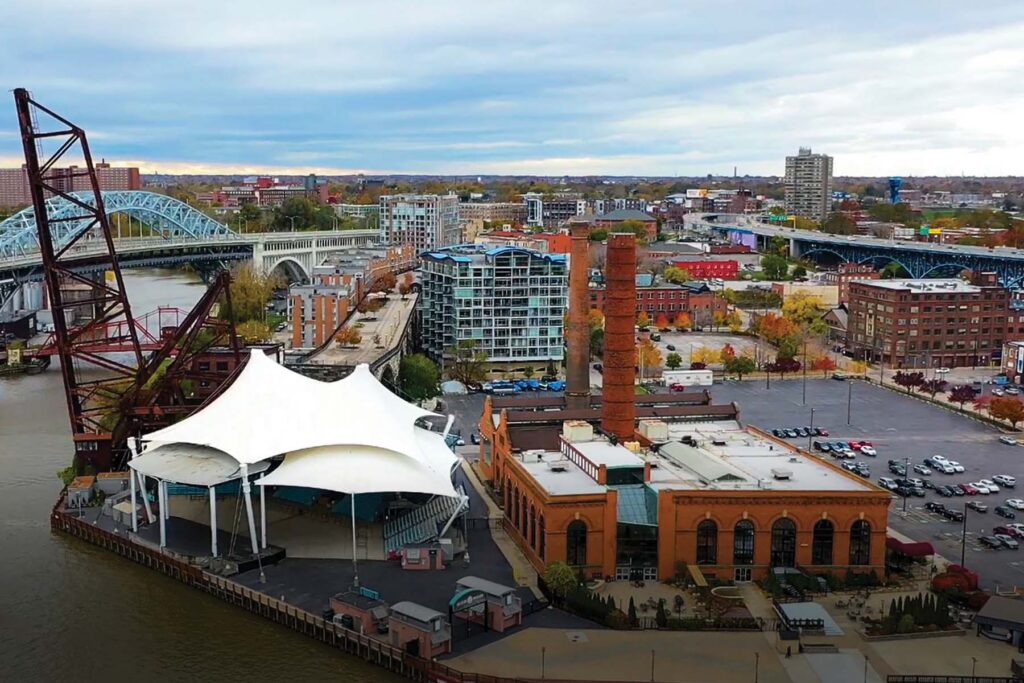
Founded in 1956 and headquartered in Williamsville, N.Y., custom tensile fabric structures contractor Birdair is celebrating its 70th anniversary in 2026 by visiting more than 200 Birdair structures across the U.S. as part of its Architectural Icons Tour.
Michele Roth, Birdair’s business development manager and director of marketing, says that the fabric structures and materials sector has expanded significantly since Birdair’s start.
“Tensile architecture is a highly specialized field,” says Roth. “At the time of Birdair’s founding, the range of available membrane materials was relatively limited. Over the past seven decades, the industry has benefited from a lot of major advancements in different engineered fabrics and coatings and structural analysis and different manufacturing technologies.”
Roth notes that one of the key membranes developed back in the 1960s was polytetrafluoroethylene (PTFE)-coated fiberglass, which Birdair spun off from National Aeronautics and Space Administration spacesuits. Birdair built the world’s first permanent self-supporting tensioned membrane PTFE roofing system in 1973 at the University of La Verne’s Sports Science and Athletics Pavilion in La Verne, Calif.
“We are in the process of replacing La Verne’s roofing system now,” Roth says. “It’s over 50 years old, and that speaks to the durability of the product itself.”
Roth added that over the past 30 years, ethylene tetrafluoroethylene (ETFE) film has expanded what’s possible for architects and engineers.
“It’s a very hot product amongst architects and owners because of the transparency that it gives as an alternative to a glass system,” Roth says. “PTFE-coated fiberglass and ETFE film have allowed designers to create longer spans, more complex geometries and highly efficient building envelopes.”
Overall, the fabric structures market has expanded to include a variety of new materials and applications since Birdair’s inception.
“Fabric structures were once viewed primarily as temporary or specialty solutions,” Roth explains. “But now, they are widely accepted and used as a permanent architectural element for stadiums, airport structures, amphitheater venues and transportation facilities around the world.”
Impacts on fabric structures
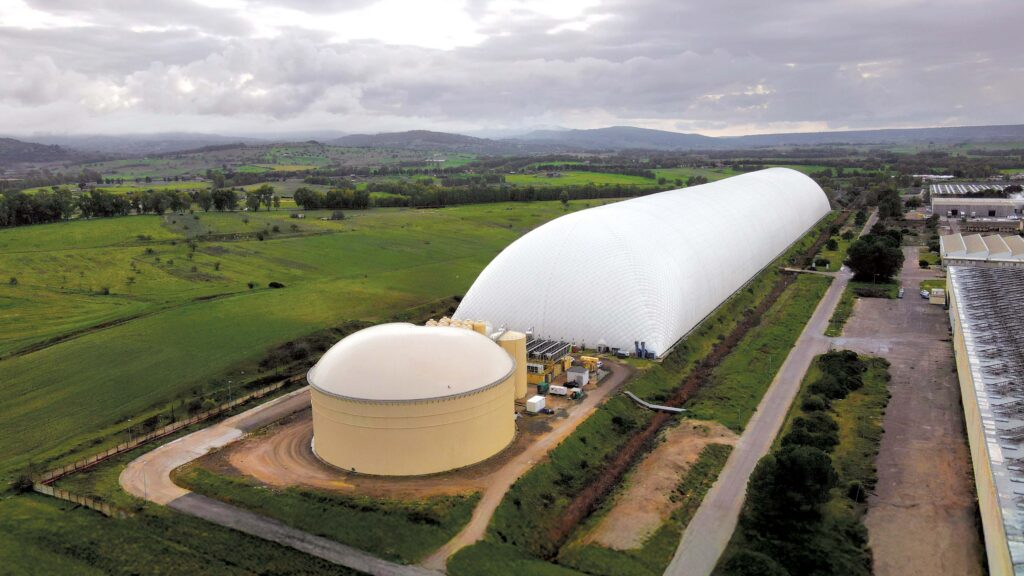
Donato Fraioli, technical sales and product development specialist at ASATI, says that when his grandfather, CEO Donato M. Fraioli, founded ASATI in 1962, nylon-coated fabrics were being used to build fabric structures, while today, polyester-based weaves coated with vinyl and laminated with Tedlar® film are used.
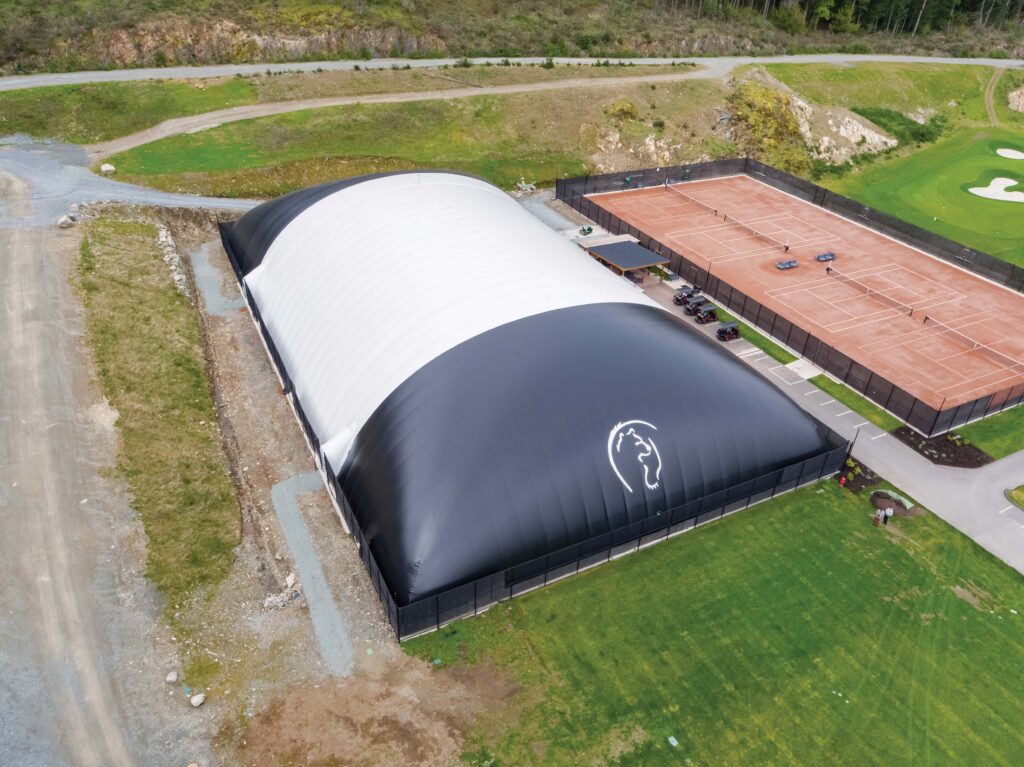
ASATI is an air-supported structure design and engineering company based in Rye Brook, N.Y. The company is credited with being the first to use air structures to cover military radar antennas and, in 1963, being the first to design and erect an air-supported structure over a tennis court. One trend Fraioli has noticed is the demand for covered spaces in the sports market.

“The market for youth sports has exploded,” Fraioli says. “Kids expect to play in climate-controlled spaces that allow for year-round training and safety from the extreme heat and cold. On the construction side, air-supported structures are being held to a much more critical engineering and code standard these days, giving them greater longevity and resilience to extreme storms. As a result, a lot of the seasonality of the sports industry has been removed.”
For ASATI, the ability to create alternative fabric structures such as its product line of air beam structures, launched in 2025, is rooted in its research and development efforts.
Vincent Fraioli, innovations research and development specialist, uses a 3D printer to model and prototype the hardware and components that go onto ASATI’s structures.
“With air beam structures, you have fresh air pressurizing and internal fabric space that creates a framework for an internal cavity,” Vincent says. “These structures are built of inflatable arches. This is a key component difference from the traditional air structure, which has an internal pressurized space that allows for large openings without vehicle airlocks. The air beam structures also do not require a concrete foundation, making them highly portable and modular. It offers our client base a versatile option for those looking to rapidly install a structure that can meet, for example, Category 3 hurricane requirements.”
Materials, architectural technology and shade sails
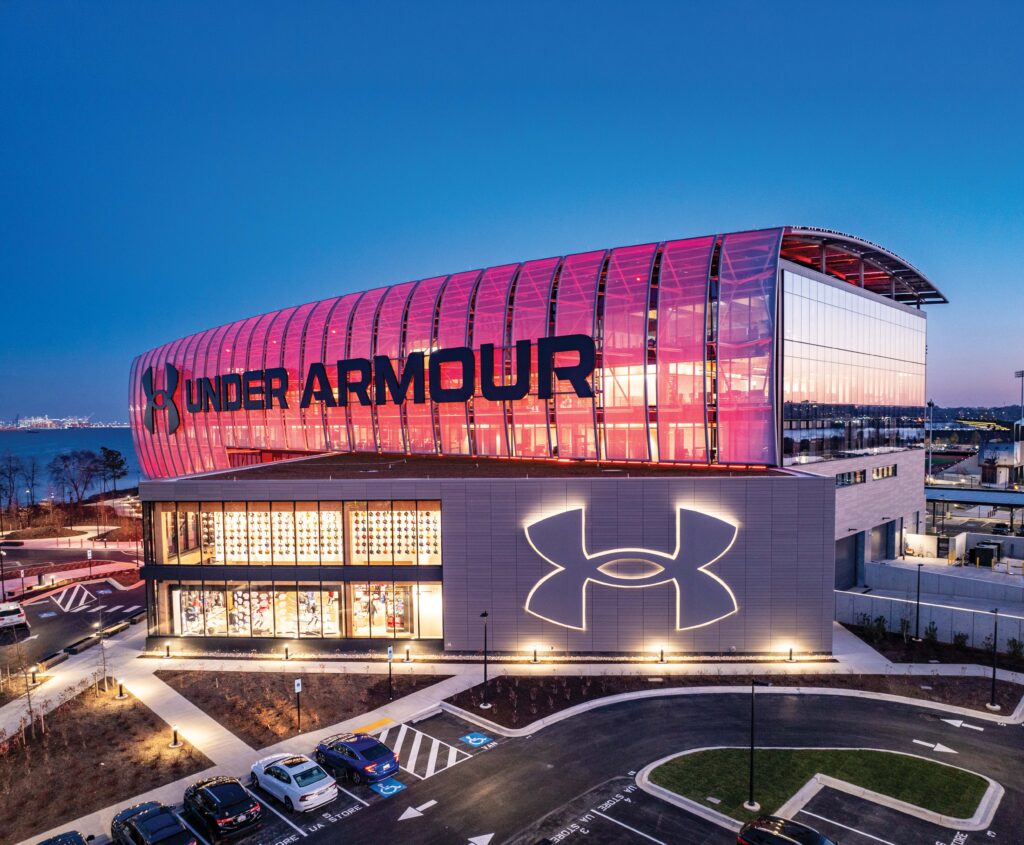
Since 1994, design-build firm GuildWorks, located in Portland, Ore., has been creating bespoke fabric structures and facades for parks, plazas, venues, hospitality and additional spaces.
Mar Ricketts, founder, CEO and senior design principal, notes that since GuildWorks’ founding, the diversity of materials on the market has grown; coatings, longevity and sustainability have increased; and strength has improved.
“We are seeing data for carbon tracking, recyclable fibers and other new sustainable developments in the market,” Ricketts says. “I think there is a lot of new potential coming just around the corner.”
A greater variety of forms and materials is now available in the fabric structures industry and in other advanced building industries.
“Architecture is an interesting technology, and as in many technologies, you think about things coming to the market and taking over the lead in a marketplace in a matter of a decade,” he says. “This is true in autos, healthcare, computers and in programming — even faster. However, in architecture, most homes are still built with balloon framing from a couple of hundred years ago. Architecture technology overall can be 100 years in the making, with newer material advancements.”
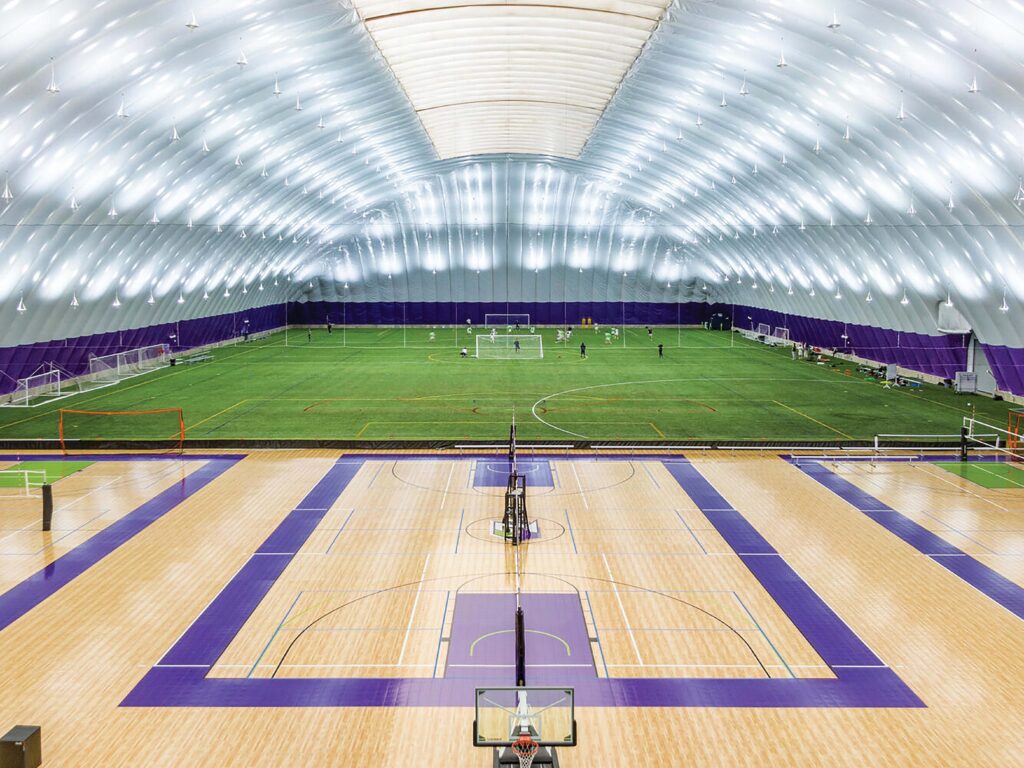
Ricketts says he is amazed at how the desire to create shade has taken off to the point where it is an entire subindustry. “This has always been part of what I focus on but never the majority of it, since we are designing and building architecture, not just shade sails,” Ricketts says. “However, I am surprised at the market that has grown here. I am hopeful this is also happening in fabric structures and lightweight architecture, but it’s just that it is a bit slower. But I am amazed at how many new projects keep popping up.”
Ricketts foresees continued growth in the fabric structures market due to the dramatic temperature swings in the weather combined with people’s drive for outdoor living and experiences.
Fabric buildings become larger
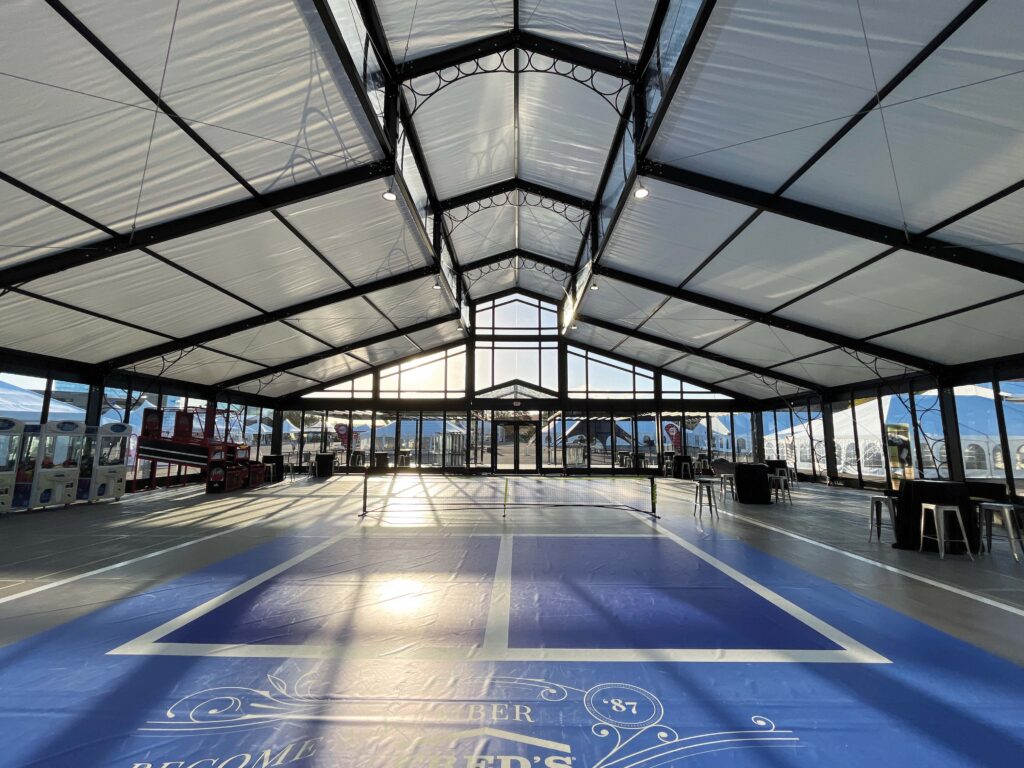
High-performance materials manufacturer Seaman Corp., headquartered in Wooster, Ohio, has been creating industrial and architectural fabrics, geomembranes and commercial roofing since 1949.
Seaman Corp.’s Frank Bradenburg, business director of architectural fabrics, has noticed that fabric buildings have become larger over the years.
“A fabric building used to be constructed of maybe 2,000–4,000 square yards of fabric,” Bradenburg says. “Now it’s not unusual to have customers that are constructing buildings that have 10,000–30,000 square yards of fabric in one building. The scale and size of these buildings continue to expand as we go along.”
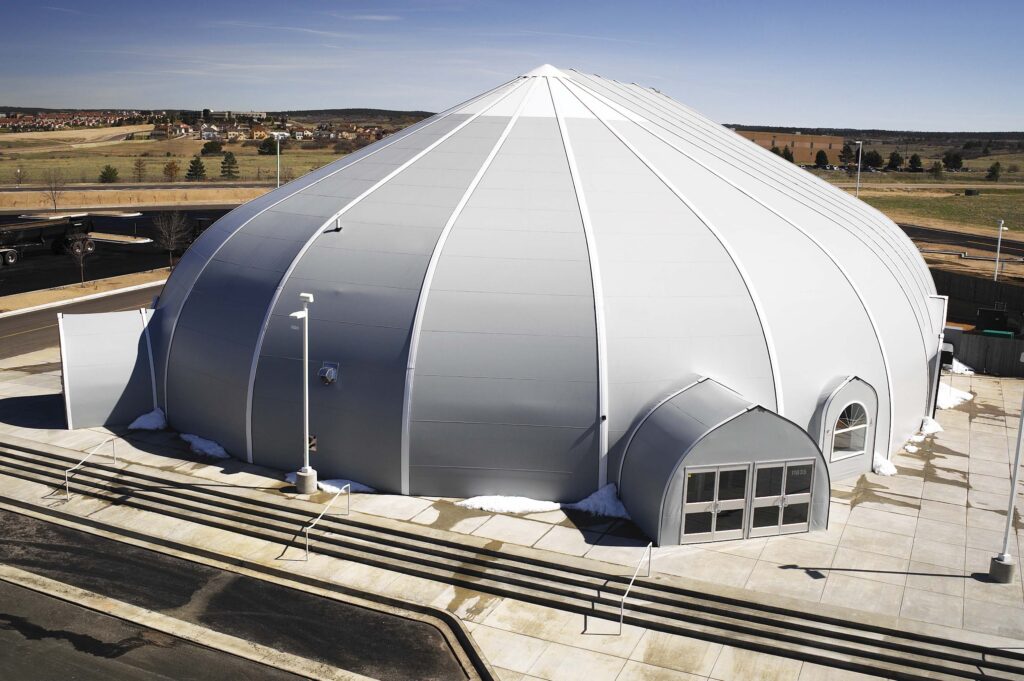
The demand for higher light transmission as well as translucent materials has been a key trend. There is a great desire among architects to design buildings where the environments inside the buildings have an outdoor feel on the inside while ensuring protection from the weather, according to Bradenburg.
“I think there’s been more focus on the longevity of the materials,” he says. “People don’t want to put buildings up and have them look good for just a short period of time. A focus on aesthetics has certainly been something that has grown. The use of color, in addition to light transmission, is desirable. More architects want to design buildings that feature different colors or color combinations. They’re moving from an industrial look to more of a commercial, highly aesthetic look.”
A bright outlook
“I think what drove our industry forward over the past 50–70 years are the entrepreneur-led companies,” Fraioli says. “Those who maintain the leadership of their company are going to see very fruitful futures because the demand is growing. It’s the product know-how that is evaporating. We all always want to push that into our schools, to pass down knowledge.
“It’s a bright future. There are a lot of amazing things to come in manufacturing, with automation and robotics — we’re at the very tip of that and can supercharge some of these companies that have the desire to innovate.”
Roth notes that the innovation of materials and sustainability along with the investment in public infrastructure, airports and amphitheaters, signals demand for more community gathering spaces.
“Shade is a big thing that people need, and fabric is a good solution for that,” Roth says. “Covering big spaces without as much structural support and creating more of that open space for people to gather will continue to drive demand.”
Steph Donovan is a writer and the owner of In the Word Biz LLC. She is based in Kent, Ohio.