 TEXTILES.ORG




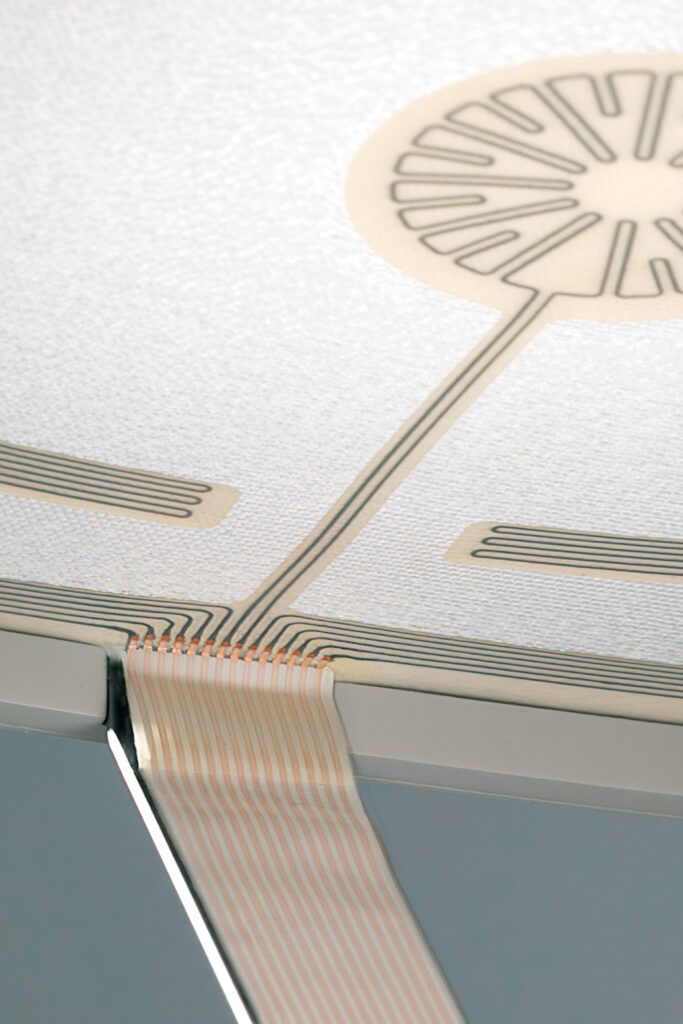
In the interactive textiles feature in December 2023’s Specialty Fabrics Review, an expert postulated that controls one day could be incorporated directly into a vehicle’s fabric surfaces. That might be a step closer with a prototype tensioned textile touch lamp that took a year of multidisciplinary collaboration and research among three organizations in Germany. The project was called “Soft Interfaces” by the collaborators.
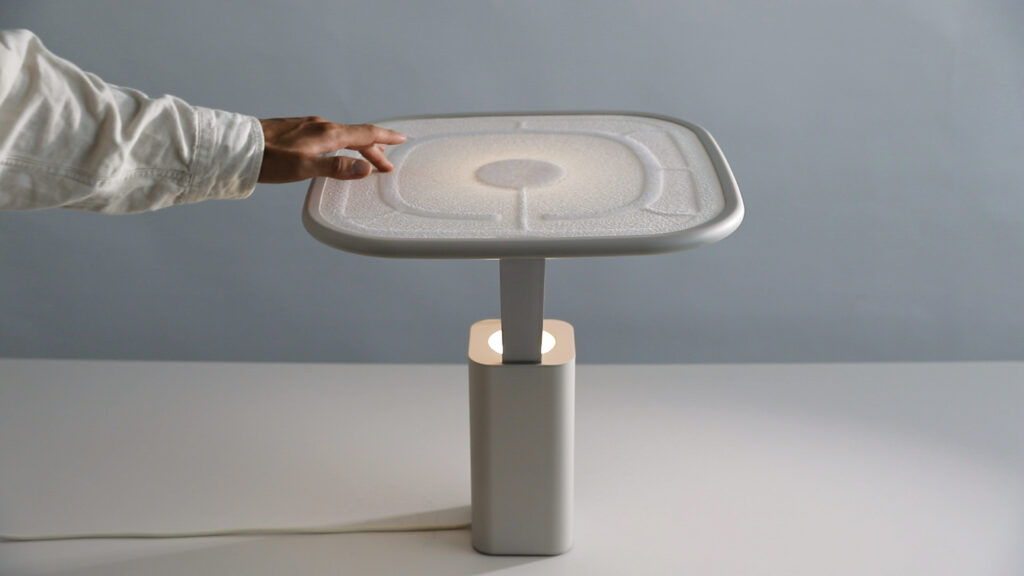
The lamp features a stretchy tensioned textile that turns on the lamp when pressed and adjusts the intensity and light temperature corresponding to the area pressed and the strength of a person’s touch.
Key to the stretchy textile being conductive was creating a new process for liquid metal dispensing. Previously only a lab process, liquid metal dispensing is new to commercial product development, let alone knitted fabric. This technology made the liquid metal called Galinstan printable and embedded it into pathways inside the fabric instead of using conductive yarns, which can have issues with flexibility and stretch.
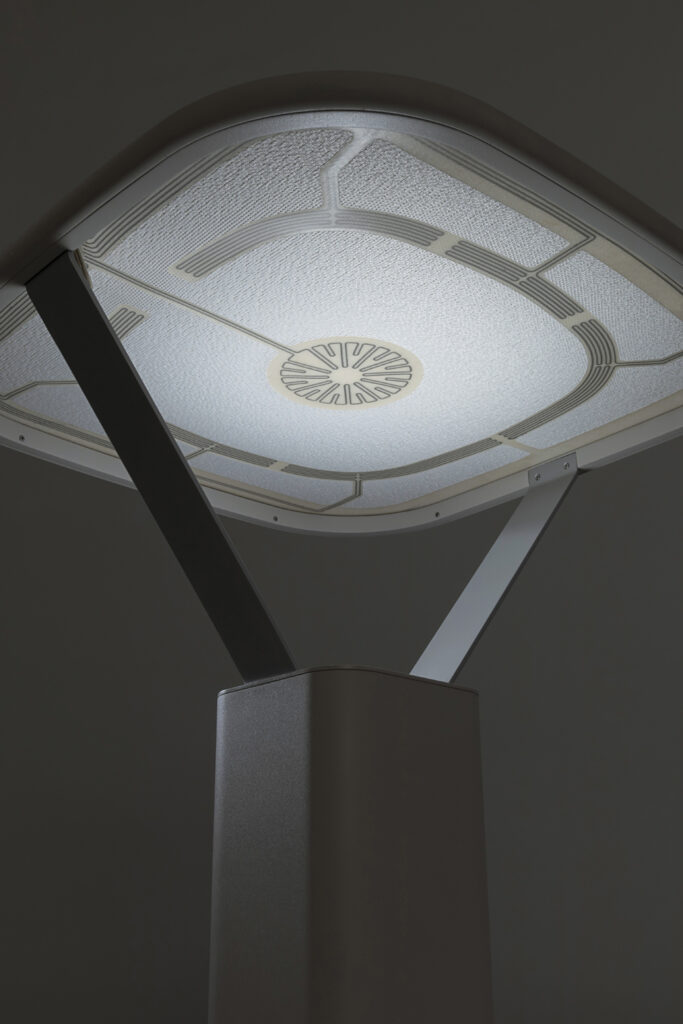
The difference in the knitted patterns in the textile shows the user where the interactive materials lie. The change in the metal pathways when the tensioned textile is touched in these areas tells the device how to respond.
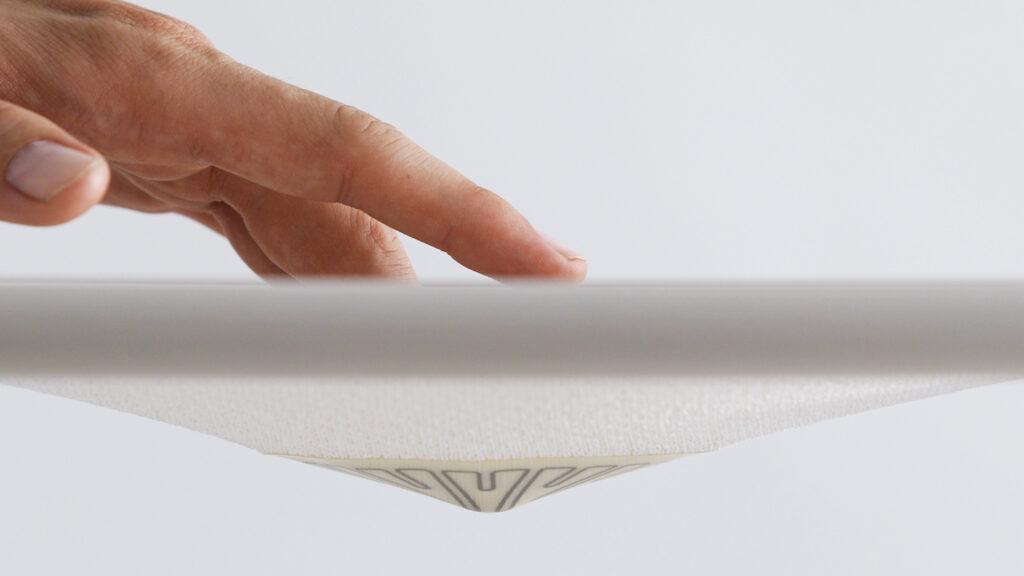
Smart textiles could “transform home textiles into responsive surfaces or bring new levels of sensitivity to medical products,” says a release about the project, adding that items using e-textiles without control screens could potentially create longer-lasting products that consume less energy. WINT Design Lab’s website also notes that the textile shows potential for scaling and washability.
Collaborators included WINT (design), Case Studies (textile development) and the Fraunhofer Institute for Reliability and Microintegration IZM lab (technical design), all in Berlin, Germany.
See Specialty Fabrics Review‘s Swatches section every month for short stories covering news, ingenious projects and research.