 TEXTILES.ORG




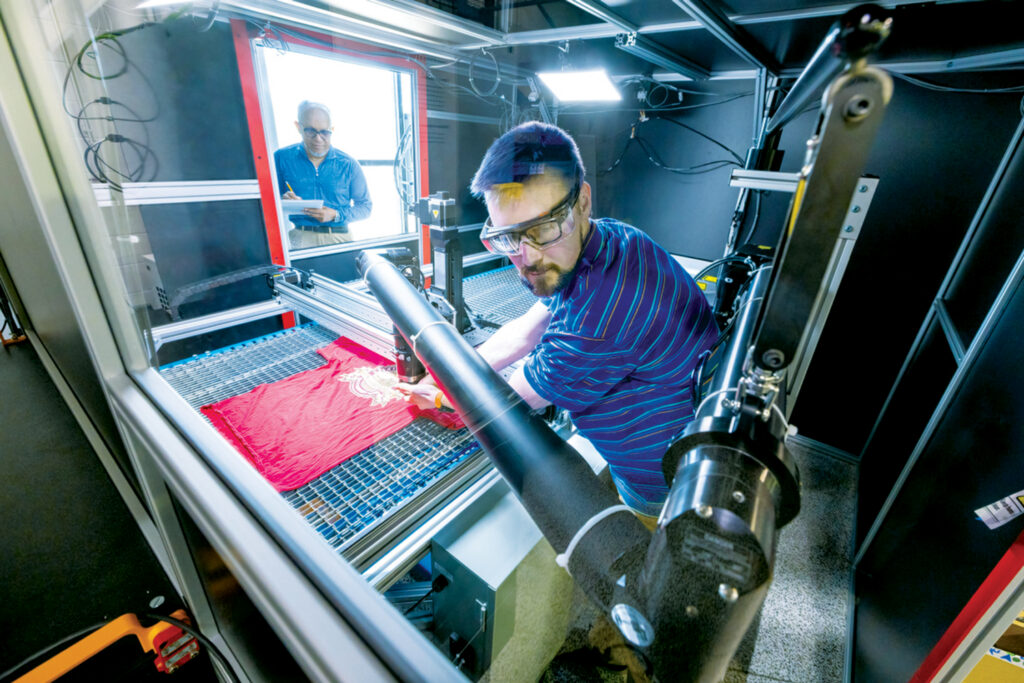
A major pain point in recycling used clothing is the disassembly of items, such as removing zippers, fasteners and screen-printed areas, which is largely a manual process. A research team at the Rochester (N.Y.) Institute of Technology is developing an automated system to identify and disassemble garments at high speed and in high volume.
The system’s cameras generate a multidimensional map of a garment and identify its fiber composition. Artificial intelligence and machine vision-guided algorithms process that data and send it to a robotic laser-cutting system that removes nonrecyclable elements. A sorting gantry separates out that material from what can be recycled. The prototype processes a garment roughly every 10 seconds.
Key collaborators include Ambercycle and Goodwill of the Finger Lakes, which provided garments for testing and insights into the resale and reuse market. Nike contributed industry guidance in the project’s early stages.
The work, which began in 2023, was funded through a grant of nearly $1.3 million from the REMADE Institute, a public-private partnership focused on developing circular manufacturing solutions. The engineering team presented its work at a global REMADE conference last April in Washington, D.C. The textile recycling project is still in the pilot phase but has attracted worldwide interest. The team anticipates transitioning the system to its partners for continued testing and deployment.
See Specialty Fabrics Review‘s Swatches section every month for short stories covering news, ingenious projects and research.