 TEXTILES.ORG




Manufacturer advancements in upholstery textile technology are enabling fabricators to meet a broad range of end-user needs and to stay on top of the trends popping up in various transportation sectors. While different modes of transportation have their own needs, upholstery trends follow similar patterns across markets.
Shifting priorities
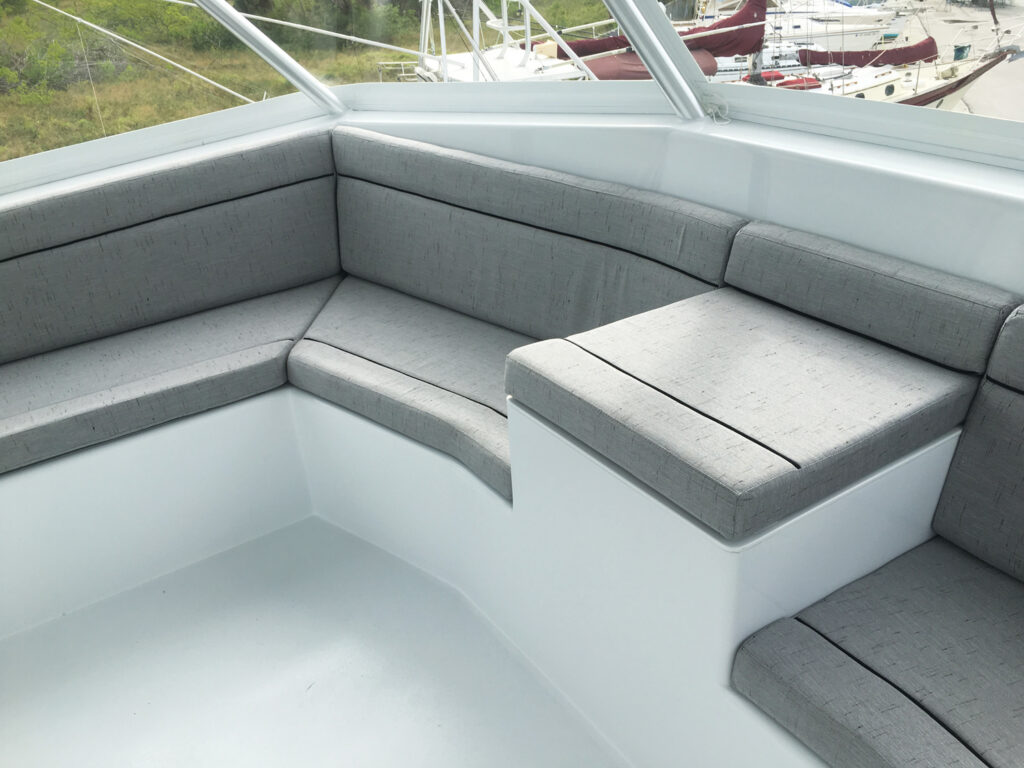
Headquartered in Riviera Beach, Fla., Canvas Designers Inc. is a full-service custom canvas shop serving the sports fishing and mega yacht markets in South Florida, the Caribbean and Costa Rica, says owner Mike Erickson. Because aftermarket projects comprise the bulk of his shop’s upholstery work, they’re generally replacing older products.
Consequently, his customers typically are looking for ways to update the look of their vessels. As such, they’re gravitating toward upholstery fabrics with a cleaner, more modern look that adds texture rather than color, opting for less color contrast as well as for more contemporary shapes.
“We’re seeing fewer complex surfaces and more rectangular, squared-off looks,” Erickson explains. “This makes upholstering easier because you don’t have to deal with the issues of stretching fabric into complex surfaces.” Still, Erickson does look for fabrics with enough bidirectional stretch to go smoothly around those types of configurations.
His marine clients are moving away from Ultraleather® fabrics for exterior uses, embracing instead hardier textiles such as Sunbrella® Horizon® for their durability and UV and weather resistance. However, because of its soft feel, Ultraleather still is favored by clients for interior furnishings.
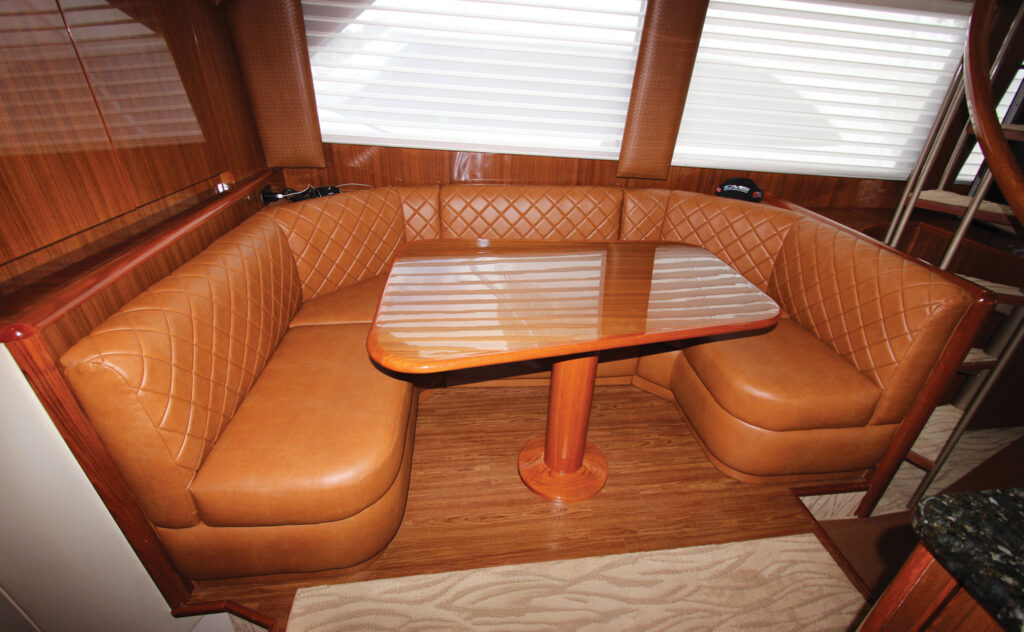
Erickson would like to see a textile melding the feel of Ultraleather with the performance and cleanability of Sunbrella Horizon from suppliers and manufacturers. He explains that in the marine industry, performance and aesthetics are tied in terms of what vessel owners value.
Bob Ericksen, director of sales and marketing for Enduratex™, says that from his perspective, more marine fabricators are selecting materials combining performance and aesthetics. Headquartered in Corona, Calif., the company manufactures durable coated fabrics for the marine, transportation, automotive and contract markets, among others.
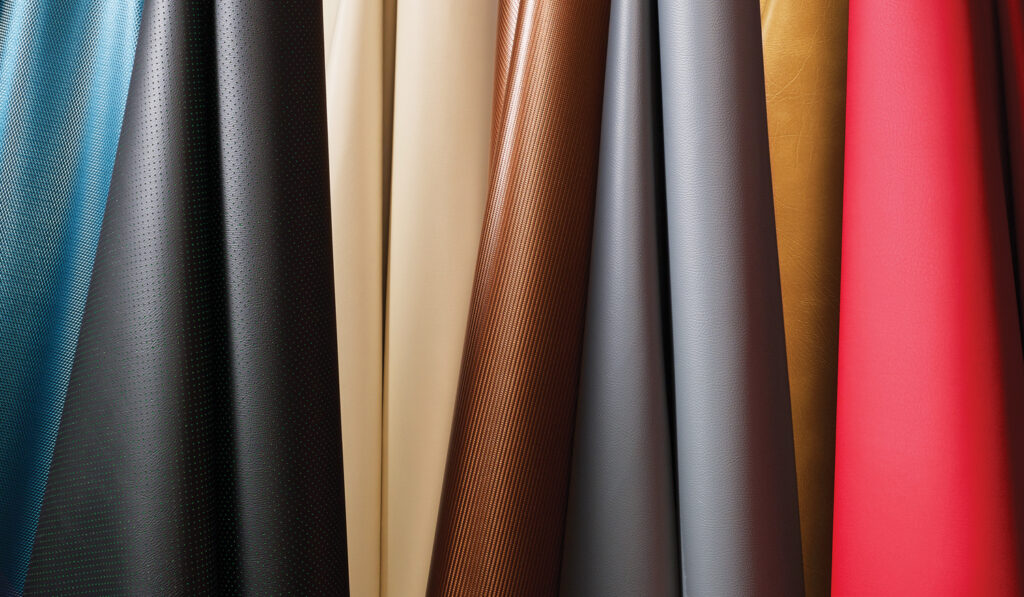
Cleanability is still a “major” priority for their customers, and Ericksen says this is why the company’s FORBID™ SRT topcoat—offering protection from a variety of common stains—is garnering strong interest. However, expanded color options are increasingly on the radar. For example, because of the ability to help manage the fabric’s surface temperature, whites and light neutrals traditionally were the colors of choice. But now, deeper hues such as earthy tones and navy blues are becoming more popular.
Ericksen says these trends follow in transportation and automotive, where customers increasingly are opting for dark, earthy palettes, feeling these deliver a more modern and elevated look.
“Beyond color, we’re seeing increased interest in materials with added visual depth, such as patterned embosses, subtle two-tone effects and suede-like textures,” he adds.
One reason for this shift in marine applications has been advancements in fabric cooling technologies, says Ericksen, mentioning Enduratex’s ChromaCool™ textile. Designed to keep coated fabrics cooler for longer periods, it makes the use of darker color options more feasible.
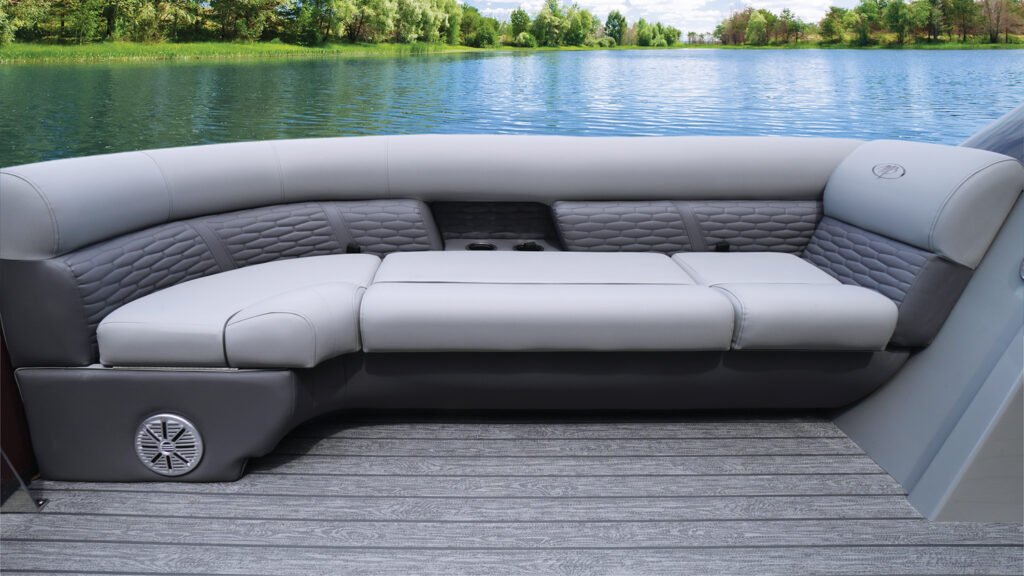
“We’ve also seen a transition from glossy, traditional marine finishes towards more modern matte looks, including brushed grains and suede-inspired textures that deliver a soft, more refined aesthetic,” Ericksen says, adding that marine fabricators are trying to differentiate themselves from competitors through durable, innovative products that enhance the customer experience.
Premium materials are a plus
Whether a vehicle is designed for commercial, public or personal use, performance and appearance carry about equal weight, Ericksen says. However, due to the demanding environments commercial and public vehicles operate in, performance “remains essential,” he says, adding that this makes Enduratex’s high-durability, abrasion-resistance coated fabrics with strong cleanability popular options for those markets.
Ciara Crossan, head of creative, transport, for Camira, says the same. Headquartered in Mirfield, West Yorkshire, U.K., with a global network of warehouses and showrooms, the company designs and manufactures textiles for public transportation, including bus and rail.
Although aesthetics are important, high performance and longevity are a “top priority,” since fabrics deployed for these applications must withstand ongoing heavy use. Along with durability, additional textile must-haves are abrasion resistance, colorfastness, compliance with fire safety regulations and ease of cleaning.
But appearance still ranks high, adds Crossan. “Operators are increasingly looking for fabrics delivering a modern, cohesive and premium interior feel, whether through flat-woven textures, refined color palettes or patterned moquette that effectively disguise wear and tear,” she says, explaining these qualities have made moquette a “preferred option” for many operators, although the demand for flat-wovens and vinyls is rising.
Transportation markets also are leaning toward premium materials, says Deric Nutter, director of business development and strategic growth for Veteran Textile Solutions (VTS), a Los Angeles-based supplier of upholstery fabrics for a range of markets, including transportation, marine, contract and specialty upholstery.
“The trends we’re seeing apply across a mix of personal and specialty-use vehicles. They’re most noticeable in interiors where customers want coordinated materials and upgraded aesthetics—such as custom automotive, powersports, marine, and RV and coach applications,” he says, mentioning that at the same time, durability, UV resistance, UV stability and color consistency are unwavering expectations.
Additional trends include:
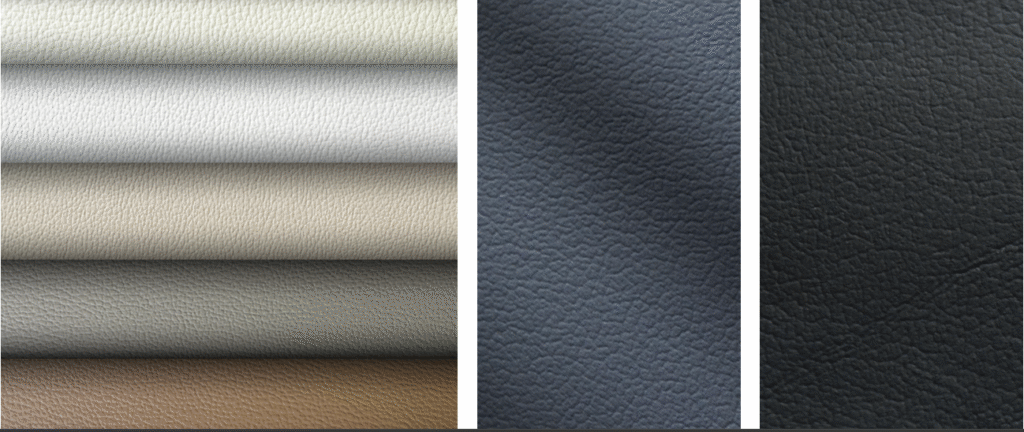
• Combining leather and vinyl: This tactic delivers a more consistent visual across seating, door panels and trim areas while merging the appeal of leather with vinyl’s flexibility, durability and cost-effectiveness, Nutter explains. Crossan says pairing vinyl with moquette or flat-woven fabrics is popular for many of the same reasons, adding visual interest and a “premium touch” to interiors as well as practicality.
• Embracing perforation options: Nutter says micro, mini and designer patterns provide ventilation and enhanced comfort and cooling along with depth and visual interest, resulting in speedy growth of
such textiles.
To address the first trend, VTS launched Zenith™ Vinyl Leather Match. The cross-market, coordinated program allows customers to pair a high-performance vinyl with a top-grain leather, affording mix-and-match capabilities. According to Nutter, for most installations, vinyl is predominately used, with the leather relegated to high-touch and high-visibility areas such as bolsters, headrests and inserts, although the ratio and configuration are flexible, depending on specs.
Responding to the second trend, VTS introduced an engineered vinyl backing constructed to support these complex perforation designs, with the backings providing the required flexibility for modern seating ventilation systems while still adhering to performance standards.
Balancing sustainability and performance
Sustainability isn’t budging from the spotlight. In fact, the attention likely will only increase as consumer concern over the environmental impact of products and processes accelerates across the board. Textile manufacturers and suppliers are taking note and responding.
“For today’s fabricators, the most valued upholstery features are those balancing long-term performance, efficiency and environmental responsibility,” says Nutter. “Materials must not only perform under demanding conditions consistently across diverse builds but also contribute to a more sustainable manufacturing process.”
According to Nutter, these requirements have inspired VTS to design products with multiple applications that can perform in a range of markets. Doing so has enabled the company to trim waste, consolidate inventory and reduce production runs. Additionally, this strategy allows distributors to lower their overall inventories while improving item turnover, further reducing the associated environmental footprint.
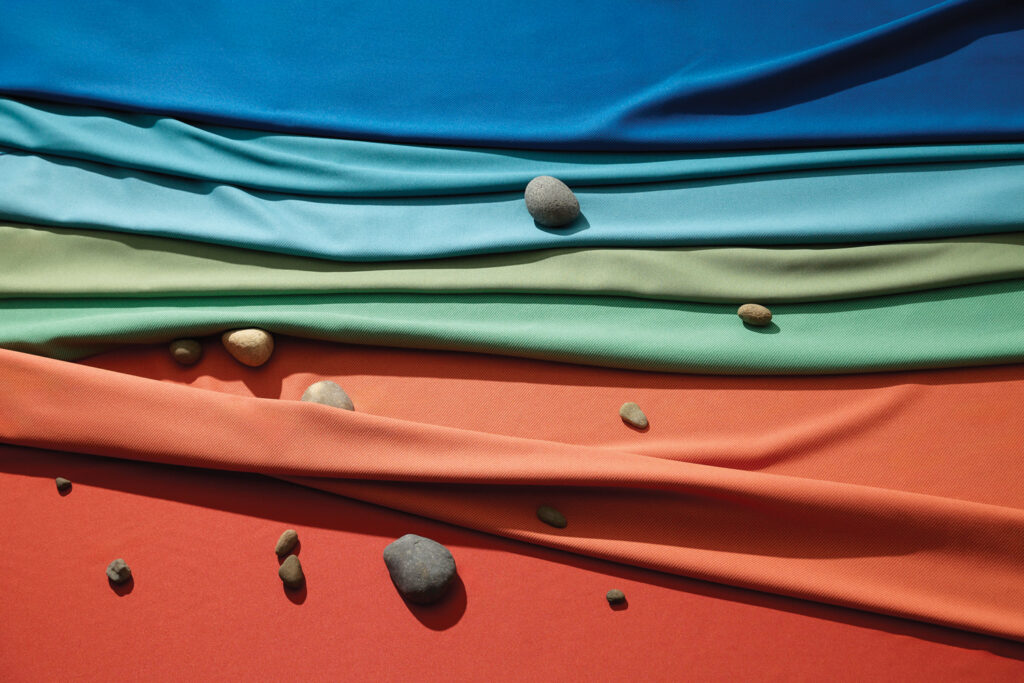
To this end, performance remains even more critical, Nutter says. “Abrasion resistance, UV stability, colorfastness and cold-crack durability are still expected,” he explains. “But now they’re paired with a drive for longevity and life-cycle value.”
Crossan says Camira is hearing from more fabricators that sustainability credentials are a deciding factor when selecting materials, especially for those fleets needing to hit certain environmentally focused targets. Consequently, she predicts there will be a growing emphasis on eco-friendly materials backed by certifications supporting claims. And as regulatory pressures increase along with more “ambitious” corporate sustainability goals, Crossan believes the demand for legitimate documentation and transparency will intensify.
Camira has had a decades-long relationship with sustainable materials, introducing the company’s first recycled fabrics in the 1990s, says Crossan, adding that other innovations have included combining natural wool with plant fibers such as nettle, flax and hemp.
Camira is “also a pioneer in textile-to-textile recycled fabrics, treating textile waste as a precious resource to create new materials and support a circular economy,” she says.
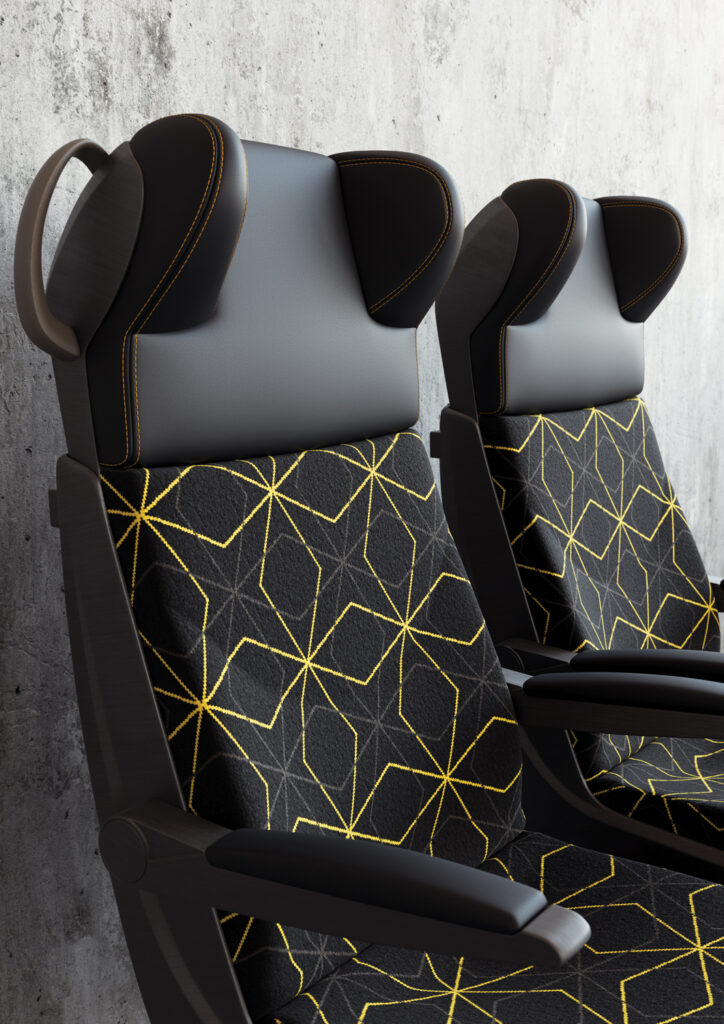
Also among the company’s sustainability efforts is the SEAQUAL collection, made from upcycled marine plastic waste. Introduced in 2025 and targeting bus and coach interiors, the line consists of a range of flat-woven fabrics.
“Each meter contains up to 35 plastic bottles and is up to 42% lighter than traditional wool moquette, reducing vehicle weight and fuel use,” Crossan says. “The fabrics feature Camira’s Eco FR™ backing—a halogen-free, flame-retardant solution with a lower environmental impact.”
The company is at work on a new collection; estimated to launch in the first quarter of 2026, it’s composed of 100% postconsumer recycled polyester from plastic bottles, keeping these out of landfills and turning them into flat-woven fabrics for the “next generation” of bus and coach interiors.
“With a significantly lower carbon footprint than virgin polyester, it’s a smart solution for future-focused, low-emission travel,” she says. “The collection features a futuristic aesthetic enhanced by subtle micro detailing.”
Pamela Mills-Senn is a Seal Beach, Calif.-based freelance writer.
SIDEBAR: Repairing, restoring and improvising
Located in Nelson, New Zealand, Mortimer Upholstery and Marine Covers works with canvas, PVC, leather, vinyl and mesh, serving customers in the marine, automotive/transport, hospitality and commercial markets, among others.
“The automotive sector of our business has always been consistent, changing only in the types of work the different vehicles’ makes and models require through their usable life,” says Ian Mortimer, owner, adding that New Zealanders keep their cars a long time, typically upgrading only when necessary.
Mortimer says the New Zealand fleet is primarily composed of Japanese cars, with Toyota in the lead. More cars from China are arriving along with an “upsurge” in American pickups—but only for those convertible to right-hand drive. Car dealers are still importing low-mileage, used vehicles from Japan, with some needing upholstery repairs, requiring the company to maintain an assortment of foam-backed auto fabrics in black and grays as well as varying patterns. Repairs to foam-backed headliners and truck seats also are a consistent source of work.
“Automotive vinyl used to be popular in cars, and we still keep a good range in stock, mainly shades of grays and different grains in black,” he says, explaining that leather is becoming the standard for car seats. “[Vinyl is] still the go-to for boats, but the challenge lately is matching the imported upholstery seating being installed in new boats.”
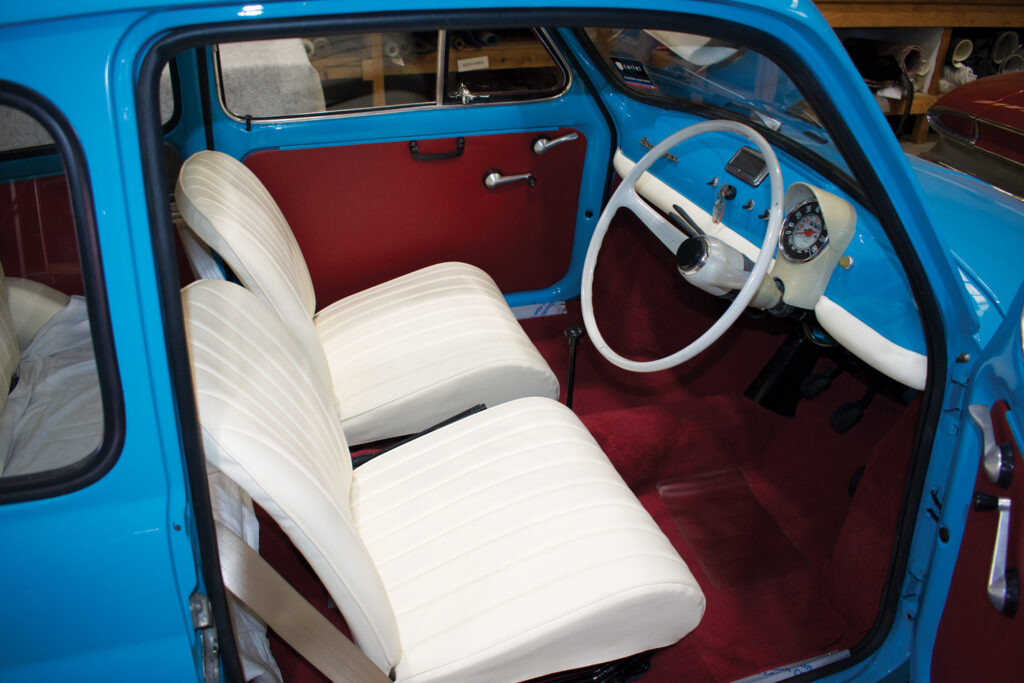
Restoring custom and classic cars comprises a large portion of the company’s business, says Mortimer, who has seen a “surge” of American cars from the ’60s coming into the country. When able, Mortimer Upholstery and Marine Covers provides original spec fabrics, vinyls, headliners and leather sourced from local or U.S. suppliers; other times, the company has to improvise.
“Being ATA [Advanced Textiles Association] members provides us with a great network of similar businesses to contact for help in finding solutions,” Mortimer says. “We consider ATA members our comrades, not our competitors.”