 TEXTILES.ORG




For businesses of all sizes, expanding into service-based revenue streams can unlock new income, deepen customer loyalty and even spark spinoff companies.
Added services for a shade business can include offering awning cleaning, maintenance and storage. For a supplier, having cutting services passes savings (both in time and labor) to customers while requiring little overhead. One company has even turned customer questions into a formal training and education business all its own.
Maintenance, storage and repair
Proactive maintenance strategies such as routinely checking on a previously installed awning’s age and condition, followed by offering cleaning and repair options (in-house or referral), are low-cost, replicable practices that even small to medium-sized shade businesses can implement.
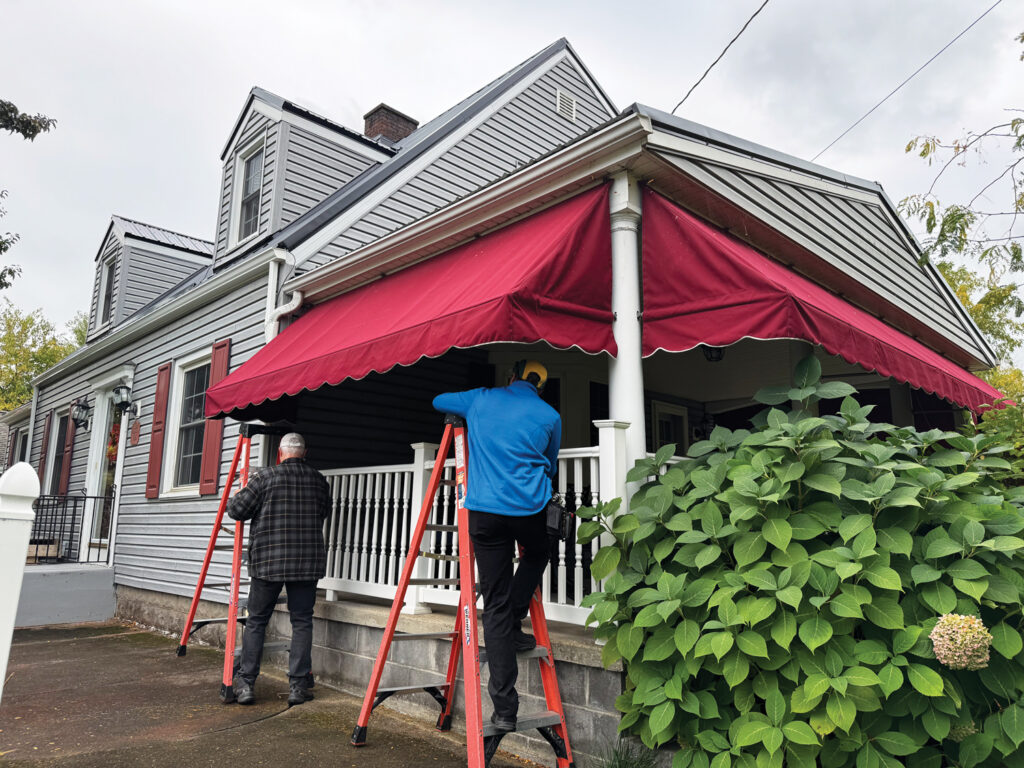
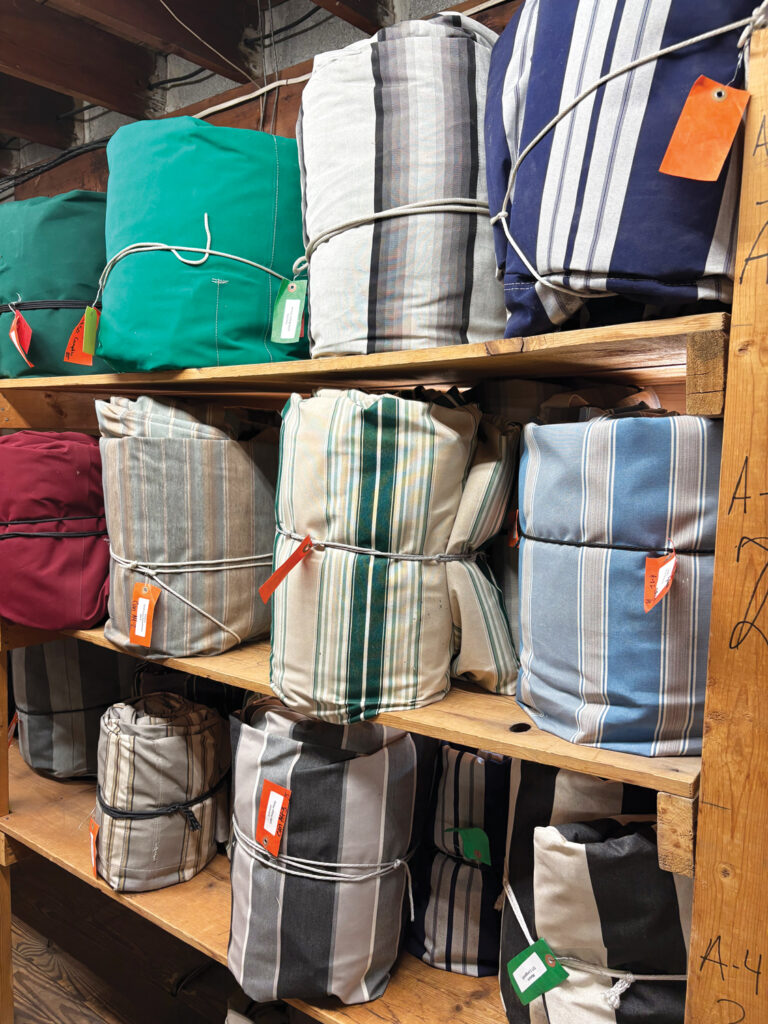
Advanced Textiles Association (ATA) member Al’s Awning Shop Inc. in Erie, Pa., is a family-run awning business that sells exterior coverings for patios and decks as well as industrial sewing services. Offerings include installation, maintenance, takedown, seasonal storage, and repair of custom-made outdoor curtains and awnings. Professional takedown service helps extend the life of the awning, while winter curtain installation for homeowners or businesses lets customers enjoy patios and decks just a little bit longer.
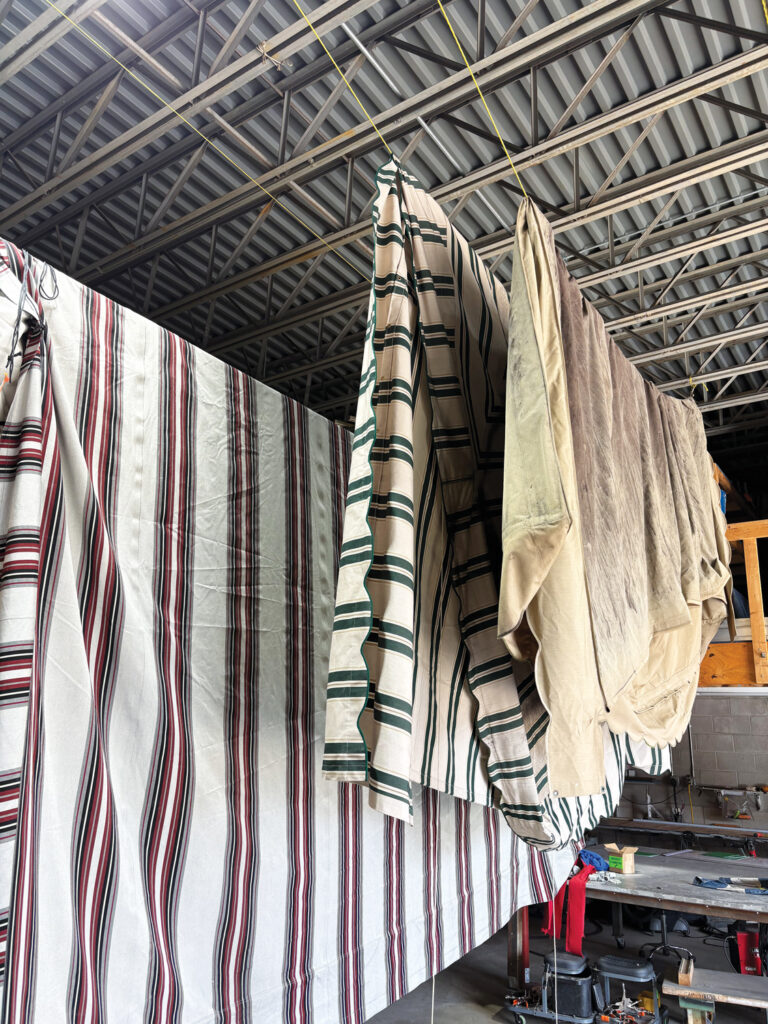
“Mother Nature is not our friend here,” says Michele Quadri Butterfield, owner of Al’s. “Every customer wants to extend summer. So we are conscious of what the customer wants versus the reality of the weather.”
The company has offered takedown services for commercial and residential customers from the start. Beyond this, Quadri Butterfield says Al’s in-house cleaning and repair services continue to grow in scale and detail. In turn, the company is seeing more recommendations and repeat business.
“We try to remember it’s a sad day when the awning comes down,” Quadri Butterfield says. “And we try to be as proactive as we can with maintenance and cleaning.”
Her team checks purchase dates and reminds customers after two or three years about professional cleaning options and preparing them for possible repairs in future years.
She says time, logistics and cost are key factors to consider when adding any new services or initiatives, and employees who are willing to do the physical work of takedowns and installation are key to the company’s growth and sustainability.
At one point, the team decided it was no longer productive to offer takedowns for small, second-story residential window awnings. Customers usually can pull them up against the house in the winter. Not to mention that insurance costs rise the moment a ladder comes off the company truck.
“We’ve definitely seen a return on investment,” Quadri Butterfield says of Al’s cleaning station and proactive maintenance initiatives. “The ROI comes from the relationship we’re building with the customer.”
When ‘free’ makes dollars and sense
While he doesn’t advertise “free repairs” in his shade business, Roger Magalhães, founder and general manager of Trading Up Consulting LLC and Shades In Place Inc. in Tampa, Fla., and Franklin, Mass., says occasional free repairs in exchange for positive reviews and referrals can go a long way in building his business. And his van being in a new neighborhood serves as a mobile billboard.

“Customers expect to pay for something, and I say, ‘You know what? Just write me a nice review. Tell your friends.’ And they’re blown away. It’s a surprise … and it works.”
Last year, Magalhães took a service call to Ana Maria Island, an affluent part of Florida. “Somebody had bought a lot of shades, but for some reason, the dealer didn’t want to go back. There was $100,000 worth of shades in that house,” he says.
Magalhães charged for his drive time but not his labor. “It was a massive house. We had a really good conversation, and the $250 driving fee became the price of acquiring a new client in a very affluent neighborhood,” he says. “The client has already come back to buy more shades because she wants to buy from me.”
He also encourages companies to team up with related businesses (in his case, painters and power-washing companies) to build a network of cross-industry referrals.
“[When you] refer people, they will pay you back somehow,” he says. “These are little things that most people don’t think about.”
Precut materials and stocking programs
To truly add value for customers, a new service should solve a common problem.
Quality Thread & Notions (QTN), an ATA member based in Solon, Ohio, sells high-performing sewing products to manufacturers across industrial, military, commercial and recreational markets. The company recently launched Pro-Cut™, a custom cutting service.
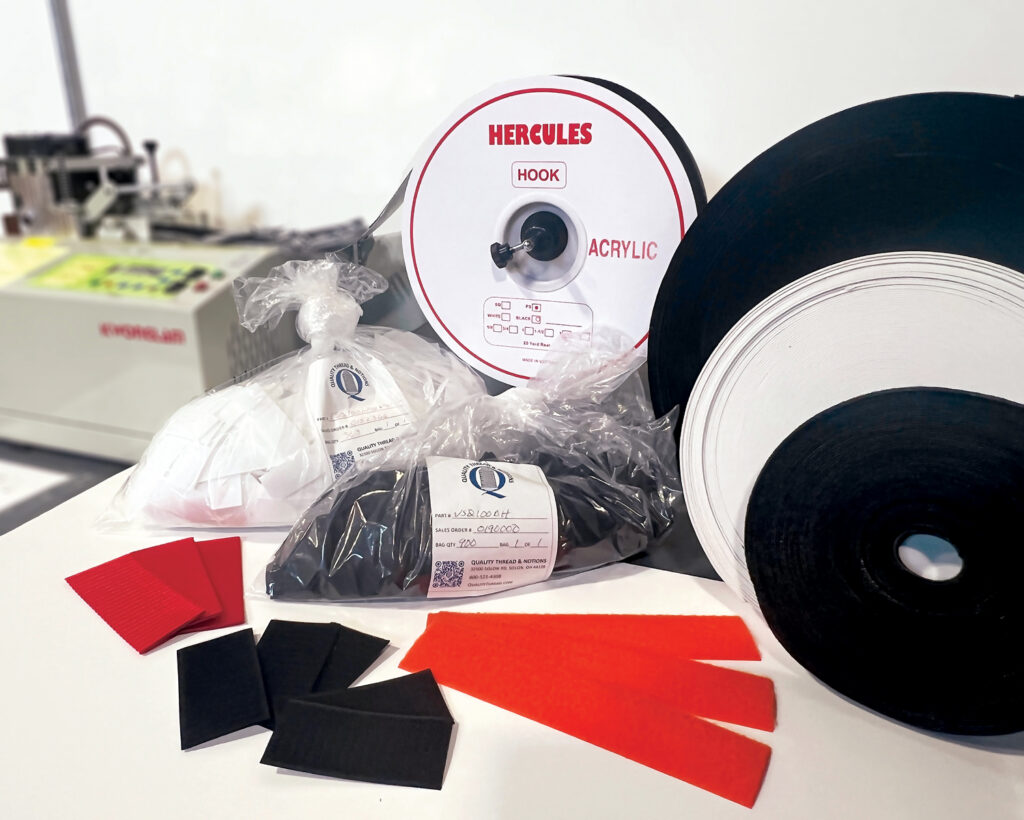
“We were getting numerous inquiries about cut-to-length webbing and hook-and-loop and saw a great opportunity to support our customers even more,” says company president Bob Heintz.
According to Heintz, the demand for cut-to-length products has come from a wide range of industries and company sizes, especially small and midsize manufacturers looking to improve efficiency and address ongoing labor challenges.
“Some of our customers are fairly small,” he says. “As businesses face labor shortages, they’re looking for smarter ways to streamline production.”
Precut materials can go directly into production. By removing the extra steps of pulling the stock, measuring it and cutting it, manufacturers save time and ensure accuracy.
The process is efficient on QTN’s end as well. Notions product manager Doreen Langa and product data manager Paul Stegall developed a program that calculates the optimal way to fulfill customer piece requirements while minimizing scrap, often aligning orders to roll lengths for maximum material yield.
The company first offered precut pieces about 20 years ago. Although the concept was well-received, the program was paused when the original cold-cutting machine presented width and cut-type limitations. Now, with an investment in a new dual-mode hot-and-cold cutter, Heintz expects QTN’s Pro-Cut service to deliver 80% of the cutting needs customers request with more versatility and cut intricacy than the previous service.
He anticipates a swift return on investment from the initiative, citing the program’s efficiency and strong demand. “It’s not an overburdened process for us,” he explains. “We’ve built an automated system and a very tight procedure around it.”
That process includes a custom quote generator that automatically calculates pricing based on material type, cut length and quantity, allowing customers to receive accurate quotes quickly and easily.
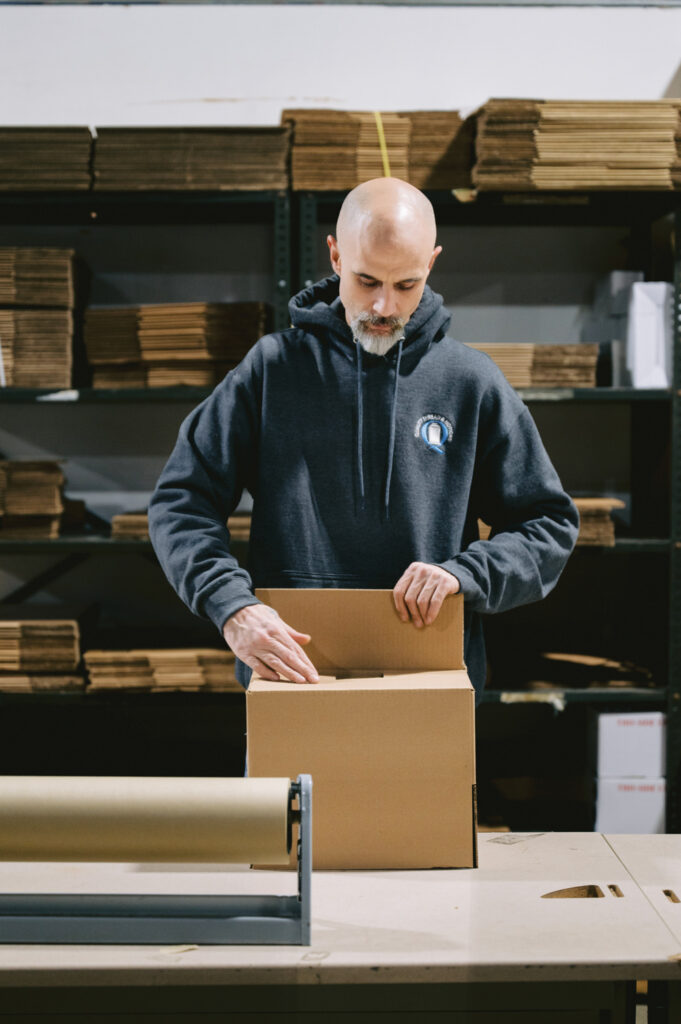
Beyond Pro-Cut, QTN continues to support customers with its longstanding stocking program. Customers can store their inventory at QTN’s temperature-controlled facility and receive shipments on demand, helping to minimize up-front inventory costs and free up valuable space at their own locations.
Although separate from the cutting initiative, the stocking program complements it by offering a complete, flexible supply solution from material preparation to delivery.
“That’s one of the pillars of Quality Thread & Notions,” Heintz says. “We hold inventory and make things easier for our customers. Whether they need zippers, thread or reels of hook-and-loop, we can stock it, cut it and ship it directly to their door.”
Training and education
Industry leaders looking to grow their businesses can’t afford to stop learning. This opens the door to another value-added service opportunity: passing that knowledge on to customers.
Robin DuBroy, former director of education for ATA member Wholesale Shade in San Marcos, Calif., launched Shade Sail University six years ago.
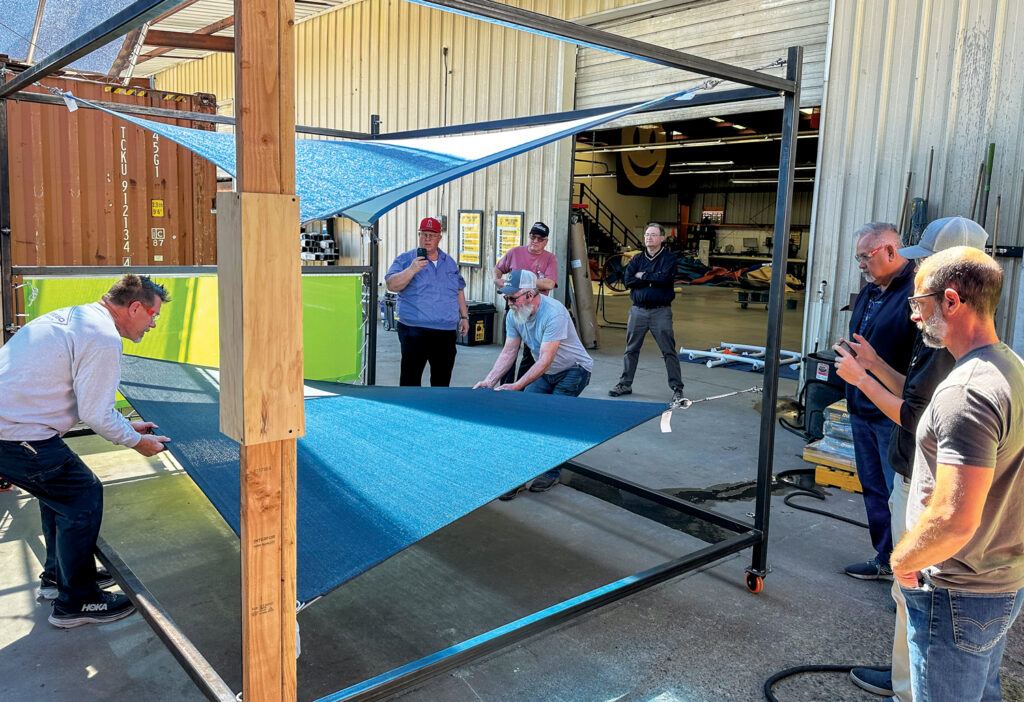
“It really started because we were fielding all of these questions from our customers. And we said, ‘What if there was a resource?’ There aren’t too many comprehensive resources here in the U.S. for shade sails,” she says.
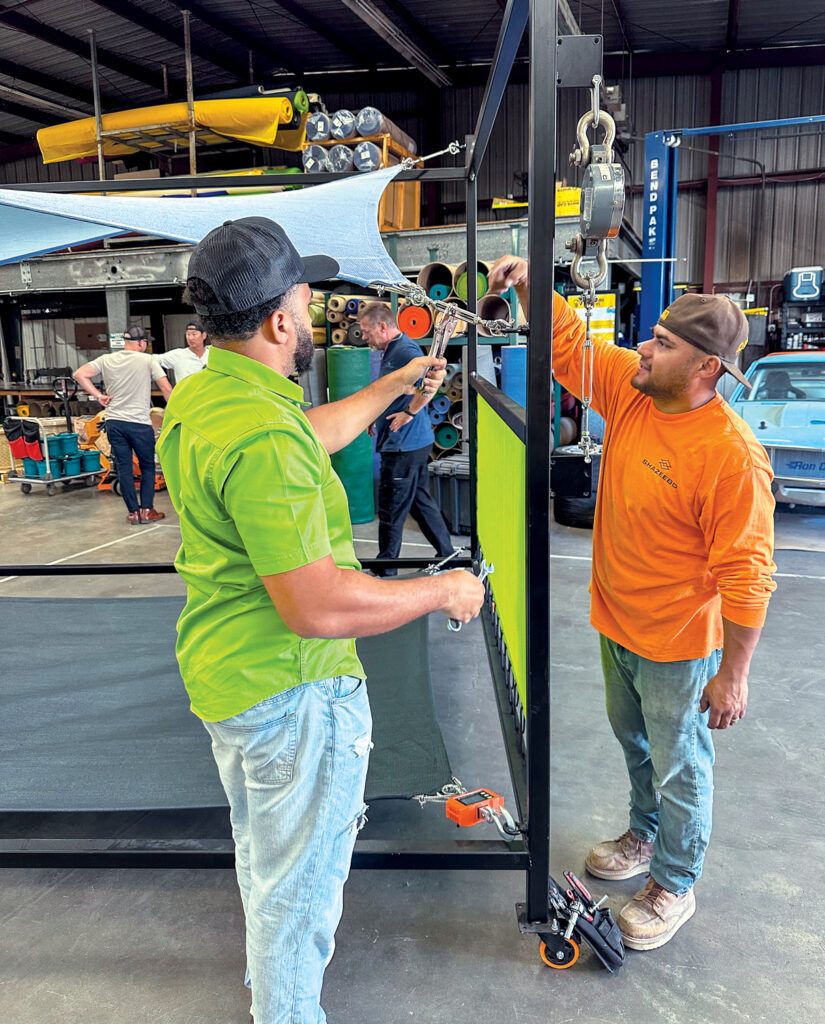
The comprehensive training program supports the shade sail industry and industry newcomers. Educational materials and videos cover everything from design and installation to maintenance and sales. What started as a book has evolved into hands-on, three-day workshops at the San Marcos warehouse.
New training products include a second-edition book and webinars produced with industry partners and even education sessions for conferences such as Advanced Textiles Expo. In November, DuBroy presented “Shade Sail Designs That Bombed—Don’t Make These Mistakes!”—a session that had people standing in the aisles. The company’s Patrick Howe presented the topic as an ATA webinar in February as well. But, DuBroy says, “the heart and soul of it really is the in-person workshop,” where class sizes are kept small so lessons can be based on attendees’ experience.
DuBroy says attendee feedback helps her generate new training information. Design is also a key interest, so the company is piloting a 3D shade sail design service with core customers. Now its in-person training also includes a lesson on 3D rendering and how to create shade sails in 3D imaging for customers.
DuBroy says the hard part of any new project often is just getting started, and while it’s tough to put a specific number on the training’s ROI, she knows they’re reaching companies they never would have reached before.
“We have existing customers who attend training and ramp up their sales quite a bit,” she says. “Some customers have doubled or tripled their sales after attending the training. There’s a lot of knowledge out there, no matter the industry you’re in, and the opportunity to share that is a great vehicle for bringing in new customers. The added bonus is that you get to help someone improve their business while growing yours.”
Takeaways for smaller businesses
Increasing services along with product volume is a smart and sustainable way to grow business. This strategy can help mitigate the ups and downs that naturally occur with product launches and seasonal sales.
Trading Up’s Magalhães says, “My thought was always, ‘Nobody’s going to replicate what I do, so the best way I can utilize my time, because I only have 24 hours like everybody else, is just to add on services and knowledge to my own repertoire. These things make me more essential.”
Small businesses that want to diversify revenue can start by asking questions and collecting data.
“First, identify the need,” says DuBroy. “What are your customers asking for? Where is there a void that you can fill with this service?”
She recommends collecting actual versus anecdotal data, such as tracking the number of people calling and requesting a specific service in the last six months.
Second, she cautions businesses to “Guard your time,” she says.“I think especially in the service world, you can get really into providing support for a customer, and the next thing you know, you’ve spent six hours over several weeks, and maybe the purchase at the end does not equate to all the hours you put into it. Make sure that you’re guarding your time and allocating your personal resources effectively.”

Finally, don’t forget about those seemingly small practices that have a big impact.
Magalhães seeks easy wins that build rapport with customers. It’s how he grew his part-time shade installation service into his own thriving business. His top tips are:
- Never stop learning in your industry.
- Ask for reviews.
- Answer the phone.
- Keep customer service central to all projects.
“It seems basic, but we answer the phone, emails and texts. Even if I can’t do the work right away, I might say, ‘Unfortunately, it’s too far’ or ‘This is not exactly my expertise.’ And a lot of people say, ‘You know what? You were kind enough to respond. I’m willing to wait.’ Just be kind, and return the courtesy of someone calling you,” he says.
Sara Scullin is a freelance writer and editor based in Wisconsin.
Advanced Textiles Association members can discuss adding services further on the CONNECT forum.
See Specialty Fabrics Review‘s Features section every month for in-depth stories on a wide variety of business topics. Maybe you’ll find inspiration, information about a new product or service or advice from others that you can apply to your business.
But this information and inspiration isn’t just in our stories. Be sure to also check out our print edition for valued ads and information from our sponsors pertaining to your market area.