 TEXTILES.ORG




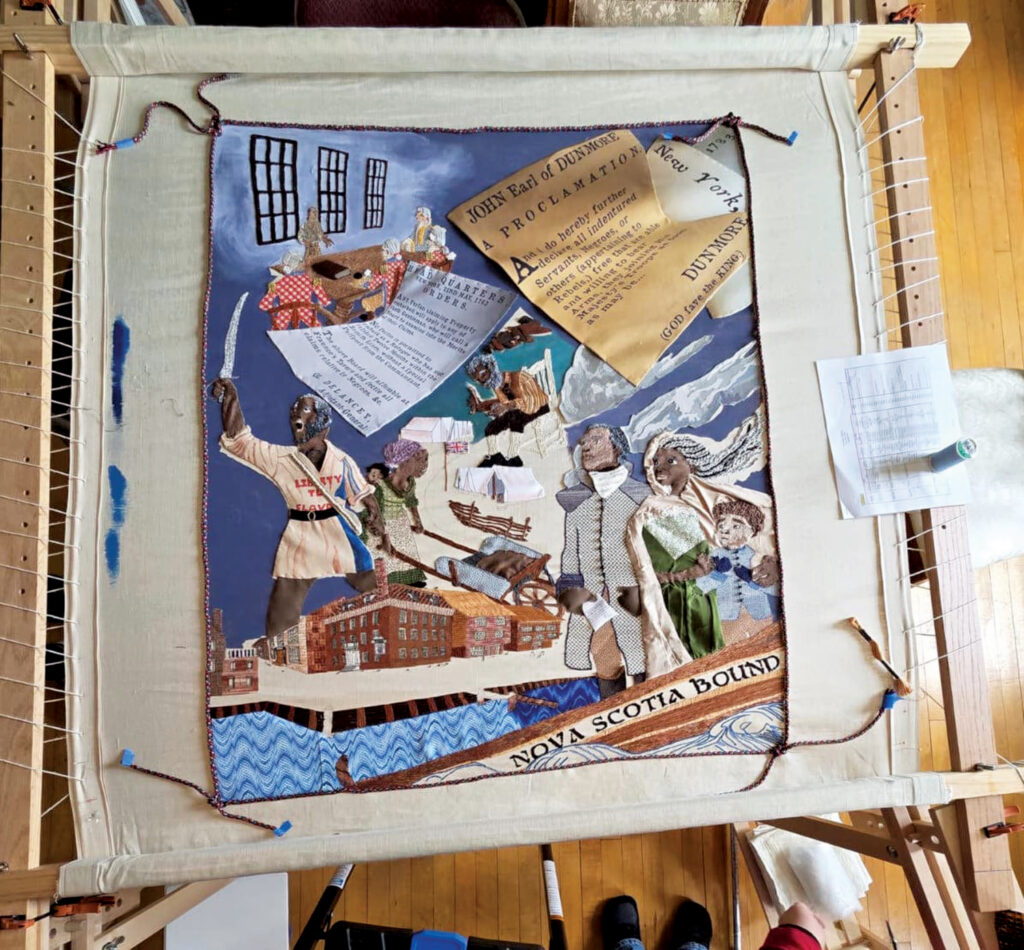
To celebrate the country’s 250th anniversary, traveling art exhibit “America’s Tapestry” began a two-year tour June 19 in Virginia. Featuring 13 hand-embroidered panels that represent each of the original U.S. Colonies, it will be on display at the Muscarelle Museum of Art at the College of William & Mary in Williamsburg until Sept. 6. It will then travel to Pennsylvania, New Jersey, New Hampshire, Rhode Island and New York.
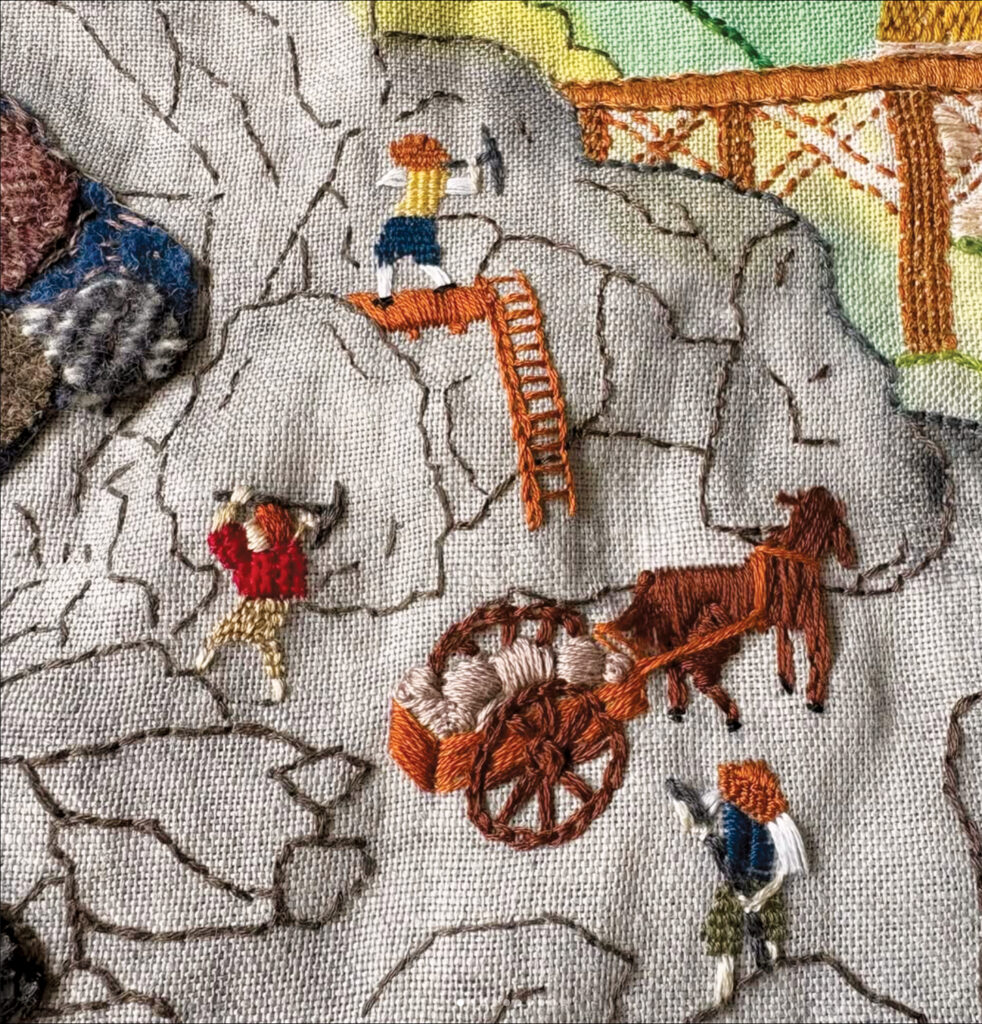
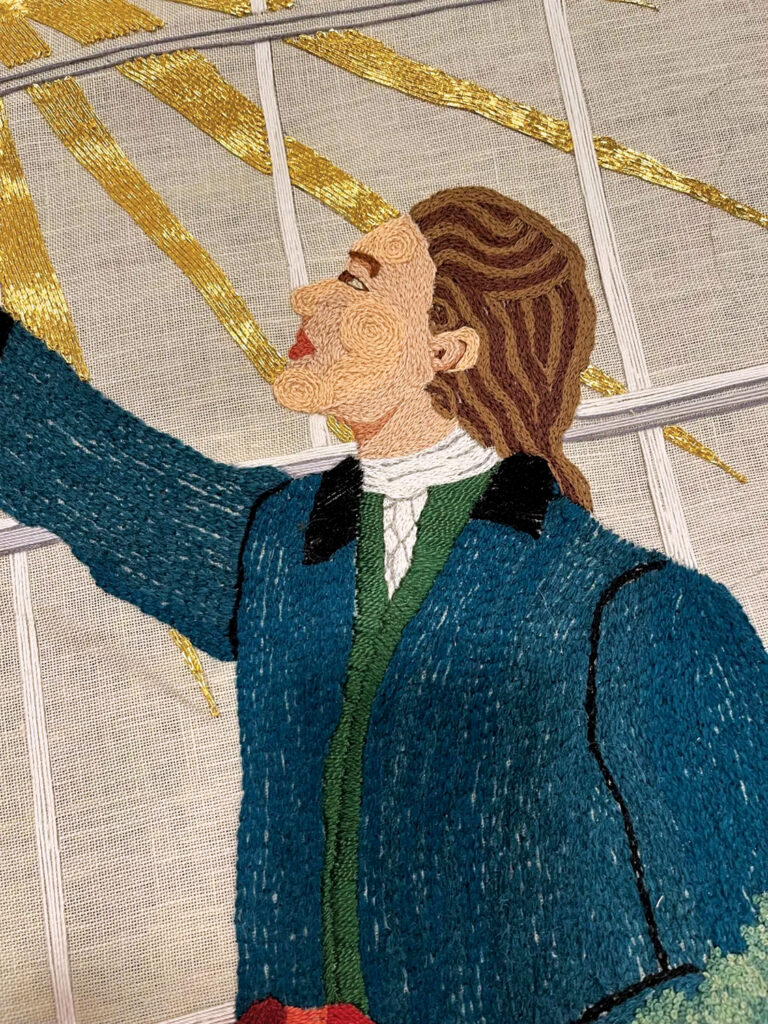
Over the course of 18 months, each 35-by-45-inch panel was hand-embroidered by community members in each state, including those with and without embroidery experience. The panels illustrate stories drawn from each state’s Revolutionary War-era history, weaving together diverse and often overlooked stories that contributed to the country’s fight for independence. Curated by textile designer Stefan Romero, the project was inspired by “The Great Tapestry of Scotland,” a community art installation that represented 12,000 years of Scottish history in 160 hand-stitched panels.
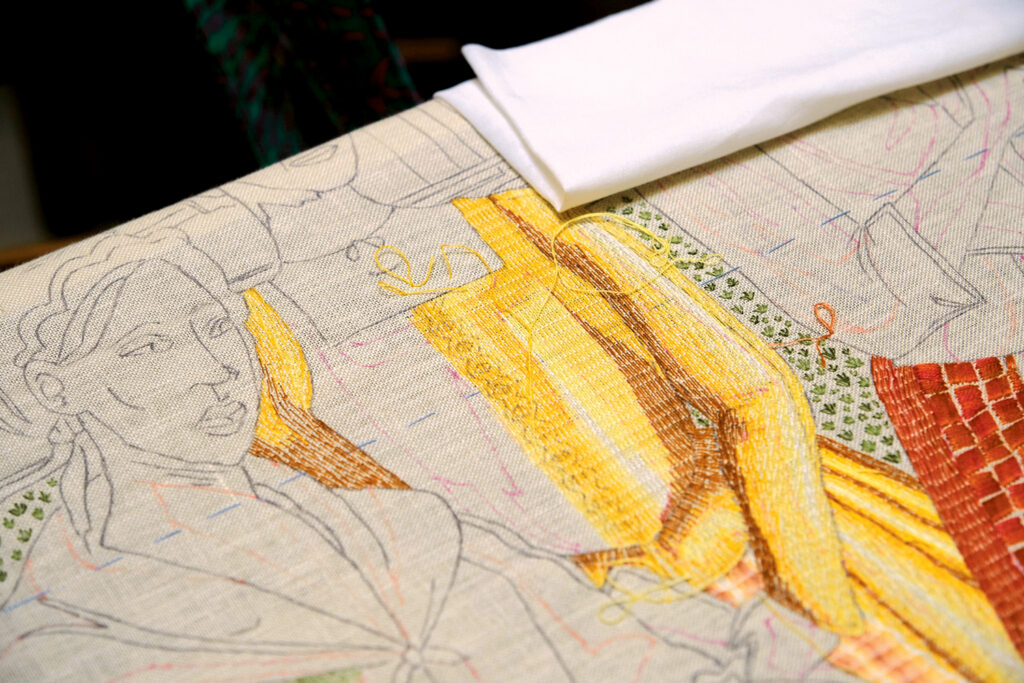
“It’s special to see people come together across so many regions to tell these stories with their hands,” says Romero. “From the novice to the experienced artisan, over two years, I’ve watched people collaborate to do work that would typically take triple or quadruple the time to achieve.”
The Virginia panel highlights the story of an enslaved man named Aberdeen. After being forced to work for seven years in the Wythe County lead mines, Aberdeen defied his Loyalist master’s orders to join the British cause and enlisted with the Continental Army, which later granted him freedom.
The Georgia tapestry honors the Chasseurs Volontaires de Saint-Domingue, a militia unit from the French colony that later became Haiti. The militia was composed of formerly enslaved and free soldiers who fought in the American Revolution.
The New York panel pays tribute to Black Loyalists, whose service to the British made them eligible to evacuate to Nova Scotia upon the war’s end. The North Carolina panel highlights the Edenton Tea Party, one of the first documented acts of political resistance by women in North America.

Other panels tell the stories of lesser-known heroes in the fight for independence: Connecticut’s Hannah Bunce Watson, the first female editor of the Hartford Courant, who kept Patriot morale alive through her writing; Henry Fisher, whose naval ingenuity protected the Delaware Bay from British incursion; and Pennsylvania’s Rebecca Young, one of the first documented makers of an American flag. For more information about the panels and the exhibit’s touring schedule, visit AmericasTapestry.com.
