 TEXTILES.ORG




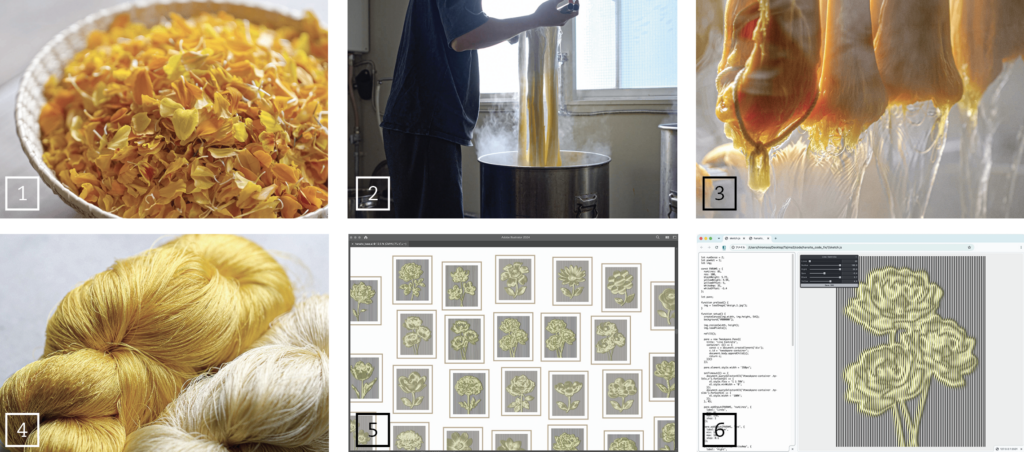
Japanese designer Hiromasa Fukaji, known for drawings and designs using geometric patterns and mathematical algorithms, brought that perspective to embroidery for the recent HANAITO project for &T, an embroidery art brand of Tajima. But it’s not all just computers and math. Human skill, experience and intuition were required to analyze the abundance of data to create the work. And by using marigold flower petals to hand-dye the embroidery thread, HANAITO marries traditional methods with modern computing.
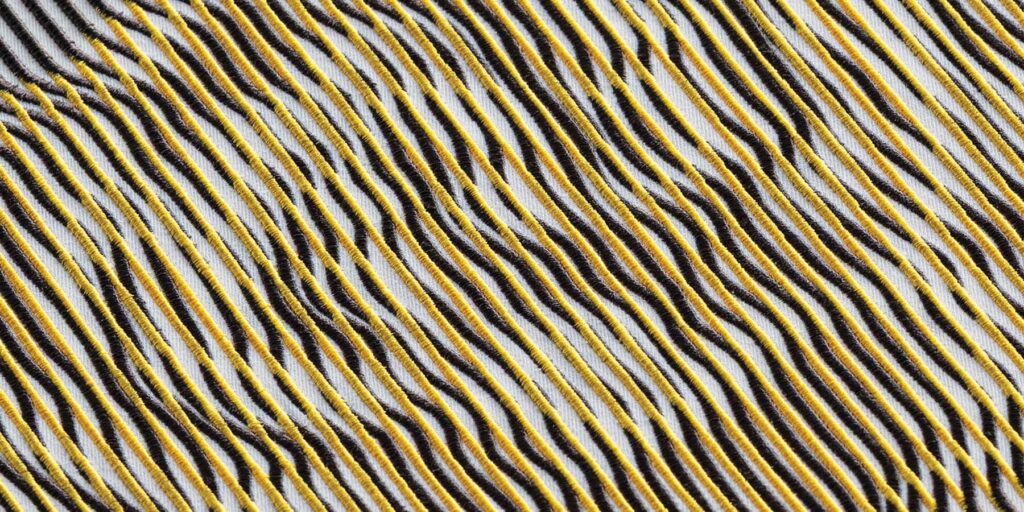
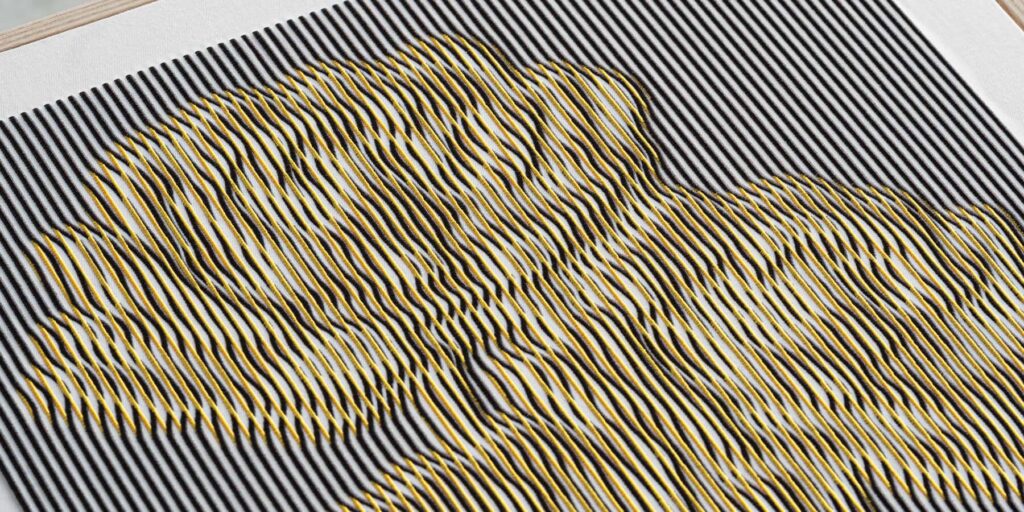
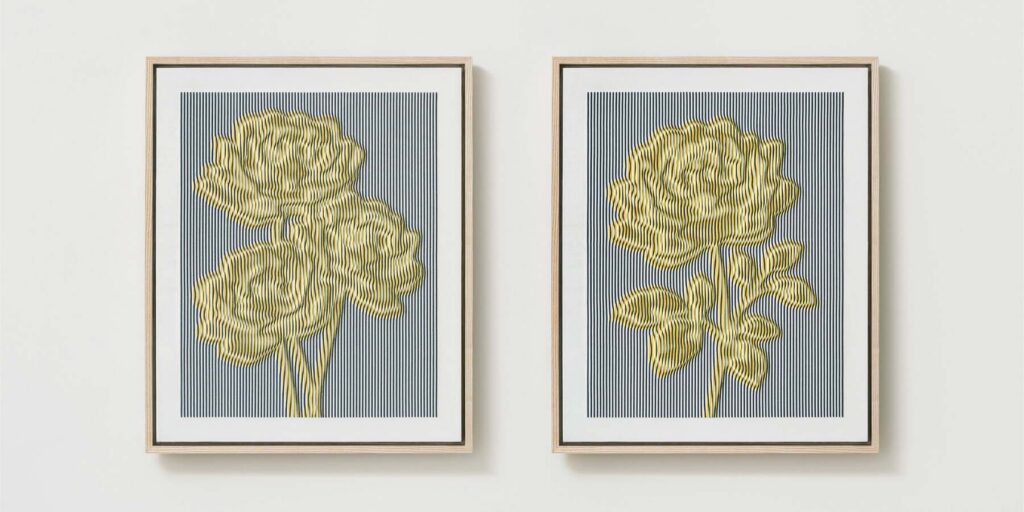
The artwork consists of two abstract flower forms satin stitched onto poly-cotton fabric. The tactile element and texture brought about through the embroidery, Fukaji says, enhances “mere digital data,” and the combination of old and new techniques brings the past into the present.
“Embroidery is a form of expression that has historically been deeply intertwined with flowers, making them a universal motif,” Fukaji says. “Drawing on this background, my intention was to reexamine the long lineage of embroidery from a material perspective by embroidering flowers with flowers.”
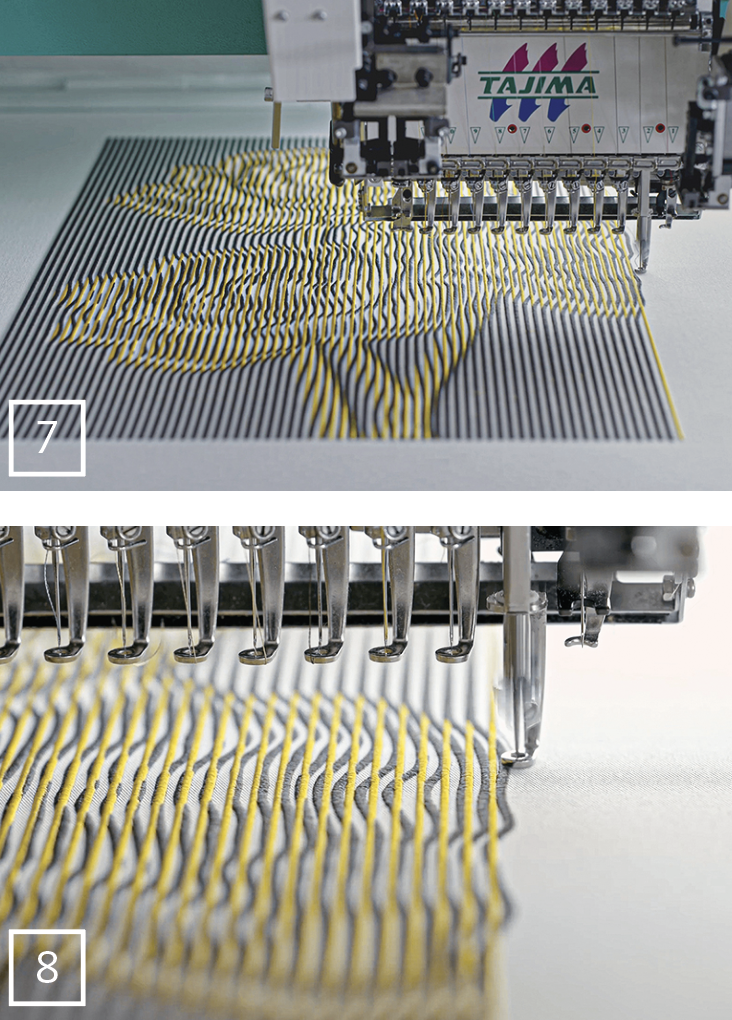
The layers of rayon thread making up the two flowers in HANAITO #1 and #2 create a visual effect that is 3D-illusory. Their appearance changes slightly depending on the angle from which they’re viewed. Fukaji even developed a custom embroidery design tool to create this artwork.
“The program analyzes the shading of the flower motifs, and the seemingly complex number of lines, their width and their fluctuations are all derived entirely from calculations,” Fukaji says. “Through a process of fine-tuning parameters, verifying vast amounts of data and repeatedly running experiments stitching actual threads with the sewing machine, I arrived at the numerical values that look the most visually appealing.”
HANAITO was planned from the start to consist of two flowers, so the scores of possibilities had to be winnowed down to a pair that worked together, making beauty always the top priority among all the bytes and pixels.
“By refining the details and composition from a design perspective — focusing on how to make it look visually beautiful — against the precise structures calculated by algorithms, I can elevate the work beyond mere surprise into a stronger, more beautiful artwork,” Fukaji says. “I genuinely enjoy exploring expressions in this direction, and I see great potential in the new visual expressions born from it.”
Examples of Fukaji’s computational design can be found at plotterdrawing.com and digraph.jp.
More on Tajima’s designs can be found at andt-art.com; Specialty Fabrics Review featured Hiroko Otake, another artist featured in the &T art brand, in January 2025.
Check out cutting-edge research, projects and art in the Swatches section of Specialty Fabrics Review each month.