 TEXTILES.ORG




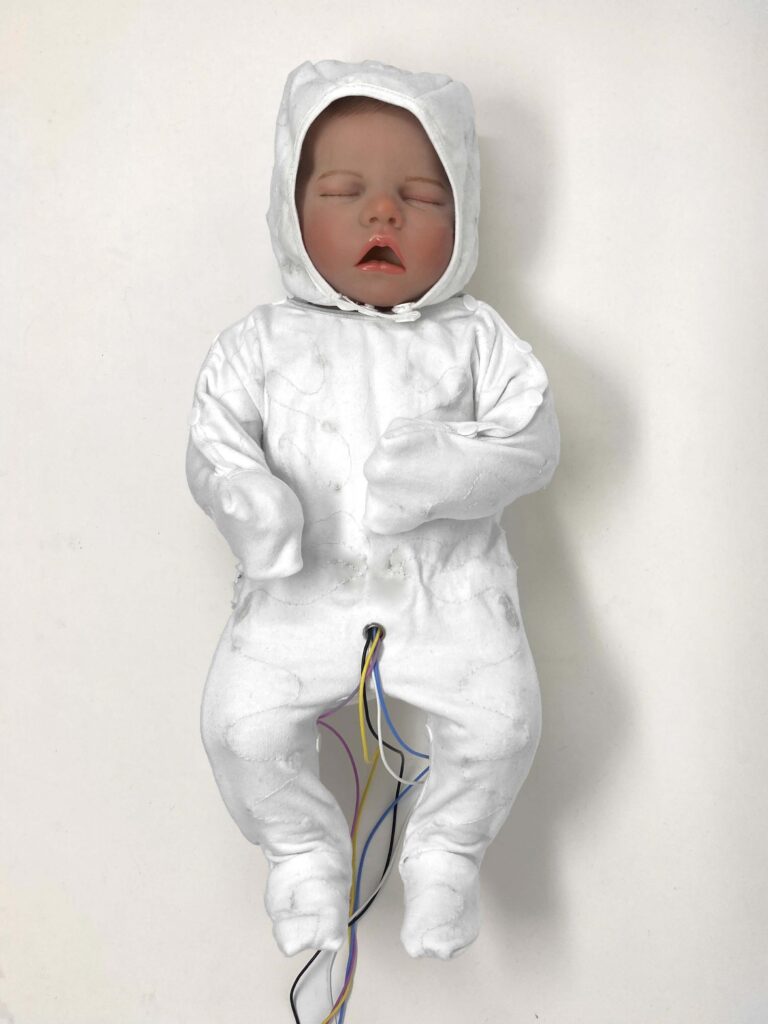
Most adults have an immediate physical response to a baby’s cry, so medical therapies that don’t allow someone to pick up their newborn can be fraught for a caregiver. That was the motivation for Lucy Dunne, Ph.D., who’s developing a light-therapy garment for babies with jaundice. She is the codirector and founder of the University of Minnesota (U of M) College of Design’s Wearable Technology Lab.
Light therapy is a standard treatment for infants with jaundice, and conventional devices for those who need medical attention include lamps, sleep sacks and glowing mats; in severe cases, the treatment may need to be continuous for a time, not allowing the babies to be removed from the device. With a bodysuit delivering the treatment, the therapy stays with the infant so they can be held and cared for normally.
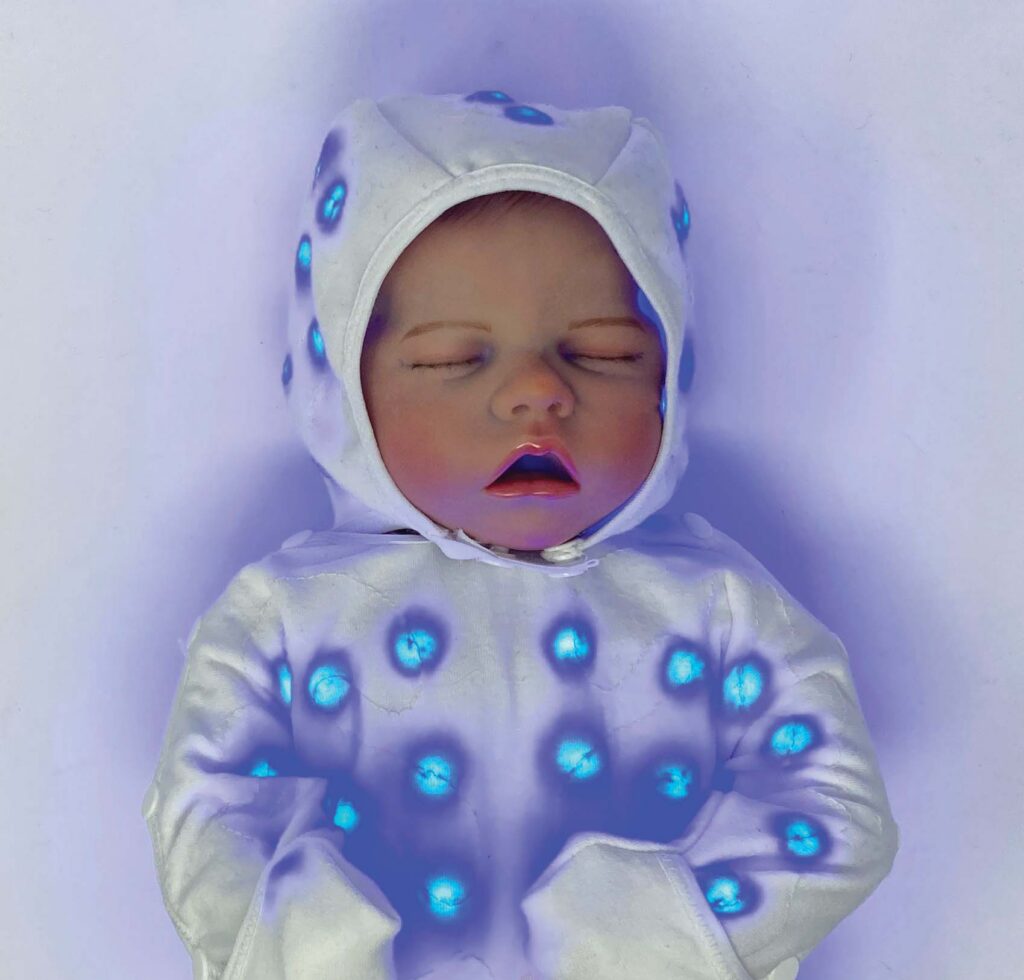
Dunne came up with the idea in 2020 following the birth of her daughter, and in 2023, her lab started developing it, building on smart textiles research she’s been doing since about 2014. Her team is currently testing the third version of the prototype.
“With each iteration we’ve explored different options for construction and circuit design/layout,” she says. “At the moment we have a prototype that works well and is very breathable and comfortable, and we’re working on making sure we can produce it affordably and that it can meet regulatory safety requirements.”
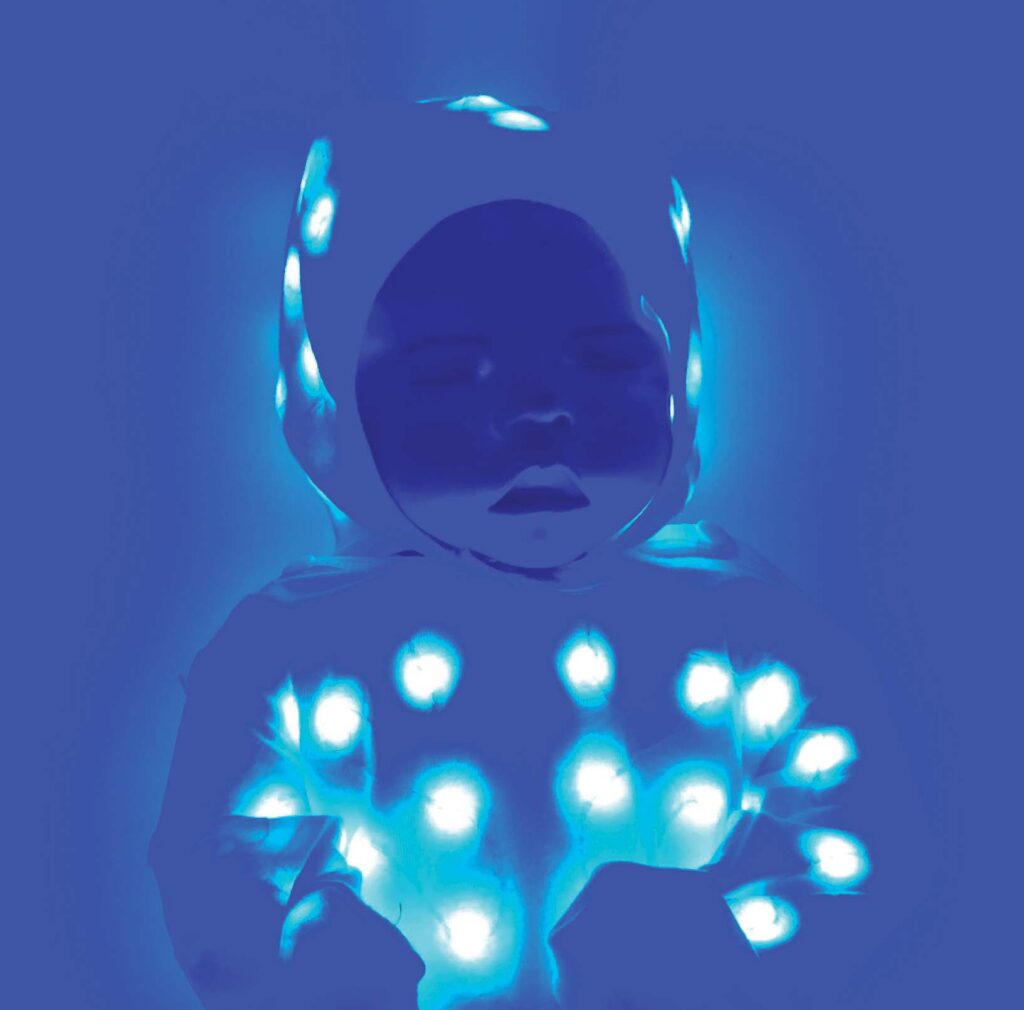
Work has gone beyond just creating the bodysuit. “The current method of measuring phototherapy devices relies on a single-point measurement, and the difference between our device and other products is how much more of the body surface it reaches,” she explains. “So we had to develop a custom radiometry mannequin that measures all over the body surface, not just at one point. … One of the surprising things we’ve discovered is how little of the body actually reaches that prescribed dose using current devices!”
The team is currently exploring different power options, manufacturability and medical device safety requirements, consulting on occasion with other U of M departments. Dunne expects infant trials to be a couple of years away.
Check out cutting-edge research, projects and art in the Swatches section of Specialty Fabrics Review each month.