 TEXTILES.ORG





In some ways, narrow fabrics are a STALWART segment of the textiles industry, says Ted Fetterman, vice president of sales and marketing at Bally Ribbon Mills in Bally, Pa. “What’s nice about that is there’s a stability.”
Part of that stability, says Michael Vitou, global sales executive at MMI Textiles, based in Brooklyn, Ohio, comes from purchase descriptions for military products that remain unchanged after nearly 50 years. Military equipment is a major application for the narrow fabrics sector.
Innovation in the sector is largely pushed by new materials to work with, and disruptions in this market area have come from supply chain turmoil in recent years.
Narrow fabrics growth areas
MMI’s most commonly sold webbing is 1 inch wide and used in applications such as military backpacks and heavy-duty outdoor gear. Workwear is a recent growth area for the sector, Vitou says, as are other markets, including medical, automotive, aerospace and aviation. MMI supplies a major manufacturer for the airline-hose industry. The hoses that connect to the bottom of an aircraft to control cabin pressure use products including 2-inch webbing, hook-and-loop and narrow fabrics in deniers ranging from 200 to 1,000.
For Bally, says Fetterman, commercial aviation business is currently booming, with narrow fabrics used “anywhere there’s safety equipment on an aircraft.” That includes slides, rafts, the webbing strap on personal flotation devices, cargo straps and tie-downs.
Bally’s narrow fabrics will also serve as seam reinforcements and tensile structure in astronaut garments such as the Axiom Extravehicular Mobility Unit spacesuit from Axiom and Prada.
New fibers, old products spur innovation
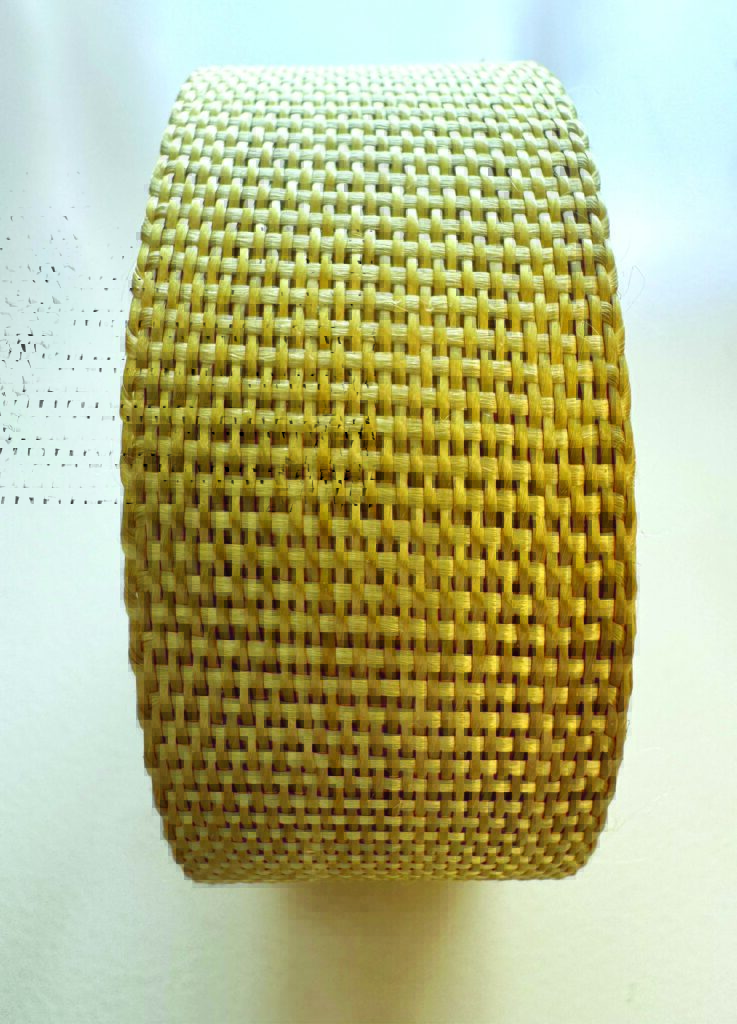
Innovation in the sector often comes from what Fetterman calls “supply chain push technology”: “So the supply chain comes up with a new innovation, and they say, ‘OK, well, we’ve made this new fiber. We’re pretty sure that you can put it in a textile, so would you check that?’” he says.
Currently, Bally is exploring the use of the lighter Kevlar® EXO™ in parachutes. “Anytime you can reduce weight and save fuel, it’s a very attractive scenario,” particularly in military aircraft applications, Fetterman says.
“It’s kind of exciting when the fiber companies come up with something new,” he adds.
Beyond new fibers, Fetterman says Bally pursues new product development through modifications to existing products in order to potentially serve new applications. That might mean changing the fiber in an existing fabric, changing weave designs or using a composite of multiple fibers to achieve all desired properties.
For example, Bally added multiple fibers into a woven structure to achieve both the desired bond strength and abrasion resistance in a polymer composite. The company is working to develop fabrics resistant to the sharp silicate particles of lunar dust.
Elastics, Vitou says, is an area where customers are requesting things such as different weaving or braiding styles for a more robust product. He says they seem to be willing to accept slightly less stretch in exchange for stronger compression and a longer life cycle.
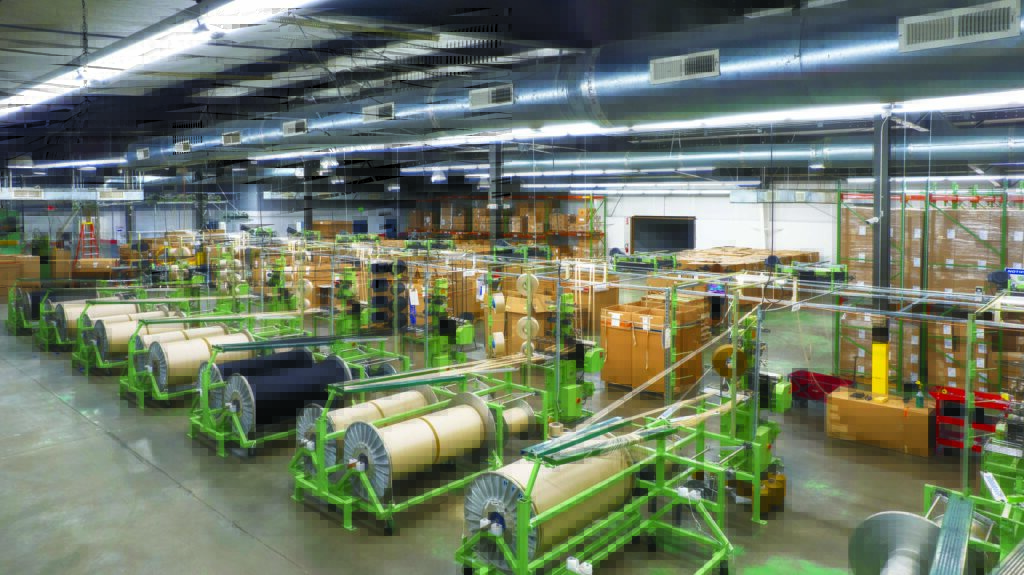
Most of MMI’s day-to-day production uses solution-dyed nylon 6,6 to create products designed to military specifications. Vitou agrees, however, that innovation in the sector can come from new materials. “There’s definitely been conversations around different types of material that can improve strength or performance” as well as higher breaking strength or lower density, he says.
“Everything, especially for the military, wants to go lighter, faster, stronger,” Vitou says. Dyneema®, for instance, is becoming an alternative to some current materials.
New facilities aid narrow fabric product development
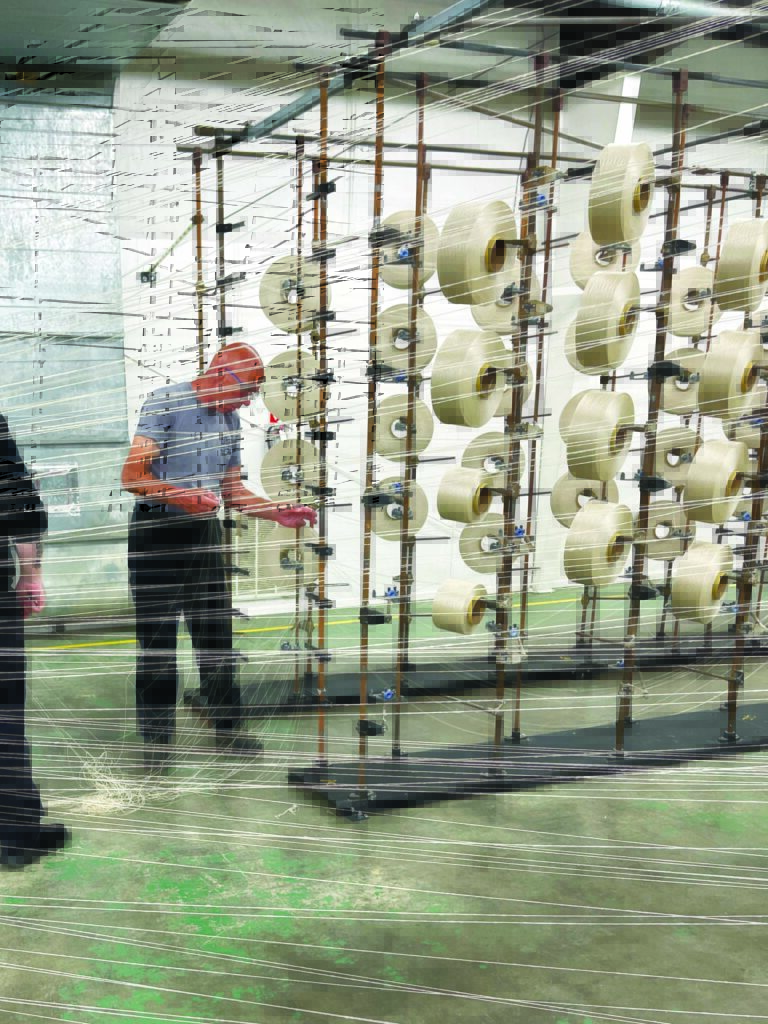
In 2021, MMI opened a manufacturing facility in Lenoir, N.C., where the company weaves its webbing and elastics. Within the past two years, MMI installed a creel system that allows bringing in smaller yarn bundles and running 10–500 yards. That contrasts with 5,000-pound yarn bundles that produce 10,000–20,000 yards of webbing.
The smaller runs provide an opportunity to evaluate new fibers’ performance and fit for the product line, whether in elastics, stretch webbing or stretch binding tapes.
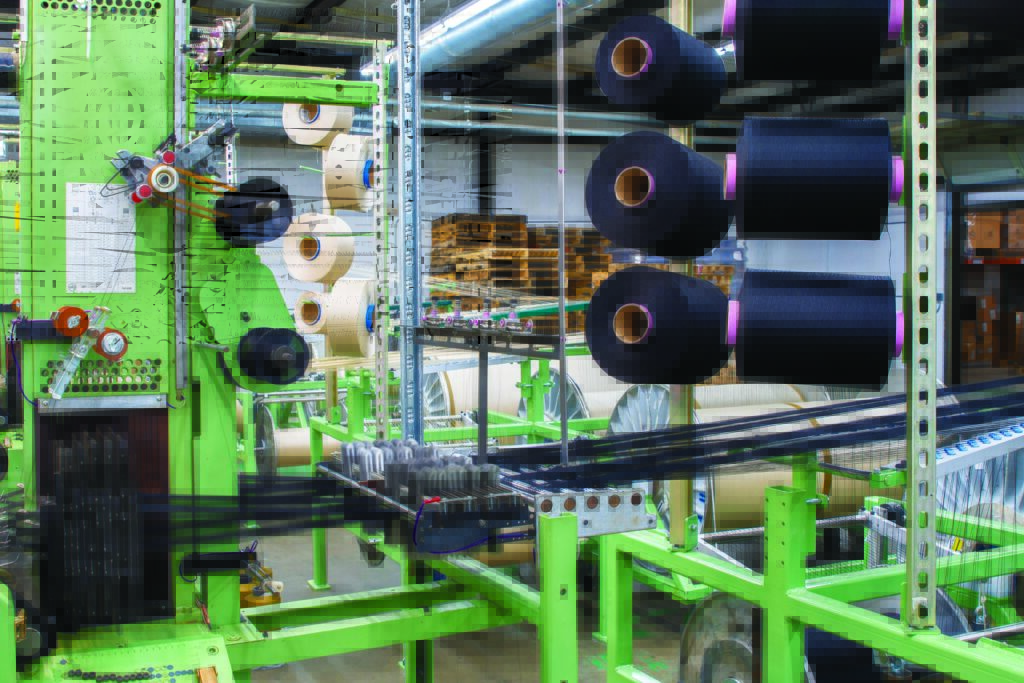
“It’s pretty hard to justify a 10,000-yard trial run of something that we don’t even know if we know what we’re doing yet,” Vitou says. With the creel system, “We have the ability to essentially get you a product that would come from our full looms, without having to run 10,000 yards for a customer just to figure out if it works for their end use.”
This year, MMI added a finishing range to its North Carolina facility. Previously, the webbing was heat-set and put up on rolls without any treatment. The finishing range offers the possibility of adding resins as well as fire-retardant and durable water-repellent treatments. The finishing range also has the capacity for piece dyeing, which is something to consider down the road, Vitou says.
For now, he notes, “A lot of the innovation across the industry, whether it be narrow fabrics or wide goods, is a lot of different chemistries” to create flame retardance, antimicrobial resistance and more.
Bringing manufacturing in-house was an attempt to catch up with a backlog of orders while new ones were coming in post-COVID-19, Vitou says. “There’s no way that our previous manufacturing supply chain was going to be able to catch up quick enough.”
Sometimes, Fetterman says, people will ask him, “‘Why are you still talking about COVID?’” His answer: “It just hasn’t stopped.”
Narrow fabrics market pressures
Over the past five years, Fetterman says, it seems that new challenges have continually presented themselves. “Textiles in the United States is really heavily dependent upon the petrochemical industry,” he says. “Petrochemical industry is very affected by, of course, world events.”
Vitou adds, “With us running primarily nylon 6,6, that’s tied pretty closely to the price of crude oil. If price per barrel goes up, [the] price of the labor, price to run the machines to extract the chemicals to turn them into yarns, obviously all that goes up” as well.
Shipping disruptions caused by the Iran war’s impact on the Strait of Hormuz have made logistics and sourcing of materials more difficult but haven’t had as big an impact as the unexpected Great Texas Freeze of February 2021, Vitou says. That winter storm created a freeze-and-thaw cycle that damaged yarn-producing chemicals to the point they had to be discarded and also caused damage to oil mining equipment, he says, noting that the event “was a big hit to our industry.”
Of perhaps greater concern to both MMI and Bally are mergers, acquisitions and closures across the textile industry. There has been a lot of consolidation among suppliers of finishes used on narrow fabrics, Fetterman says. Bally discovered the supplier of a polymer finish used to provide starch-like qualities of improved hand, stiffness and abrasion resistance to narrow fabrics was going out of business when it failed to confirm purchase orders.
“All of a sudden, we’re scrambling to figure out where we’re going to get this chemical or which chemical is going to work,” Fetterman says. “The industry is not set up for such drastic changes.”
Vitou says, “It seems like every time you turn around, you hear of another facility closing its doors. While it does immediately benefit the people that do remain in a shrinking industry, for the long term, it’s not good for anybody because ultimately, capacity is a real thing.”
Still, both Vitou and Fetterman look to the future with hope. “I think that the industry is basically looking for, ‘What is that next big product?’” Vitou says. “I think that a few of the different specialty fibers that are coming out now will land and will represent significant business.” MMI, he says, looks forward to expanding its industry presence both nationally and internationally.
While new materials are one area of interest, Fetterman says, some applications can get a renewed spotlight after years of dormancy. He first started working on inflatable habitats, an area of renewed attention, 20 years ago.
“It’s hard to think now what’s going to be the next thing,” he says. “We have to be adaptable.”
Joanna Werch Takes is a writer and editor based in Minnesota.
Stay on top of news in your market areas with the Advanced Textiles Association publications that you receive with your association membership.