 TEXTILES.ORG




The success of medical textiles in recent years is worth noting. It’s a demanding, niche market with numerous standards and regulations that take time to adhere to—and time is money. The investment needed to start in this market is considerable. It’s also highly specialized, which means that the cushion that diversification brings to a product portfolio may not be a viable option.
However, the market has grown and is predicted to remain healthy. Research firm Mordor Intelligence valued the biomedical textile market in 2025 at $16.78 billion and estimates that the market will increase to $17.75 billion in 2026. By 2031, it is estimated to reach $23.51 billion at a compound annual growth rate of 5.78%.
The firm’s report states, “This growth rests on the expanding surgical workload created by older populations, the commercialization of minimally invasive implantable fabrics, and steady public-sector funding that migrates defense textile research into civilian care.”
Interestingly, nonbiodegradable fibers accounted for more than half of the market share in 2025, but biodegradable fibers are projected to show growth through 2031. Nonwovens hold more than 60% of the market and are projected to show 8.14% growth annually to 2031.
Intended use
At Advanced Textiles Expo in November 2025, Alexander Laubach, head of business development medical at Hohenstein, shared information about the difference between a medical product and a medical device. “A medical device is all about the intended use,” he said, and devices usually must adhere to more stringent regulations than medical products.
Regulations in the U.S., the European Union and Canada are not always clear, but there is a reliable process to follow. Safety is paramount and requires a serious testing regimen. Nevertheless, biomedical research continues to yield commercialized devices
used in health care worldwide.
Suture-less nerve surgery
TISSIUM®, headquartered in Paris, France, is a medical technology company developing biomorphic programmable polymers for tissue reconstruction. The company recently announced the first commercial use of its product COAPTIUM® CONNECT, following the U.S. Food and Drug Administration’s (FDA’s) De Novo authorization earlier in 2025. The FDA also authorized the commercial use of TISSIUM Light, which activates viscous prepolymer into a flexible bond.
COAPTIUM CONNECT is a nerve repair solution that enables precise, atraumatic, suture-less coaptation of severed peripheral nerves. Dr. Michael Franco, a plastic and reconstructive surgeon who specializes in peripheral nerve surgery, performed nerve repair surgery with COAPTIUM in November 2025 at Cooper University Hospital in Camden, N.J.
“Avoiding trauma to the nerve is my No. 1 goal, and this product does just that, with no suture, no barbs, no trauma to the nerve,” says Franco.
The commercial introduction of this product supports TISSIUM’s broader strategy of delivering atraumatic, polymer-based solutions across multiple therapeutic areas.
Replicating human tissue behavior
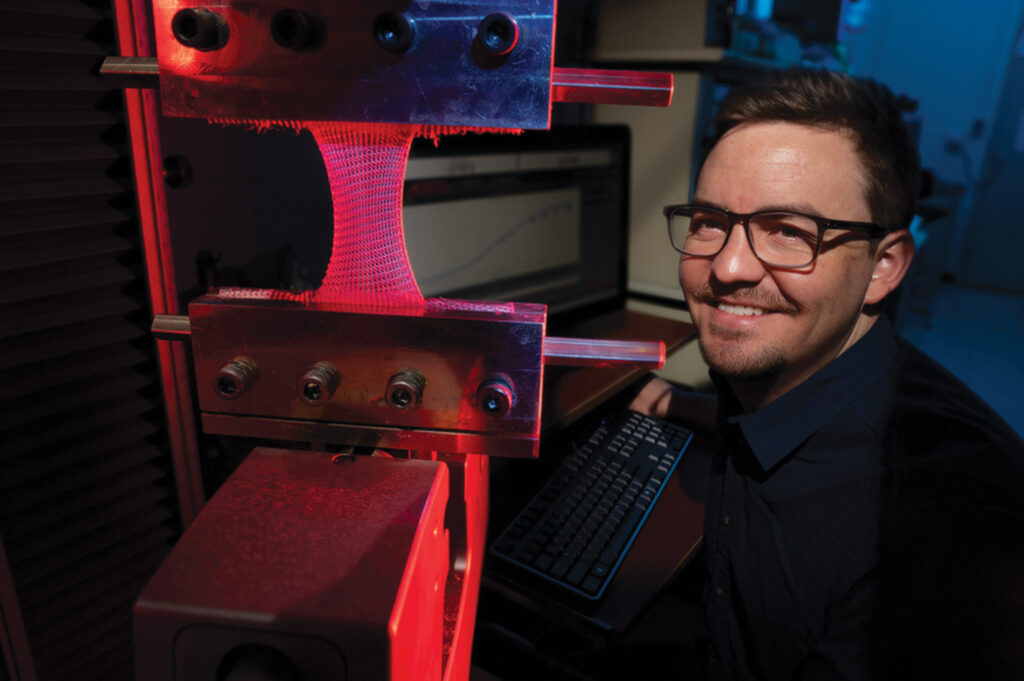
Early last summer, a multidisciplinary team at Massachusetts Institute of Technology (MIT) published a paper on a new method for treating severe or chronically injured soft tissues such as skin and muscle. Human tissue moves and flexes in a way that traditional soft materials have not been able to replicate. In fact, these materials can stretch the embedded cells, often causing them to die. The dead cells hinder the healing process and can cause an immune response in the body.
“The human body has this hierarchical structure that actually uncrimps or unfolds rather than stretches,” says Steve Gillmer, assistant group leader at MIT’s Lincoln Laboratory. “That’s why if you stretch your own skin or muscles, your cells aren’t dying. What’s actually happening is your tissues are uncrimping a little bit before they stretch.”
Gillmer is part of the team searching for a solution to this stretching setback, working to knit new kinds of fabrics that can uncrimp and move as human tissue does. Eventually, the team turned to the Lincoln Lab at MIT and its industrial knitting machines. This made it possible to design larger knits, rather than individual yarns.
Gillmer says that although the project began with treating skin and muscle injuries, their fabrics have the potential to mimic different types of human soft tissue.

A skin patch for melanoma
Earlier this year, a skin patch for treating melanoma was shown to be a possible replacement for surgery for this type of skin cancer. A large team of researchers at universities across China created the stretchy, heat-activated skin patch.
Similar to a bandage, the patch releases copper ions when activated, which kill the underlying cancer cells and prevent them from spreading. In tests with mice, the researchers say the patch reduced melanoma lesions without damaging surrounding tissue. They believe that someday, this bandage-like patch could be part of an effective and noninvasive treatment for the disease.
The research paper, “A Stretchable, Transparent, Photothermally Stimulated Laser-Induced Graphene Patch for Noninvasive Skin Tumor Treatment,” was published in American Chemical Society Nano in March.
Foldable medical brace
Bracesys, a foldable medical brace from technology company Osteoid Health Technologies in Istanbul, Türkiye, can be adapted to a user’s injured arm using adjustable cables. The appliance is made from recyclable medical-grade nylon 12, aluminum, stainless steel and Kevlar® cables.
Its designers described their device thusly to enter the A’ Design Awards in 2025: “Current orthopedic solutions present trade-offs: Off-the-shelf braces rarely fit accurately, while custom 3D-printed alternatives involve lengthy, complex processes that limit their clinical use. Inspired by the precision engineering of timepiece mechanics and sailing rigging systems, Bracesys emerged from a quest to develop a rapid, expert-driven approach that precisely accommodates diverse and evolving patient anatomies, prioritizing comfort, speed and sustainability.”
Clinicians adjust each segment for a precise fit, which reduces pressure points—and subsequent pain and skin problems traditional braces can cause. After adjustments are complete, the brace provides secure immobilization, but clinicians can easily revise the fit during follow-up visits as swelling goes down.
This is a medical product, not a device, but a testing process is required. The product currently is going through clinical trials.
Smart haptics
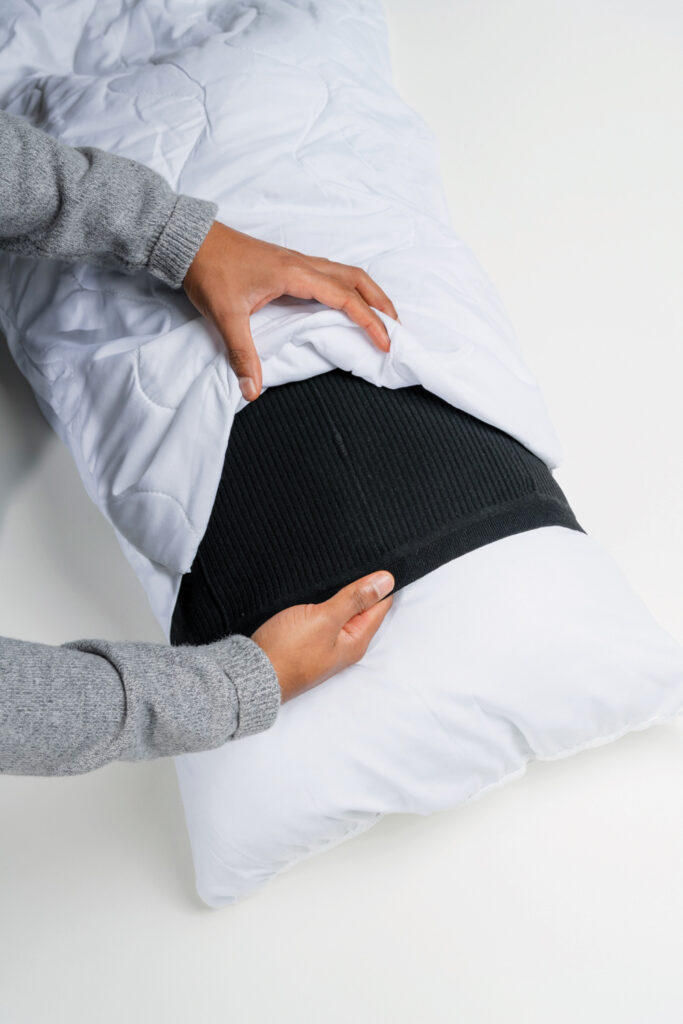
Researchers at U.K.-based Nottingham Trent University have created a smart pillow cover that can sense and alert the user when alarms activate due to fire, burglary or another danger. When the alarms are activated, the haptic actuator electronics create vibrations that people with a physical challenge, such as hearing loss, can feel.
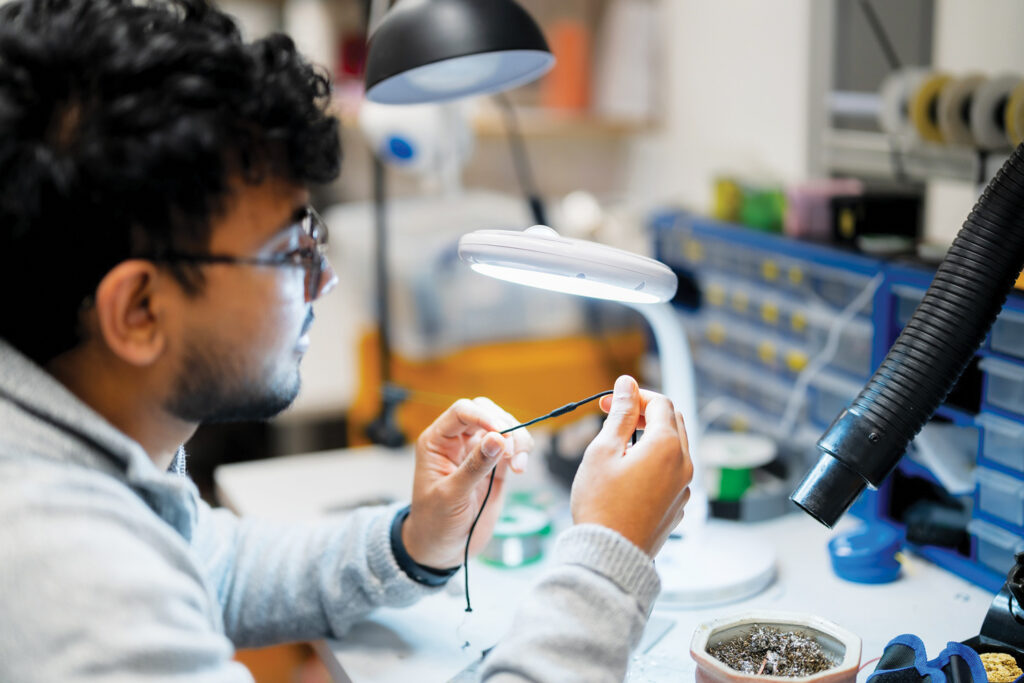
The work was conducted by doctoral candidate Malindu Ehelagasthenna, under the supervision of Theo Hughes-Riley, Ph.D. Tiny electronics are embedded into yarns that make up the fabric; the electronic circuit is wirelessly connected to fire and burglar alarms or phones. The work evolved out of a collaboration with user communities involving multiple disciplines, including electronics and communication, textiles, and design.
“This project was born out of feedback from user groups we worked with in the Deaf community who told us that they can’t sleep well with bulky items under their pillows,” said Ehelagasthenna.
Though challenges in medical device development may include large-scale applicability, cost, reliability and durability, these recent examples of novel medical devices show the promise of solutions that could become part of mainstream medical treatment, addressing long-term difficulties in treating common medical conditions.
Janet Preus is senior editor of Textile Technology Source and a contributor to Specialty Fabrics Review. She can be reached at janet.preus@textiles.org.
Seshadri Ramkumar, Ph.D., is a professor in the Department of Environmental Toxicology at Texas Tech University (TTU), Lubbock. He supervises the Nonwoven and Advanced Materials Laboratory at The Institute of Environmental and Human Health, TTU.