 TEXTILES.ORG




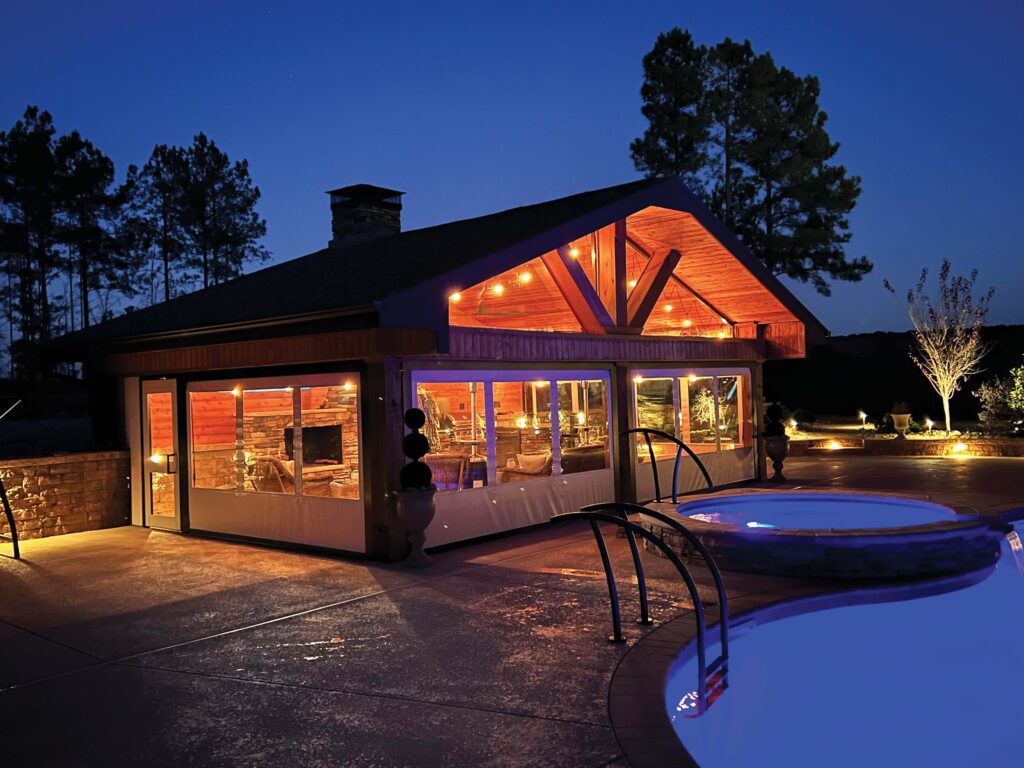
As homeowners and hospitality operators continue to invest in outdoor spaces, patios, decks and dining areas are becoming less seasonal. Specialty textiles, clear vinyl systems and engineered enclosure solutions are helping to transform these spaces into comfortable environments that can be used earlier in the spring and later into the fall — and, in some climates, throughout much of the year.
For fabricators, these projects represent opportunities to apply expertise in materials, design, fabrication and installation to create outdoor environments that balance weather protection with the desire to remain connected to the outdoors.
“Demand has grown tremendously over the past decade as people place greater value on outdoor living and dining,” says Angie Riggins, CEO of Alpha Canvas & Awning in Charlotte, N.C. “Homeowners are creating additional living space, while restaurants and hospitality venues are looking for ways to increase seating capacity, improve guest comfort and generate revenue throughout the year.”
While interest surged during the COVID-19 pandemic as restaurants looked for ways to maintain outdoor seating, demand has evolved. Today, many commercial customers are focused on practical solutions that extend existing patio use rather than creating entirely new spaces.
“We saw growing demand from bars and restaurants pre-pandemic, and then during the pandemic, things really spiked,” says Greg Mantel, owner of Acme Awning Co., located in St. Paul, Minn. “Now, customers are still interested in enclosing their outdoor spaces, but they are looking at more economical or less costly solutions.”
For many restaurants, the goal is not necessarily to operate outdoor seating throughout the coldest months. Instead, enclosures allow operators to open patios earlier in the spring and keep them active later into the fall, adding valuable seating capacity during shoulder seasons.
Designing the right system
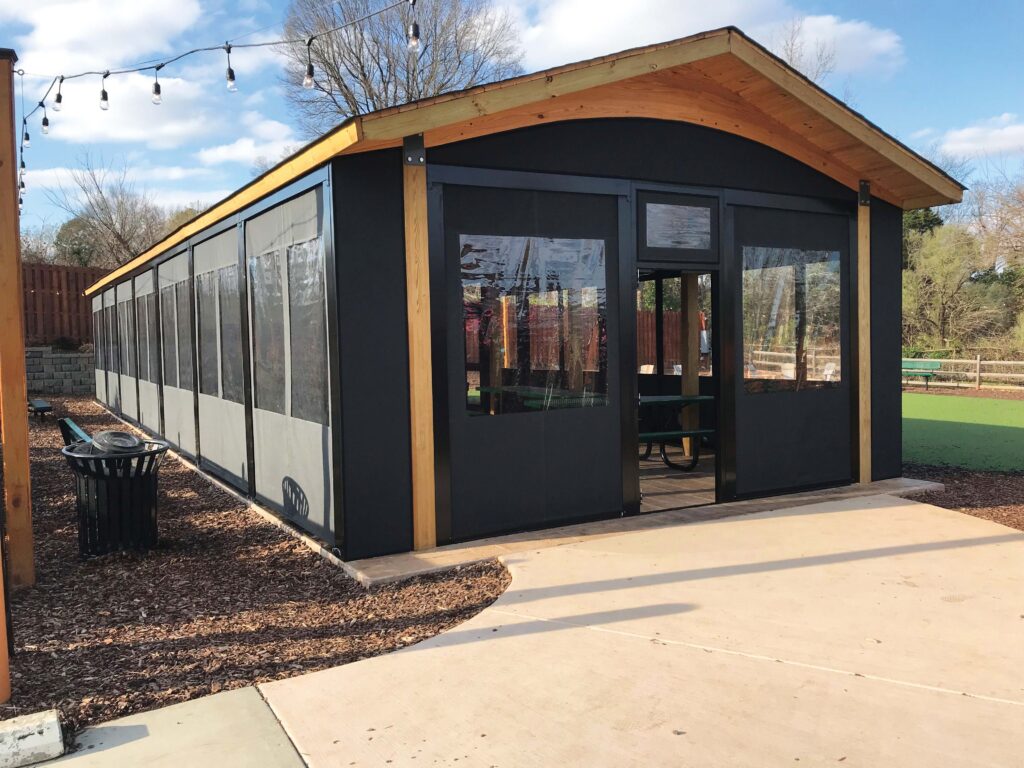
Successful outdoor enclosures begin with understanding how the space will be used. Fabricators must consider the client’s goals, local climate conditions and the desired level of flexibility.
“We evaluate climate, prevailing weather, wind exposure, sun orientation, views, maintenance expectations and whether the enclosure will remain installed year-round before recommending materials or system configurations,” Riggins says.
Today’s solutions vary widely depending on the application. Fabricators are creating custom curtain systems, retractable enclosures, screened systems and weather-protection structures for residential patios, restaurant dining areas, hospitality venues and commercial gathering spaces.
Residential projects often focus on comfort, privacy and expanding usable living space, Mantel explains, while restaurants typically are balancing guest experience, operational flexibility and return on investment.
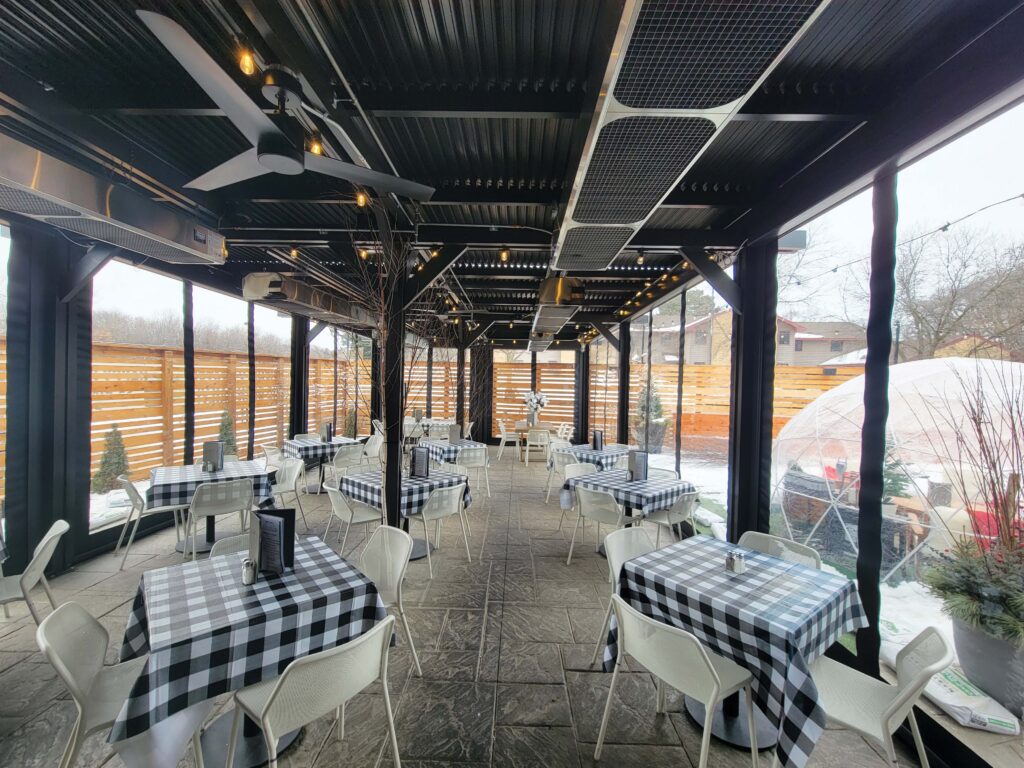
Mantel says one popular option for both residential and commercial applications is the louvered roof pergola system. These structures provide overhead protection while allowing operators or homeowners to control exposure to sun and weather.
“The louvered roof pergola has been kind of the go-to for 10-plus years now to cover an outdoor commercial and now residential space,” Mantel says. “It offers the ability to enclose the space because it has posts, and we can put screens in between those posts that will retain heat when the rooftop is closed.”
For restaurants in colder climates, these systems can provide a cost-effective way to increase usable square footage without constructing a permanent addition. In northern climes, snow loading and pitch has to be taken into account for awning coverage on top, but in the South, fabric can shield the louvers from being filled with debris such as pollen that falls into the covered space the moment the louvers are opened.
Selecting the right materials
Material selection is one of the most important considerations when designing an outdoor enclosure. Specialty fabrics, coated textiles and clear vinyl each serve different purposes, and the best-performing systems often combine multiple materials.
“Every material serves a different purpose,” Riggins says. “Fabric provides strength, weather protection, shade and architectural character, while clear vinyl preserves visibility, natural light and views while protecting against wind and rain.”
Clear vinyl panels remain popular because they allow customers to enjoy the outdoor environment while reducing exposure to wind and precipitation. However, they require careful fabrication and maintenance.
“Clear vinyl requires careful handling to prevent scratching and accommodate expansion and contraction,” Riggins says. “Long-term performance depends on much more than the material itself. Pattern development, hardware selection, fabrication techniques and installation details all contribute to how an enclosure performs years after it’s installed.”
Mantel says fabricators should also design clear vinyl systems with future maintenance in mind. Because vinyl can shrink and change over time due to UV exposure and weather conditions, proper detailing can extend the life of the installation.
“We try for these bars and restaurants to make the clear vinyl window as large as possible because you want the light,” Mantel says. “That said, we’ll always prescribe borders on the left, right, top and bottom because we want some flexibility when the clear vinyl starts to shrink.”
Engineering and installation considerations
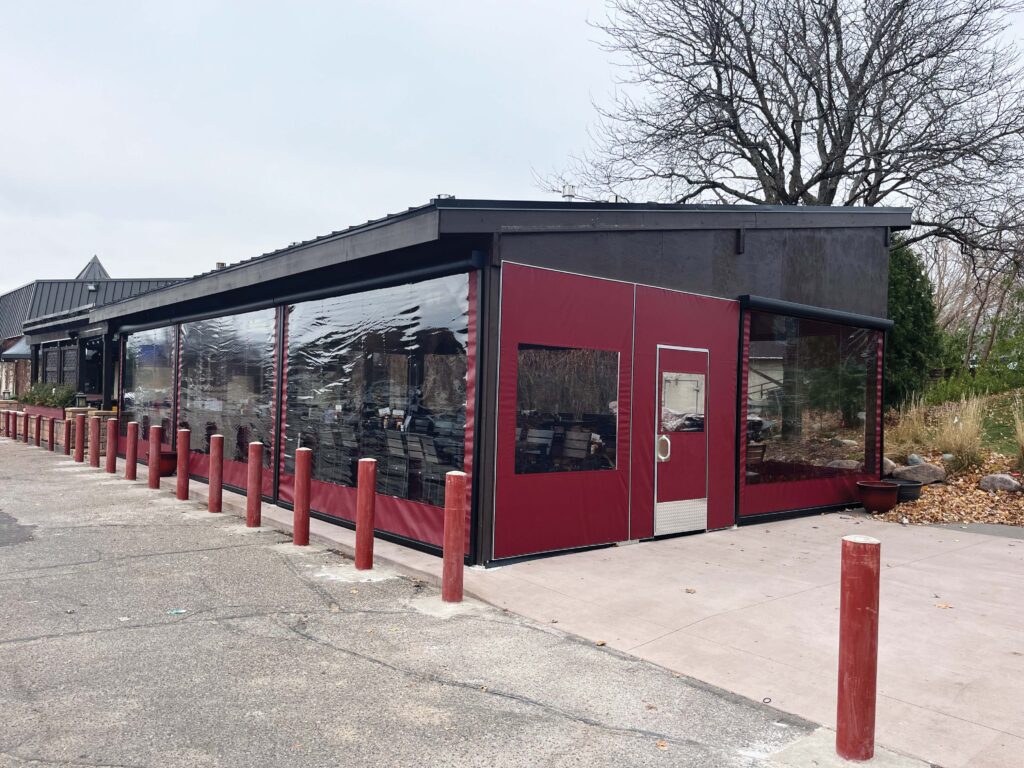
Although these systems may appear straightforward, proper engineering is critical. Outdoor enclosures must withstand local wind conditions, snow loads and other environmental stressors.
Mantel says one of the biggest challenges with pergola-style structures is ensuring the installation meets engineering requirements
while remaining cost-effective.
“All these projects require permitting at the municipality level,” he says. “We turn to engineers to review the plans, make recommendations on appropriate anchoring and, when you’re attaching it to a building, understand how the material the building was made out of affects the installation.”
Site conditions also play an important role. Fabricators must verify that the supporting structure and foundation can handle the added loads.
“We’re looking for something solid enough to host it,” Mantel says. “The patio can’t be cracked and crumbling. It has to be a concrete footing or slab.”
Freestanding structures are often preferred in some commercial applications because they can simplify permitting requirements compared with structures attached directly to existing buildings.
Comfort beyond weather protection
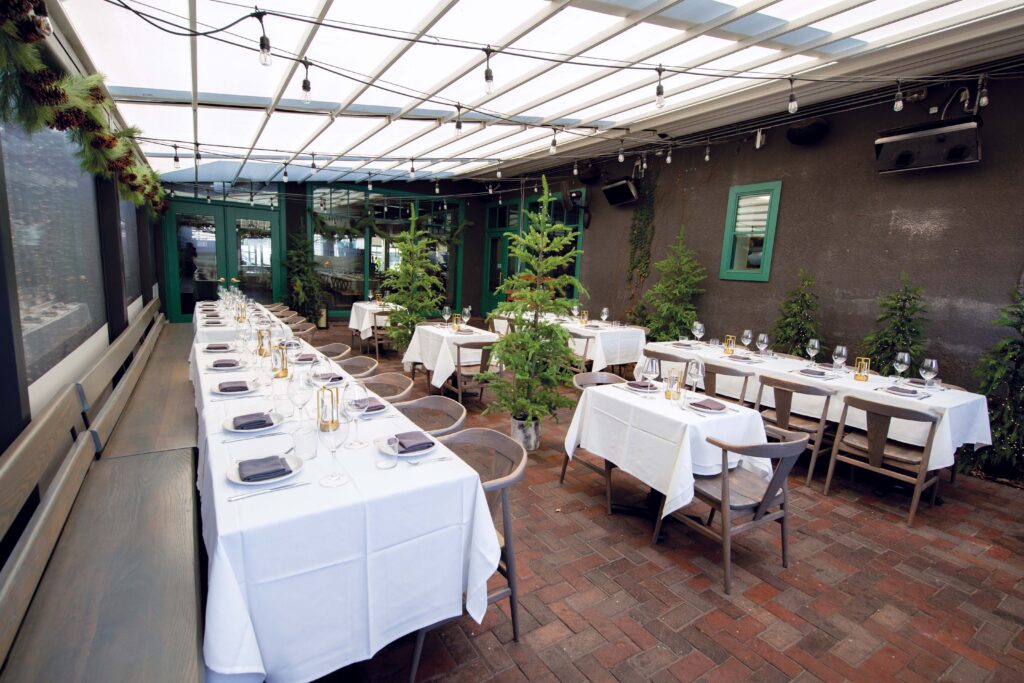
Extending the outdoor season requires more than simply blocking wind and rain. “Comfort is about balance,” Riggins says. “Weather protection, ventilation, airflow, shade and heating should all be considered together when designing an enclosure.”
Heating systems and gas fire features can improve comfort during cooler months, but they must be incorporated thoughtfully. Proper clearances, ventilation and safe operation should be addressed during the design process rather than added later.
Modern motorized systems can also improve usability by allowing end users to quickly adjust the enclosure
as weather conditions change.
“Modern motorized systems perform extremely well when they’re properly designed, fabricated and installed,” Riggins says. “Selecting quality components and integrating them into a well-designed enclosure system provides years of dependable performance in changing weather conditions.”
Maintenance matters
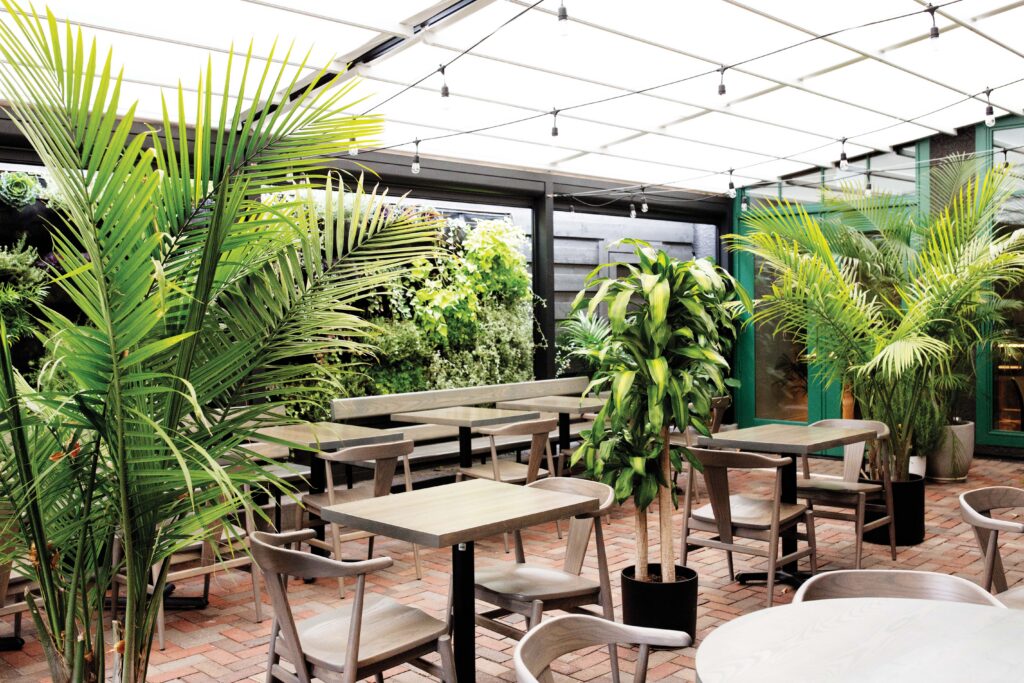
Like any specialty textile application, proper maintenance plays a major role in extending the service life of enclosures.
For clear vinyl, routine cleaning is especially important. Riggins recommends using cleaners specifically designed for vinyl windows along with clean microfiber cloths and avoiding abrasive products that can scratch or cloud the material.
“Clear vinyl performs exceptionally well when properly maintained,” she says. “A little routine care goes a long way toward preserving clarity and extending the life of the enclosure.”
Fabricators should educate customers on operating procedures. In colder climates, Mantel recommends avoiding the operation of some systems during freezing temperatures to prevent damage.
“They can leave them deployed all winter long, and they’ll perform just fine,” he says. “Or they can roll them up [for storage] all winter long, and they’ll perform [in the spring]. Just don’t open and close them when it’s freezing outside.”
Opportunity for fabricators
As outdoor living and dining continue to evolve, fabricators have opportunities to provide more than weather barriers. The strongest projects combine thoughtful design, appropriate materials and careful installation to create spaces that feel intentional and comfortable.
Riggins says the key for fabricators entering this market is to remain curious and learn from every project.
“Listen carefully to your clients, spend time observing how your projects perform in the field and never stop asking questions,” she says. “Every installation teaches you something if you’re willing to pay attention.”
Maura Keller is a freelance writer based in Plymouth, Minn.